
The complete guide
How To Choose A Walk-In Catio That Your Cat Will Actually Use
The problem with letting cats outside
Cat owners get stuck between two uncomfortable options. Keep the cat inside and watch it stare out the window, chew the blinds and get restless by mid-afternoon. Or let it out and spend the day wondering about cars, dogs, fights, ticks and the neighbour who does not like cats in the vegetable patch.
Neither option is good. Indoor cats with no access to fresh air are more prone to boredom behaviours, weight gain and the kind of low-grade frustration that shows up as scratched furniture. Free-roaming cats live shorter lives on average, and in a lot of places they are also a problem for local wildlife.
A walk-in catio solves the standoff. Your cat gets sun, breeze, bird-watching and real outdoor smells. You get to know exactly where it is. The enclosure does the containing so you do not have to.
What a walk-in catio actually gives a cat
It helps to think about what cats want outdoors, because it is not just open space. Watch a cat in a garden and most of its time goes into three activities. It climbs to a high point. It sits in a sunny patch. It watches things move.
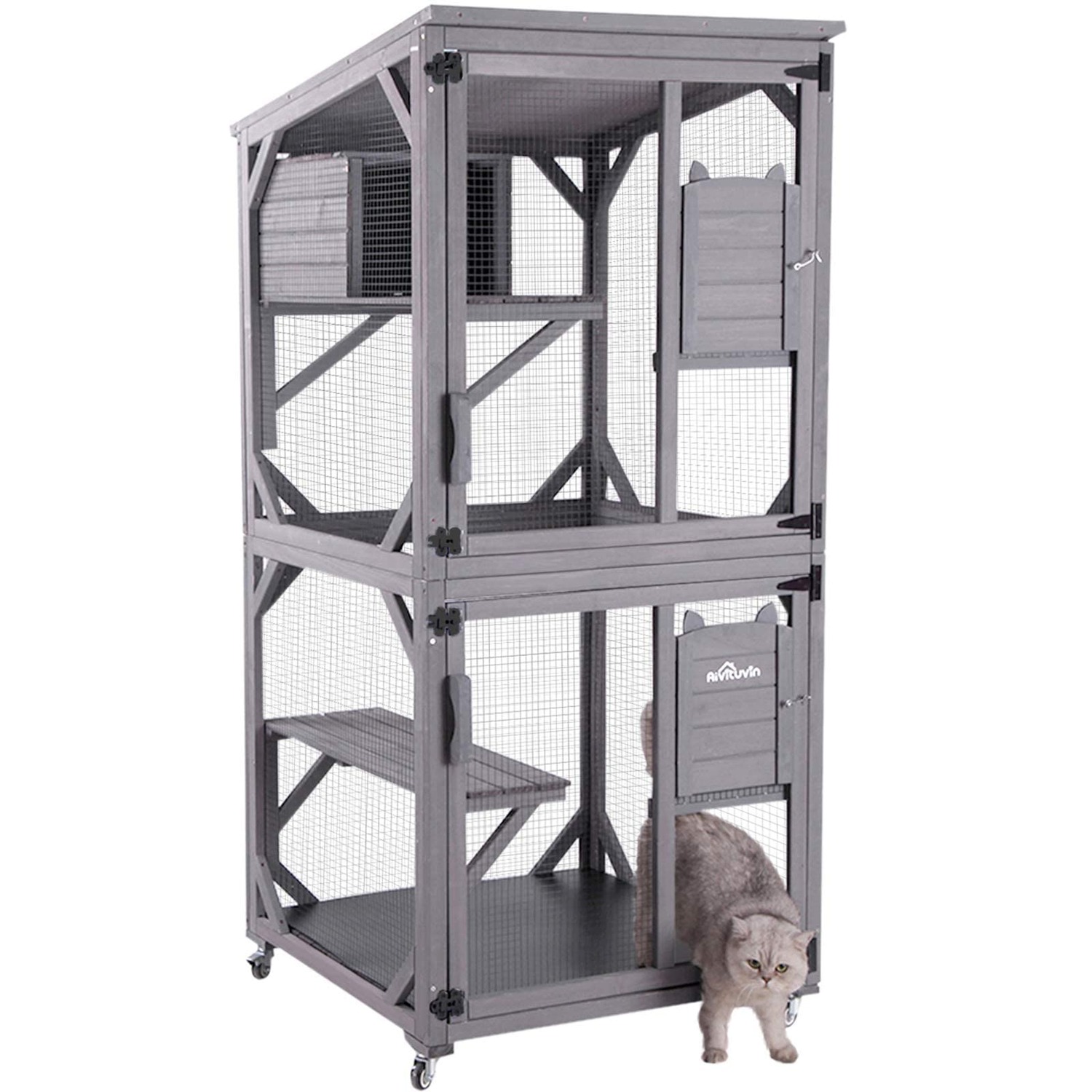
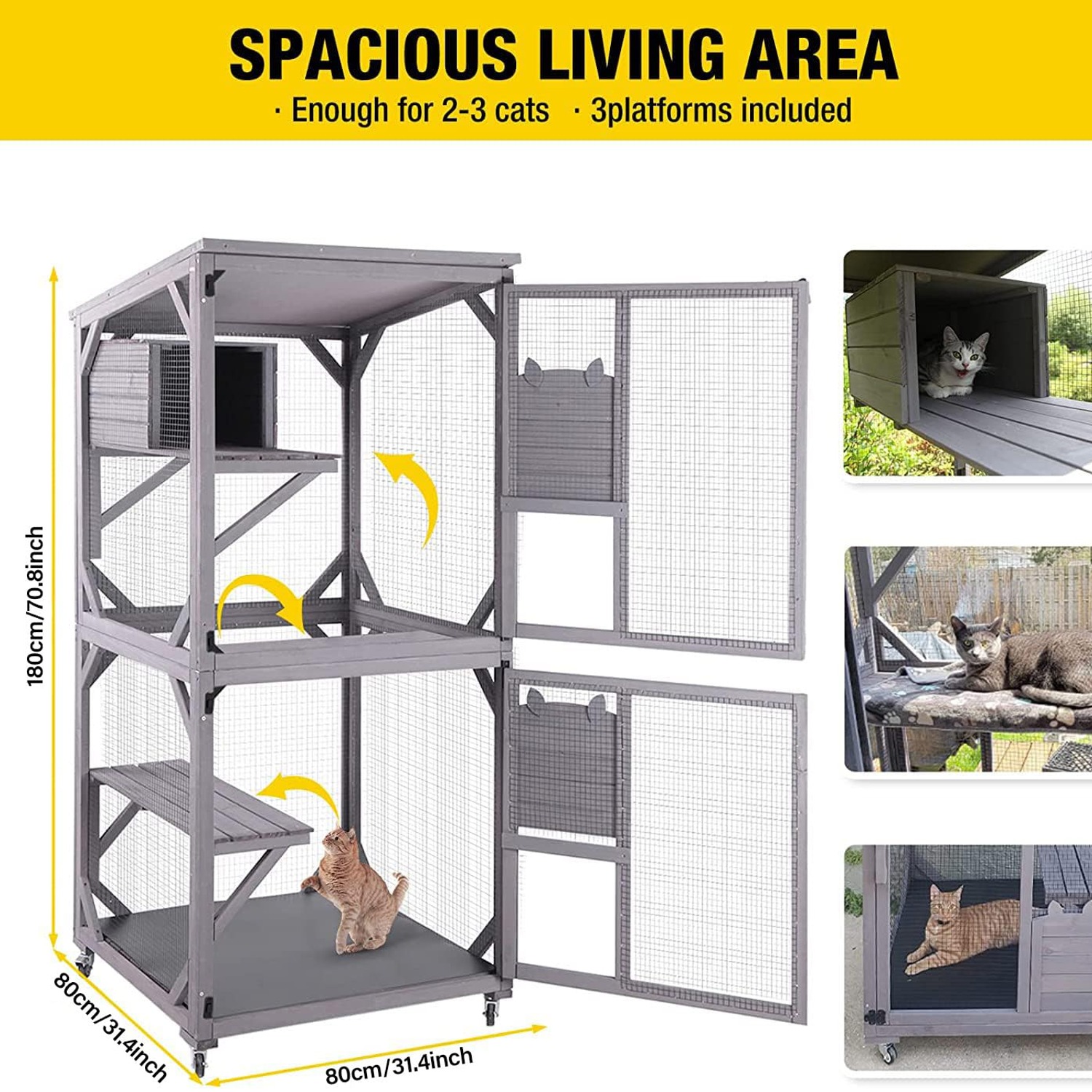
That is why height matters more than floor area. A run that sprawls sideways at ground level gives a cat somewhere to walk but nowhere to perch. This enclosure is 180cm tall on an 80cm by 80cm base, which is the opposite shape, and it suits cat behaviour far better than the dimensions might suggest.
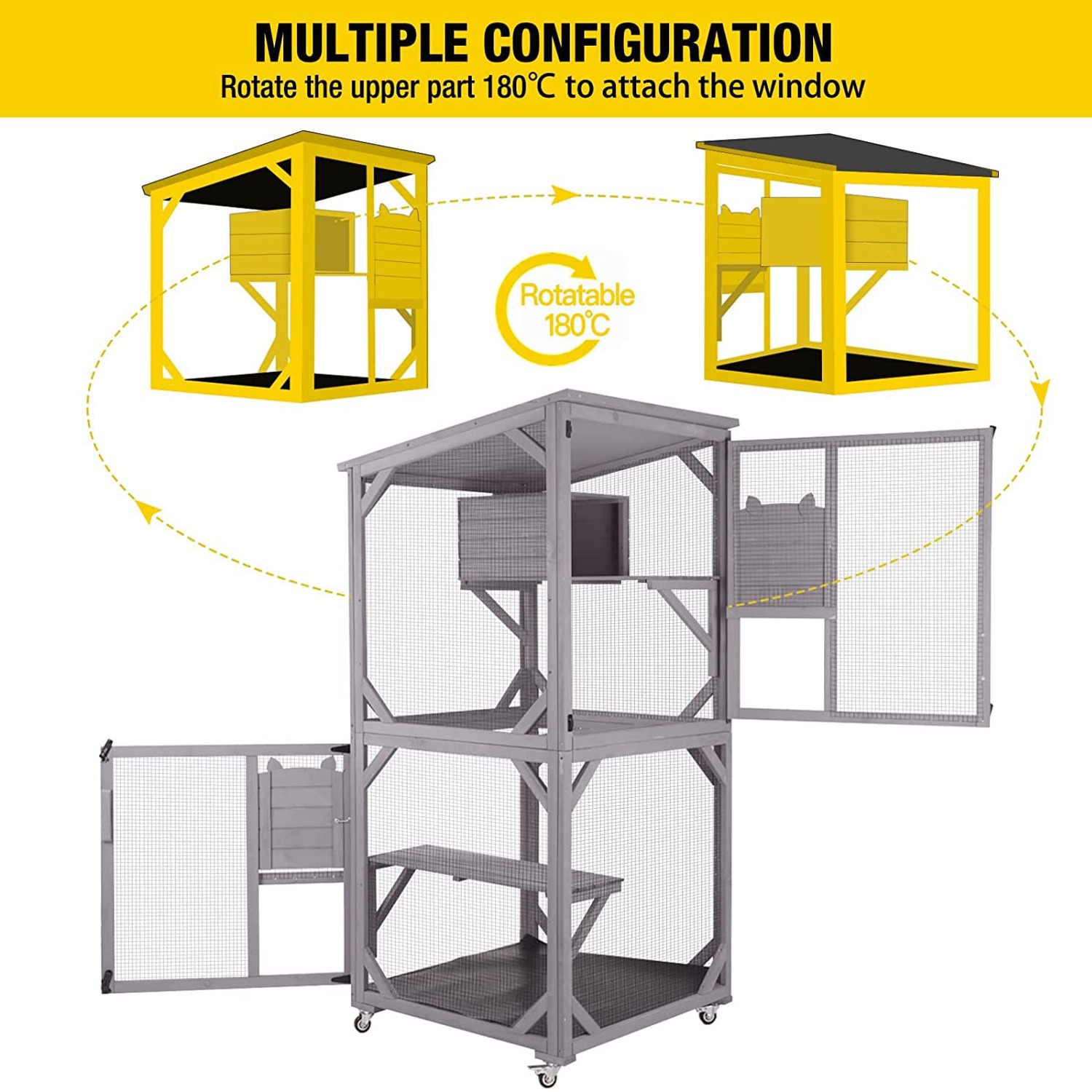
Two internal levels mean a cat can move up and down rather than just back and forth. The platform becomes the lookout, the floor becomes the stretching and rolling area, and the included nesting box becomes the retreat when the sun gets strong or something startling walks past the fence.
Materials and why timber works
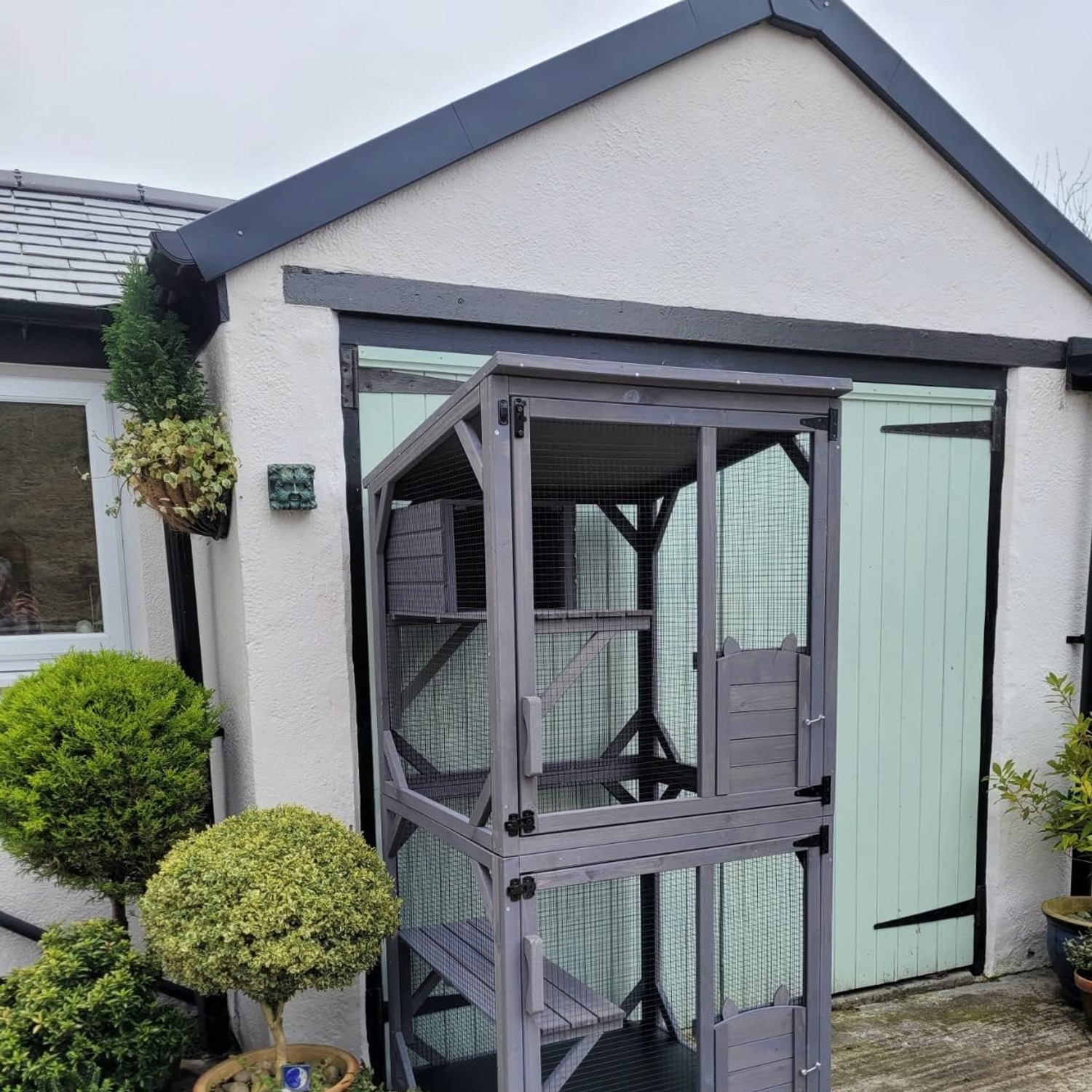
This model is built from wood with polyvinyl chloride components, finished in grey. Timber has some real advantages for a backyard catio. It is sturdy, it does not heat up the way metal does in direct sun, and it looks like furniture rather than a cage. If the enclosure is going to live on your patio, that matters.
Wire-only enclosures are cheaper and lighter, but they can get uncomfortably hot, they offer no shade and they tend to look temporary. A timber cat enclosure sits in a garden the way a planter box or a bench does.
The trade-off is maintenance. Wood exposed to constant weather will eventually grey off and dry out. That is not a flaw, it is just how timber behaves outdoors. A coat of pet-safe exterior finish every year or two, applied when the enclosure is empty and fully dry, keeps it in good shape for a long time.
The wheels change how you use it
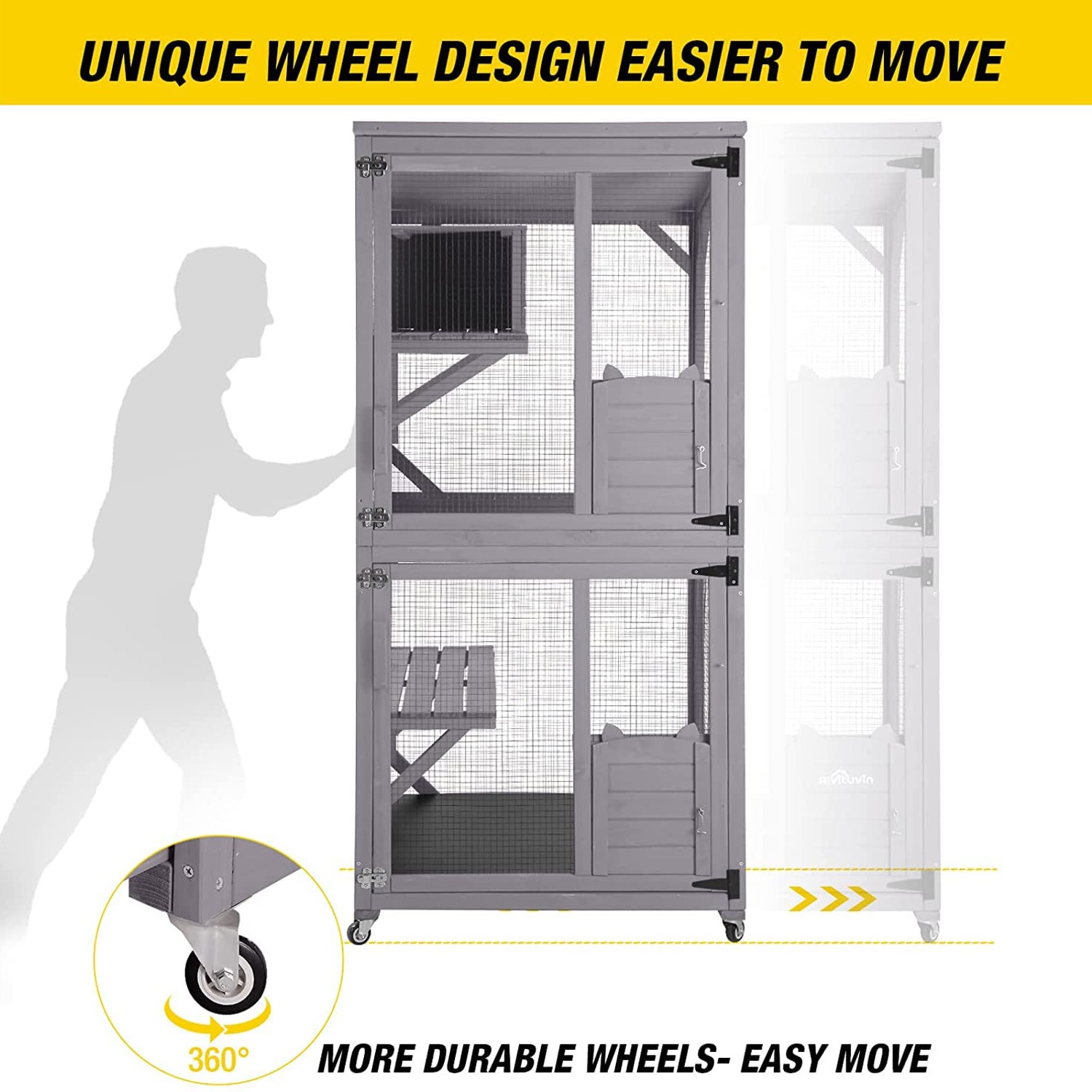
Most people skim past the wheels when comparing enclosures. They should not. Being able to move a 26.8 kg structure without lifting it is the difference between an enclosure that stays in one slightly wrong spot forever and one that actually fits into your day.
Morning sun on the east side of the house, shade under the tree by two o'clock, and under the eaves when the clouds come in. With brake wheels you follow the conditions instead of accepting whatever the fixed position gives you. When you need to mow or sweep, you roll it aside.
Lock the brakes before your cat goes in. On a slight slope or a smooth deck, an unbraked enclosure can shift when a cat jumps onto the upper platform, and that is enough to spook a cat off using it for a week.
Who this suits
This is a good fit for an indoor cat that wants outdoor time, a cat that has recently moved house and cannot be let out yet, a cat recovering from surgery that needs to stay contained, or a household in a busy street where free roaming is not safe.
It also works well for people in rentals and apartments. The footprint is small enough for most balconies and courtyards, and because it is mobile you are not drilling anything into the building. If you move, it comes with you.
Where it is less suited is a household with three or more cats that all want outdoor time at once. In that case, either run shorter sessions on rotation or plan on more than one enclosure. Cats will tolerate sharing, but crowding leads to tension and then to cats who refuse to go in.
Getting your cat to use it
Almost every owner hits the same hurdle. The catio arrives, it gets assembled, and the cat looks at it suspiciously from four metres away.
Go slowly. Set it up somewhere your cat already spends time, leave the door open, and let curiosity do its work. Put a blanket inside that already smells like home. Feed a couple of meals in there with the door propped open. Toss a toy onto the lower level and walk away.
Shutting a nervous cat in on the first day usually sets things back. Short sessions with you nearby build confidence much faster. Most cats go from suspicious to possessive in under a week once they figure out the view from the top platform.
Cleaning and upkeep
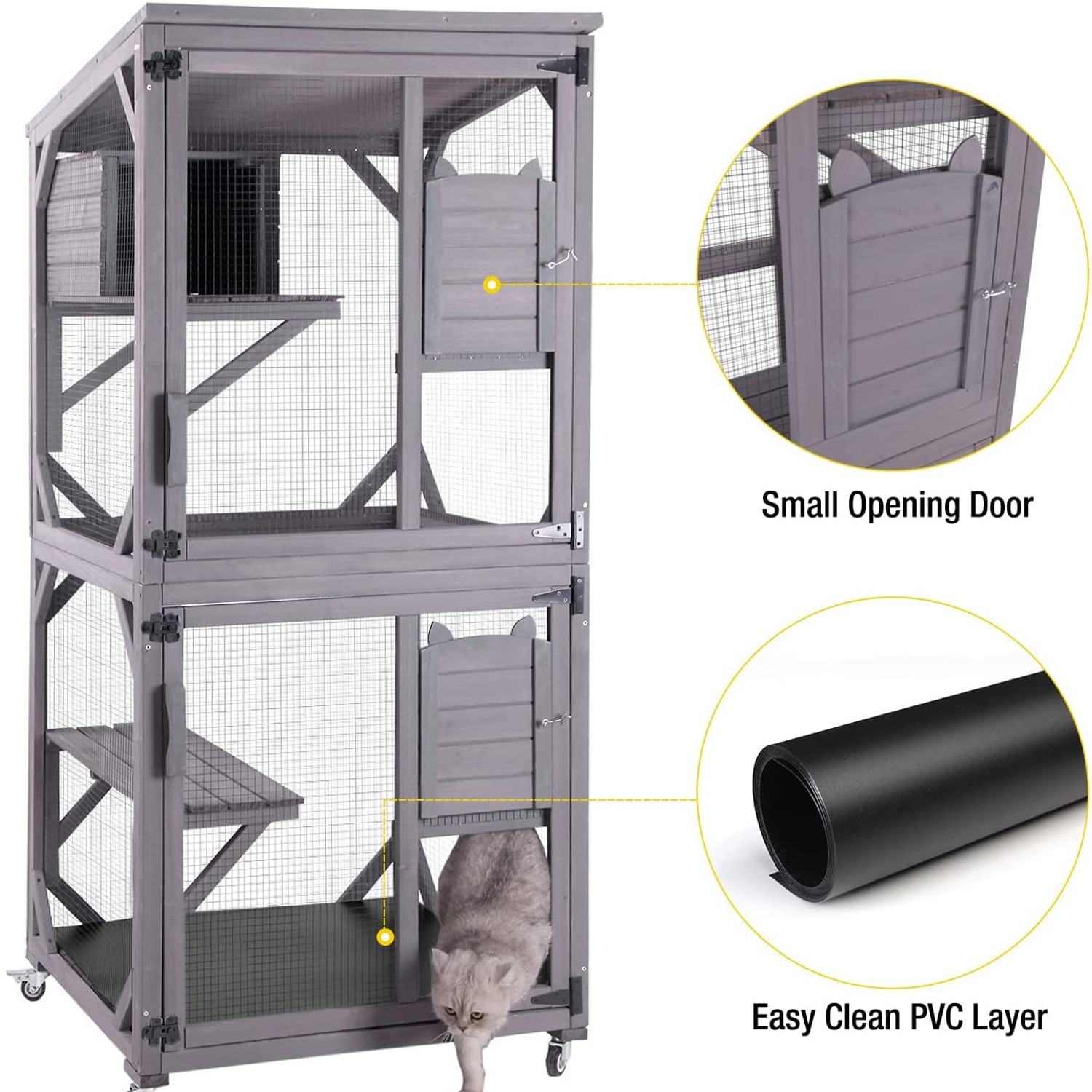
The PVC cleaning board is the feature that keeps this practical. Slide it out, hose or rinse it, put it back. That takes a couple of minutes, which means it actually gets done. Enclosures that require crouching inside with a cloth tend to get cleaned far less often than they should.
Wipe the timber surfaces with a damp cloth and a mild pet-safe cleaner, then dry them rather than letting water sit in joints. Use the two doors to reach the corners. If your cat uses a litter tray inside during longer sessions, lift it out between uses so the space stays fresh.
Every few weeks, run a quick check over the hardware. Tighten any screws that have loosened, test the door latches, and make sure the wheel brakes still hold. A structure that gets moved around and climbed on will work fixings loose over time, and five minutes of checking prevents bigger problems.
The short version
If you want your cat to have outdoor time without the risks of free roaming, a walk-in catio is the most practical answer available. This one gives you 180cm of height on a small footprint, two levels so cats can climb and perch, a nesting box for shelter, two doors for easy access, a slide-out PVC tray for fast cleaning, and brake wheels so you can put it wherever the day's weather suits.
It weighs 26.8 kg, measures 80cm by 80cm by 180cm, and is built from wood and PVC in grey. It comes with a 6 month warranty. Set it up on level ground with some shade, introduce your cat gently, and keep the tray clean. Do that and you have solved a problem most cat owners just learn to live with.