
The complete guide
How to Choose a Catio Kit That Your Cat Will Actually Use
The problem with letting cats outside
Cats want outside. Anyone who has stood at a door while a cat performs the full lean-and-stare routine knows this. The trouble is that outside is not a safe place for a domestic cat in most neighbourhoods. Roads, dogs, territorial fights, ticks, snail bait, other people's garages. The list is long, and the odds stack up over years rather than days.
The other half of the problem is what happens when you keep a cat permanently indoors. Bored cats get loud, get fat, or start redecorating the furniture. Indoor life is safer but it is also flatter. There is less to smell, less to watch, less reason to move.
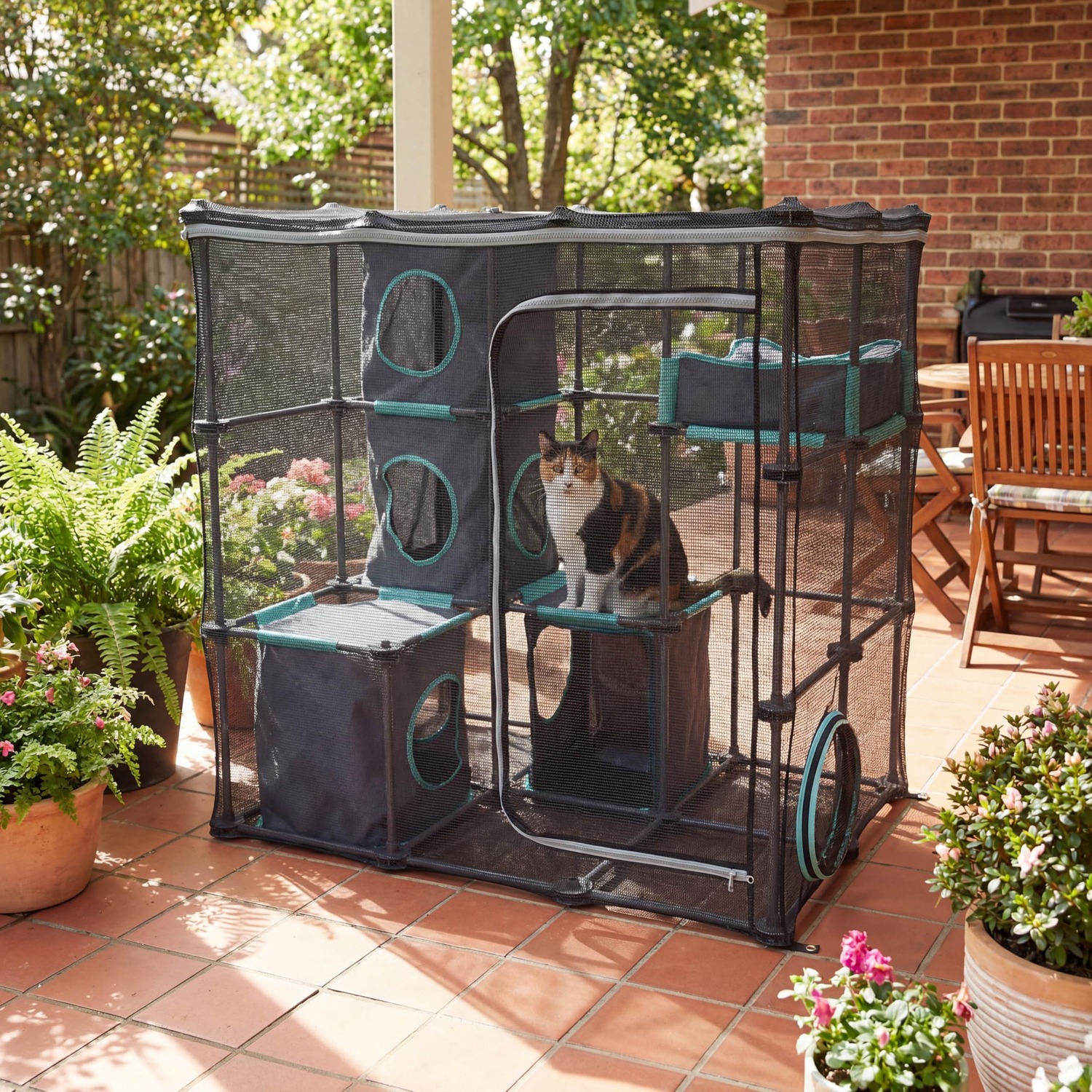
A catio kit is the compromise that actually works. You fence in a patch of outdoor air and hand it to the cat. They get sun, breeze, bird noise and grass under their paws. You get to know exactly where they are. Nobody has to compromise much.
How a mesh catio kit works
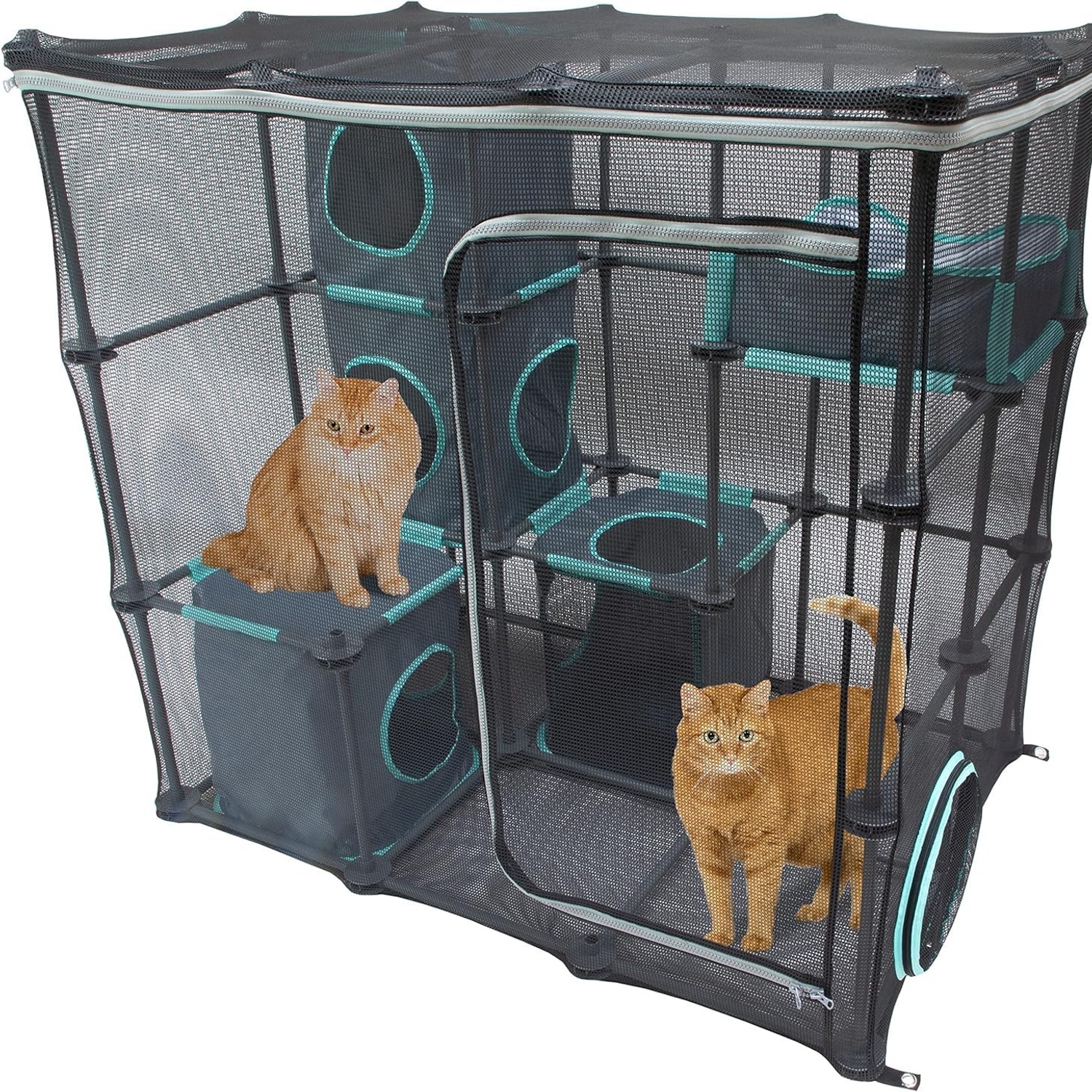
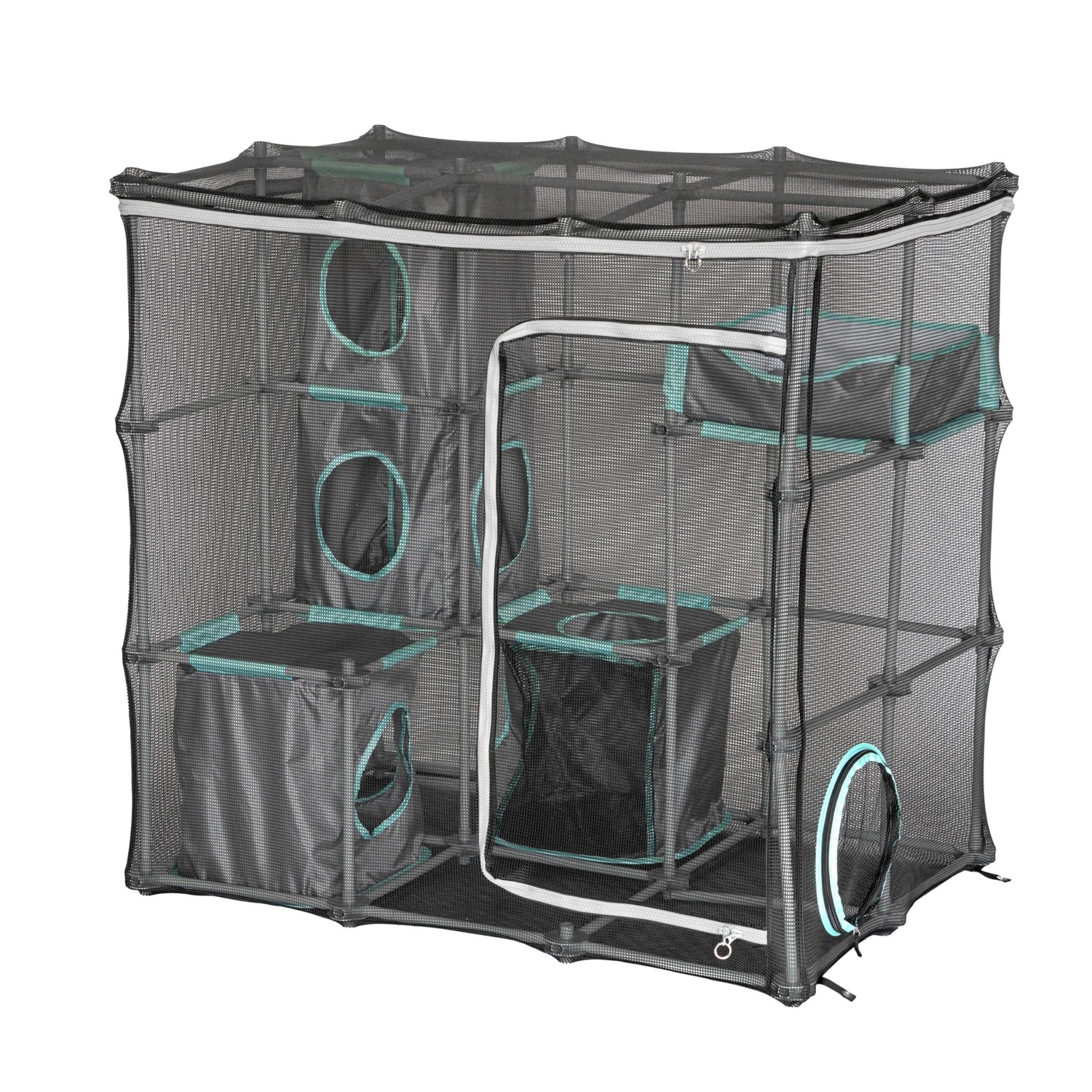
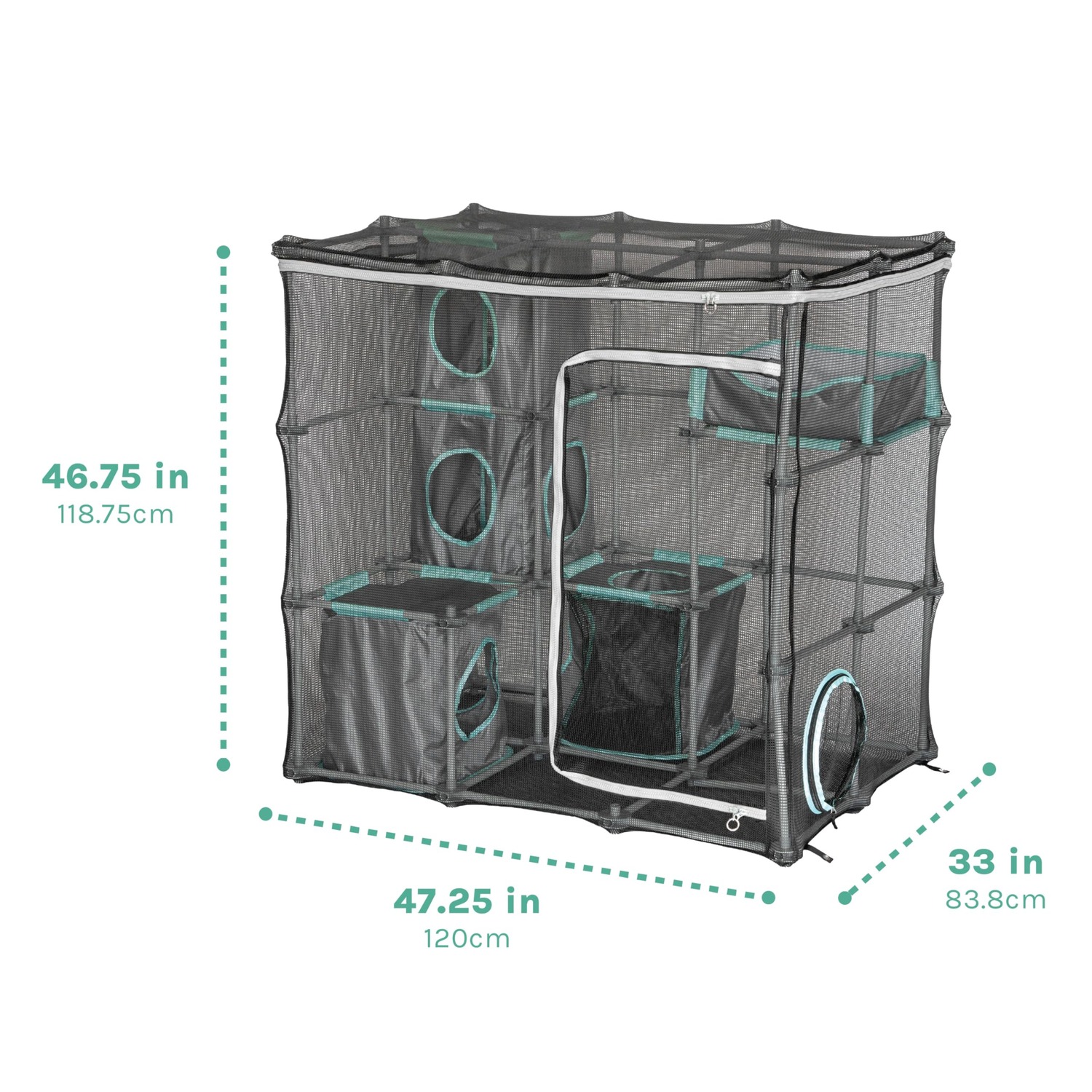
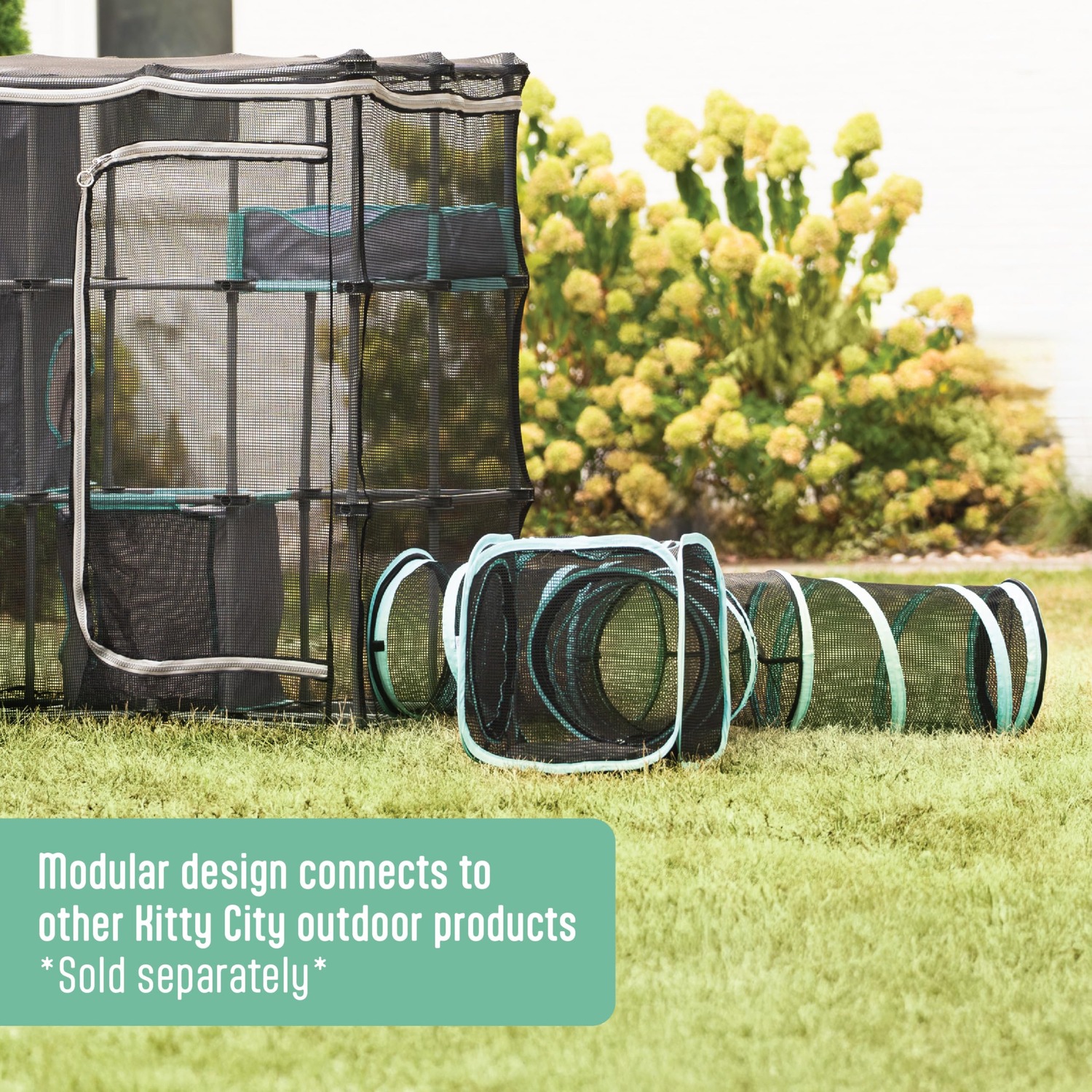
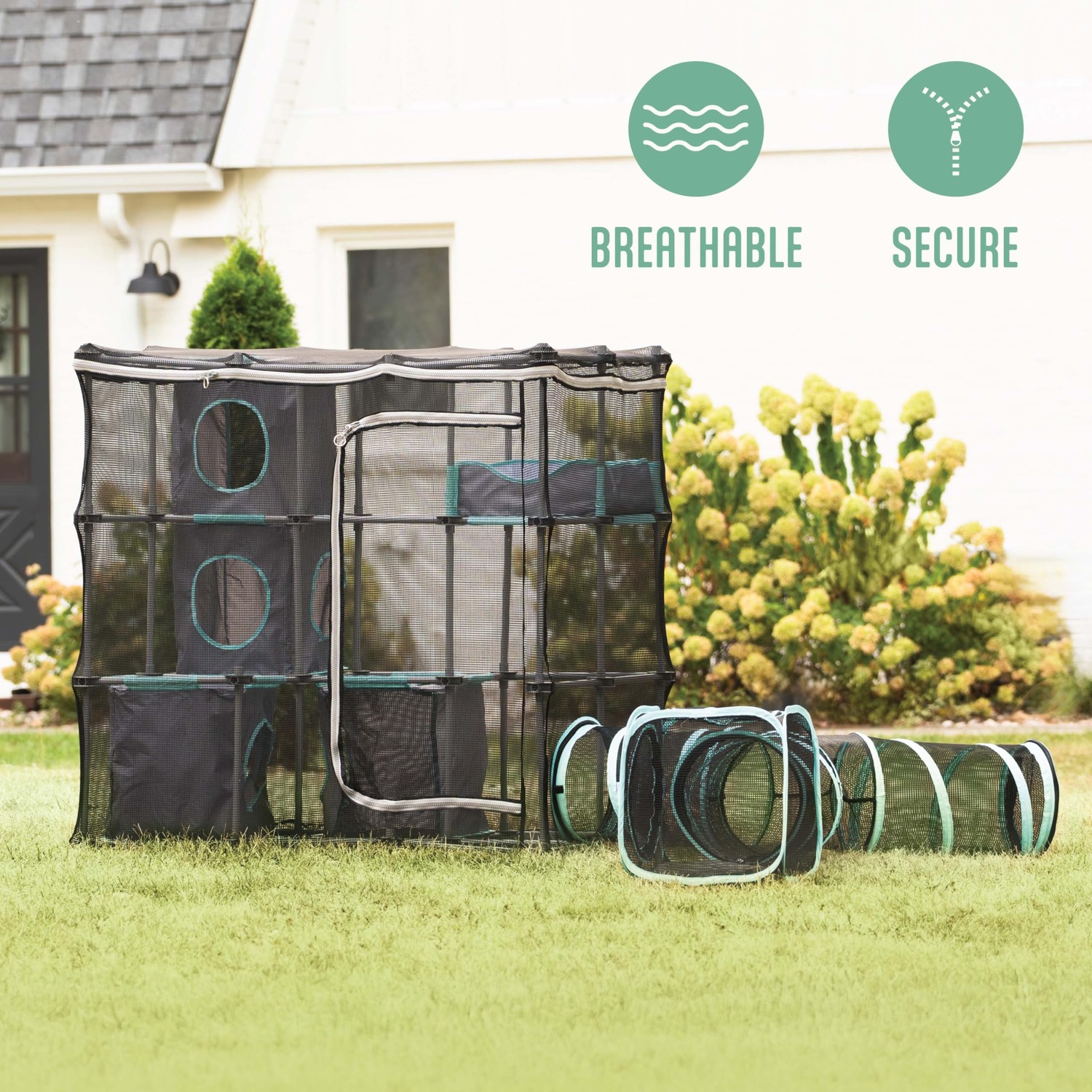
This one is a nylon mesh structure measuring 120 x 83.8 x 118.7 cm. Mesh on all sides, three levels inside, cubby cubes you can move around, a zip door in the side for you, and a tunnel port for linking to other sets.
The mesh is the key part. It is open enough that air and light move straight through, so your cat is genuinely outdoors rather than sitting in a plastic box. It is also see-through from your side, which means you can glance out a window and know your cat is fine. Solid-walled enclosures do not give you that, and cats do not love them either, because a cat with no view is a cat with nothing to do.
The three levels do more work than the floor space does. Cats read a room vertically. Give a cat a flat square of ground and they will use the edges. Give them something to climb and a shelf to sit on and suddenly the same square metre has four different spots worth being in. The cubby cubes add the other half of what cats want, which is somewhere to disappear. A cat who can hide feels safe enough to come out.
At 5.35 kg the whole thing is light. You can move it from the sunny side of the yard to the shady side at midday, or carry it indoors when rain sets in.
Who this suits
Indoor cats who stare at windows are the obvious group. So are cats who used to go out and have recently been grounded, perhaps after a move to a busier street or a vet bill that made the decision for you. That kind of cat takes to an outdoor cat pen quickly, because it gives back something they remember.
Multi-cat households are well served here too. There is room for a couple of cats to chase each other, and enough separate spots that one can nap while the other patrols. If you have been looking for a cat enclosure for a backyard with two or three residents, floor space alone is not the measure. Hiding spots are.
Renters and apartment dwellers benefit because nothing attaches to the building. No drilling, no fence posts, no conversation with a landlord. You set it up on the patio or balcony, use it, pack it down.
It also works indoors. During a storm, during a renovation, or while you slowly introduce a new cat to the household, a contained mesh space is extremely useful. Both cats can see and smell each other with a barrier in between, which is how most successful introductions go.
Choosing the right setup for your space
Start with a tape measure, not a shopping cart. Mark out 120 cm by about 84 cm wherever you plan to put it, then look at the height of 118.7 cm against anything overhead, like a low verandah beam or a clothesline.
Then think about sun. Mesh does not block much, so a spot that bakes from eleven until three is the wrong spot. Under a tree, beside a wall with afternoon shade, or under a shade sail is ideal. If your only option is open lawn, plan on using the enclosure in the morning and evening and bringing it in during the heat of the day.
Think about wind next. A light enclosure in an exposed yard will shift, so weight or anchor the base, or tuck it against a solid fence. This is simple to solve but easy to forget until a gust does it for you.
Finally, think about where you want to end up. The tunnel port is not a gimmick. It means this unit can become part of a larger modular catio later. Plenty of owners start with one kit and add a run or a second module once they see how much their cat uses it. If you think that is you, place the first unit where a tunnel could sensibly reach a door or window.
Getting your cat to use it
Do not put the cat in and zip it shut. That is the fastest way to teach a cat that the new thing is a trap.
Instead, set it up with the door open and put something familiar inside, a blanket off their usual bed works best because it smells right. Let them wander in and out for a day or two with no pressure. Toss a few treats in. Play with a wand toy through the mesh. Cats investigate things that seem to be happening without them.
Once they go in willingly, zip the door and sit nearby for ten minutes. Build up from there. Most cats are settled within a week, and the ones who take longer usually just need more hiding spots, which is what the cubby cubes are for. Move the cubes around every few weeks and the space stays interesting rather than becoming background furniture.
Looking after it
Care is hand wash only, and honestly there is not much to it. Shake out the fur and leaves after each use. Every so often, spot clean the mesh with mild soap and warm water, rinse lightly, and let it dry fully in the air before you fold it. Skip the bleach and skip the washing machine, because both will wreck the mesh.
Check the zips now and then. Zips are the part that fails first on any mesh enclosure, and a zip that has started to catch will eventually let a cat out. Keep claws trimmed, which reduces snagging on any mesh product and makes the whole thing last longer.
Store it dry and out of direct sunlight. UV is hard on nylon over years, so a cupboard beats a shed window. A kit that gets packed away properly over winter comes out in spring looking much as it went in.
The short version
This is a big, light, breathable mesh enclosure that gives a cat real outdoor time inside a boundary you control. Three levels, movable hideaways, a zip door for you, and a tunnel port so it can grow into a bigger cat enclosure system later.
It is not a weatherproof shelter and it is not a replacement for a secure room. It is a daytime space for fine weather, used while you are home or nearby. Used that way, it is one of the simplest ways to make an indoor cat's life considerably better without taking on the risks of a free roam.
If you are weighing up a catio set for the first time, measure your spot, find your shade, and plan for the possibility that you will want to add to it. Cats have a way of making that decision for you.