
The complete guide
Cat Safety Nets Explained, A Practical Guide to Netting a Balcony
The problem with balconies
Cats and balconies are a bad combination dressed up as a nice one. The cat loves it. Sun, wind, birds, the sound of the street, a ledge to sit on and watch the world. The owner loves the idea of it and quietly dreads the reality, because a cat judges a jump by what it can see, not by how far down the ground is.
Vets have a name for the injuries that follow, high-rise syndrome, and the part most people find surprising is that it happens on low floors too. A cat does not need twelve storeys to come off badly. Two is plenty. And it usually happens on an ordinary day, during a short moment of distraction, when a bird lands on the railing.
The result is that a lot of balcony doors stay shut. The cat sits behind glass watching the thing it most wants. That is the problem a cat safety net solves, and it solves it in an afternoon.
What a cat safety net actually does
A net is a physical barrier stretched across the opening between your floor and your ceiling, or between your railing and whatever is above it. It does not rely on the cat choosing to behave. That is the whole point. Training works for a lot of cat problems but it does not work against instinct plus a moving target.
The three things that make a net worth buying are the mesh size, the material and the way it is held in place.
Mesh size on this net is 3 x 3 cm. That is the common standard for cat netting for good reasons. Anything much bigger and a determined cat can get a head and then a shoulder through. Anything much smaller and you start to lose the view and the airflow, which defeats the purpose of having a balcony in the first place.
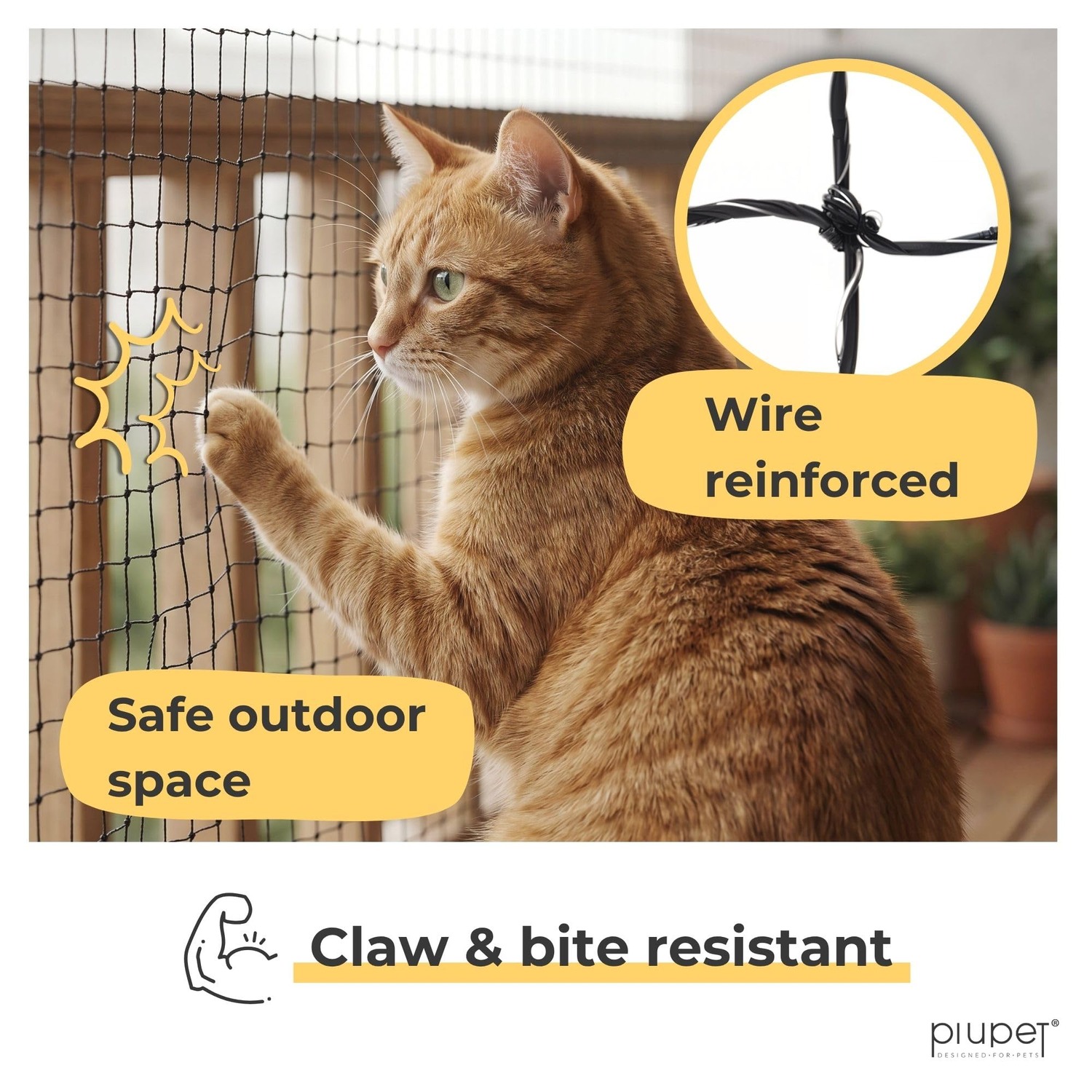
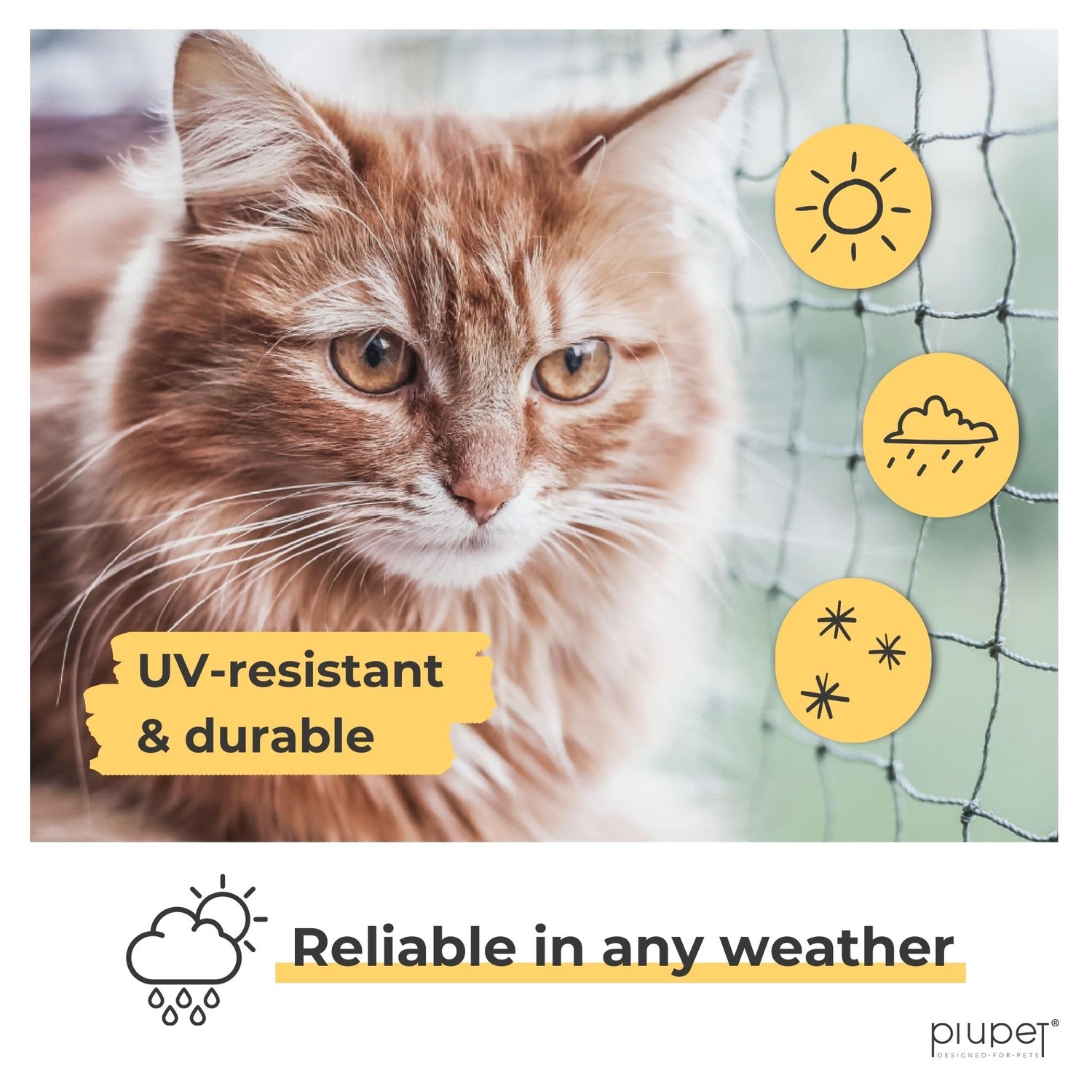
The material is polyethylene with wire woven through it. PE is the sensible outdoor plastic. It does not go brittle after one summer of direct sun the way cheap mesh can. The wire reinforcement is the upgrade that separates a cat net from garden netting. Plain plastic strands stretch when a cat climbs them, and once one strand is chewed or snapped the hole grows. With wire through the weave, the mesh keeps its geometry and a single bad spot stays a single bad spot.
Colour matters less than people expect, but black is the right default. Against bright outdoor light your eye slides past dark mesh and focuses on the view behind it. Pale netting catches the light and reads as a screen.
Who this suits
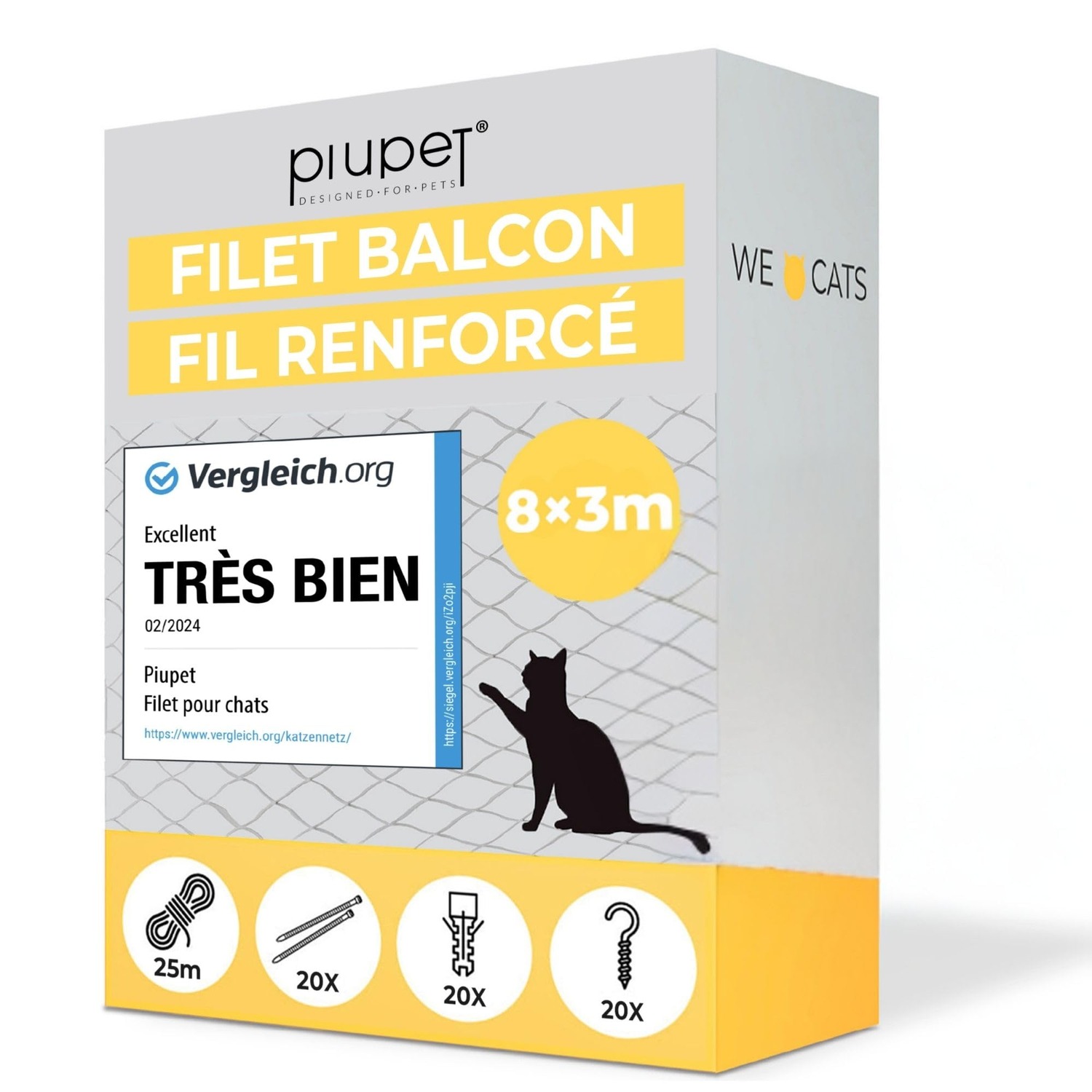
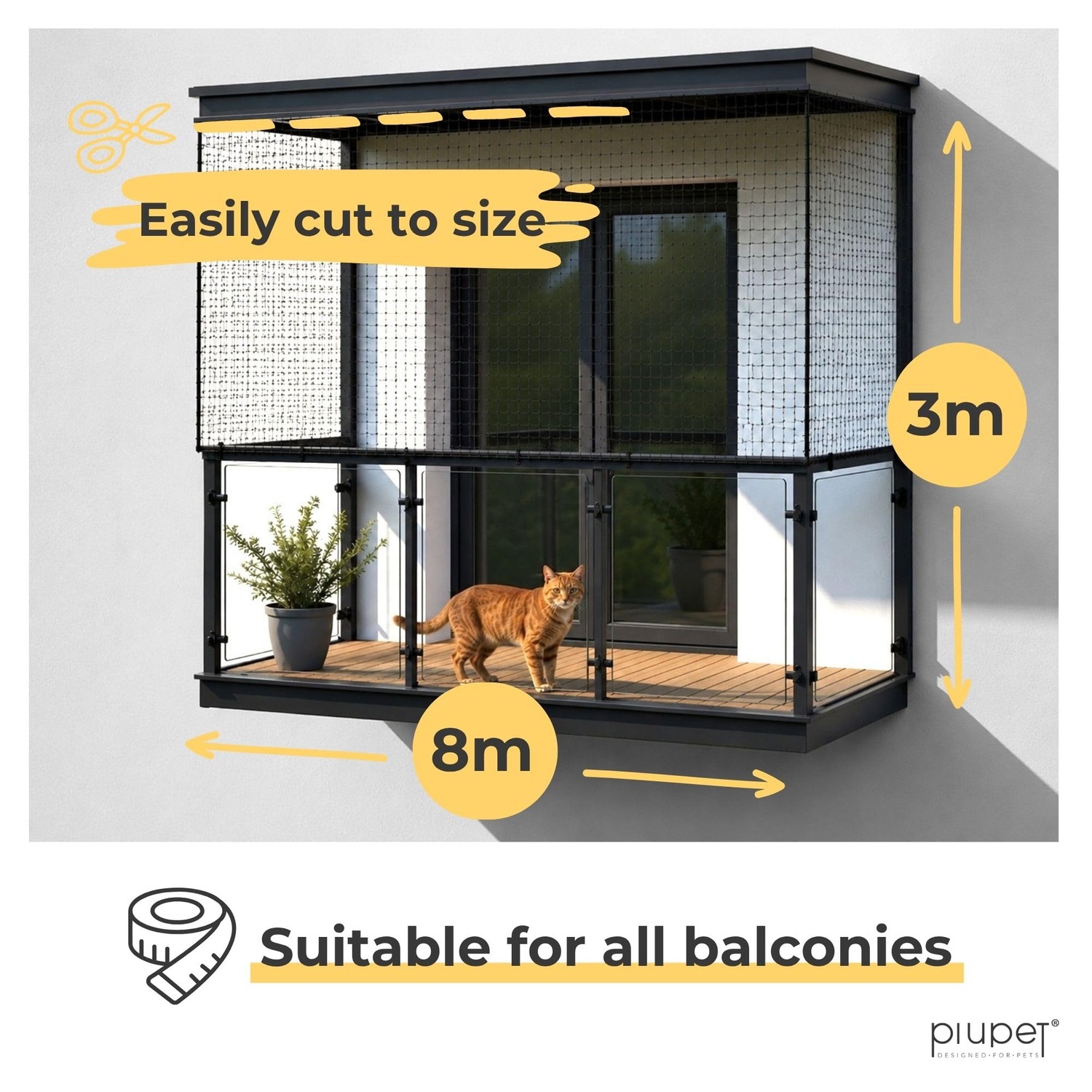
Apartment owners with a standard balcony are the obvious group. An 8 metre by 3 metre panel covers the front and usually one side return of a typical balcony with a bit to spare.
Renters are the second group, and often the keenest, because a net is one of the few serious cat-proofing jobs you can do without altering the property. If you can run rope between existing railings, posts or a pair of tension poles, you can lace the net to that and take the whole lot down on moving day.
Then there are the people building something. A net this size is a popular base for a do-it-yourself catio. Build a frame from timber or PVC in the garden, stretch the netting over it, and you have an enclosure for a fraction of the price of a prefabricated run. The same material does smaller jobs too, a window cat net over a frame, a panel across the open side of a carport, a patch over the one gap in a fence that the cat has already found.
Houses with indoor-only cats and a habit of opening windows in summer benefit as well. The cat is not trying to escape, exactly. It is trying to get closer to a moth.
How to choose and how to measure
Before you buy anything, go and measure. Most of the bad outcomes in net installations come from guessing.
Measure the height from the floor or railing base up to the ceiling, soffit or top anchor point. Then measure the width of every opening you want to cover. Include side returns, even narrow ones, because a cat will find the narrow one. Add roughly 10 to 15 cm on each edge for tensioning and attachment, because a net cut exactly to size is a net you cannot pull tight.
Write the numbers down and compare them to 8 m x 3 m. If the area needed is close to the limit, order with a margin or plan for a second panel. Netting is much easier to trim than to extend.
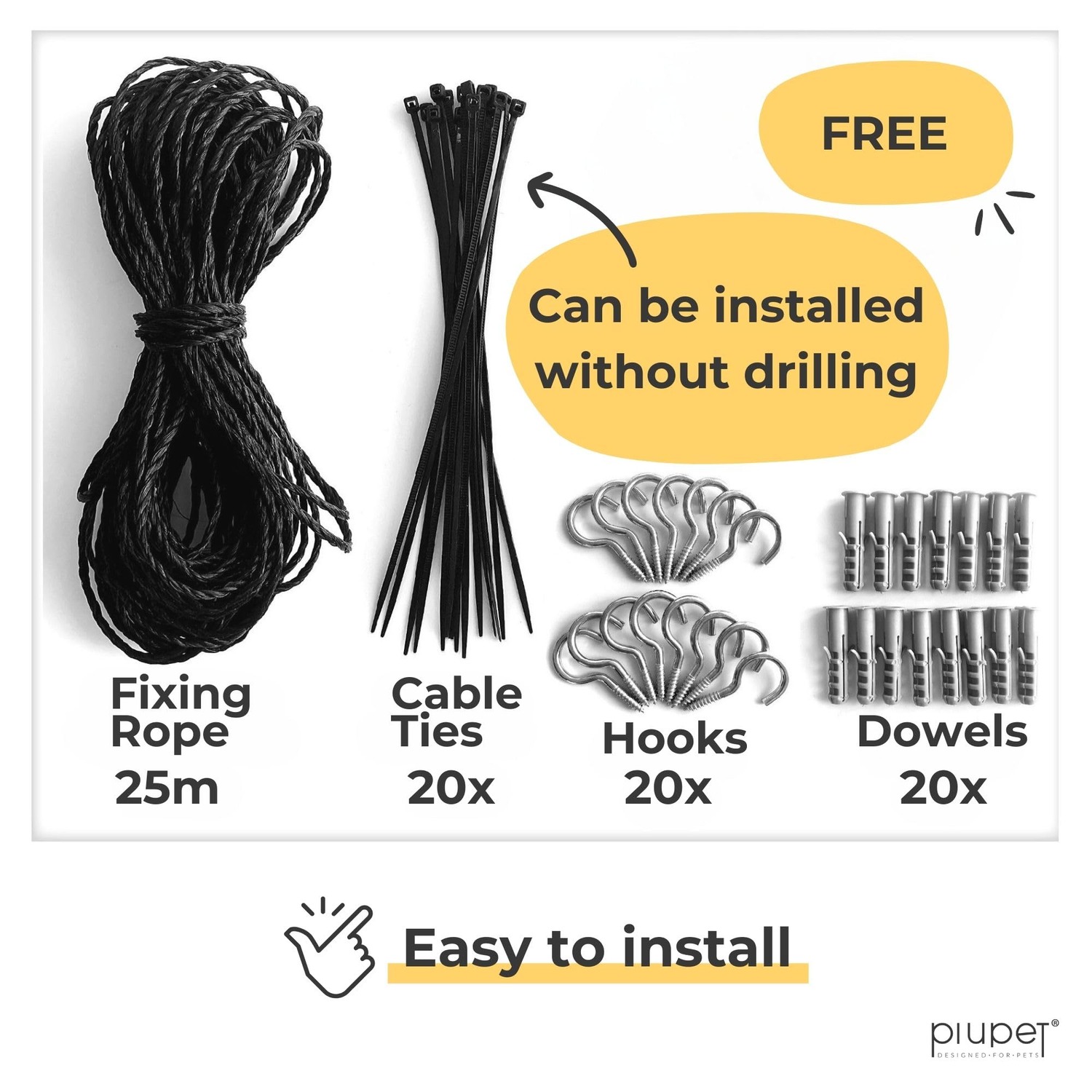
Think about your anchor points next. Masonry takes the supplied plugs and hooks. Glass balustrades do not, so you will be working with the railing itself, tension cord, or a timber frame clamped into place. Metal railings are usually straightforward with cable ties.
Fitting it without stress
The usual method goes like this. Run the fixing rope around the full perimeter of the opening first and get it tight. This perimeter line is what takes the load, not the net itself. Then unroll the netting and lace or tie it to the rope at regular intervals, working from one corner outward.
Tension evenly. A sagging panel is both ugly and unsafe, because the slack pockets at the bottom are exactly where a cat will test. Corners deserve the most attention, since that is where gaps hide.
Cut edges should be folded, bound or tucked behind a batten so there are no loose strands to pull. Use proper wire cutters rather than scissors, because there is wire in the weave and scissors will just get damaged.
Two people make this much easier than one. One holds and positions, one ties. On your own, use a few temporary clamps or pegs to hold the panel in place while you work along it.
Once it is up, do a walk around with the cat inside. Push on the net at the bottom corners, check the gap under the railing, and look at it from the cat's eye level rather than yours. Cats find the low gaps first.
Looking after it
A good net is close to a fit-and-forget item, but not entirely.
Brush dust and leaf litter off a couple of times a year with a soft brush. Wipe marks with a damp cloth and mild soapy water, then let it dry properly before re-tensioning. Skip solvents and pressure washers, since both can damage the plastic.
Every few months, run your hand along the edges and check the hardware. Rope can stretch, cable ties can perish in strong sun, and hooks can work loose in soft masonry. Replacing one tie is a two minute job. Ignoring it for a year is not.
If you ever take the net down, roll it loosely instead of folding it hard, and store it dry. Hard creases in wire-reinforced mesh tend to stay creased.
The short version
A cat safety net buys you an open balcony door. That is what you are actually paying for.
Look for 3 x 3 cm mesh, PE material and wire reinforcement, which is what this net gives you. Measure your openings properly before ordering, including the narrow side returns. Anchor to a tensioned perimeter rope rather than relying on the net edge, and tension evenly with particular care at the corners.
At 8 m x 3 m there is enough material here for most balconies, with offcuts for a window or a small frame. The fixing kit is in the box, so there is no second shopping trip. Give it an afternoon, check it twice, and then go and open the door.