
The complete guide
How To Choose And Set Up A Modular Catio
The problem with letting cats outside
Indoor cats live longer. That is not a slogan, it is just what the numbers say once you take cars, dogs, fights and poison out of the picture. The trouble is that a cat who never goes outside still wants to. They sit at the window making that low chattering noise at birds. They dart for the door when you bring the shopping in. They chew houseplants because there is nothing better to chew.
So you end up stuck between two things you care about. You want your cat safe, and you want your cat satisfied. A modular catio is the most practical answer most households can reach. It is an enclosed outdoor space where your cat gets real air, real sun and real stimulation, while the boundary stays where you put it.
What a modular catio actually is
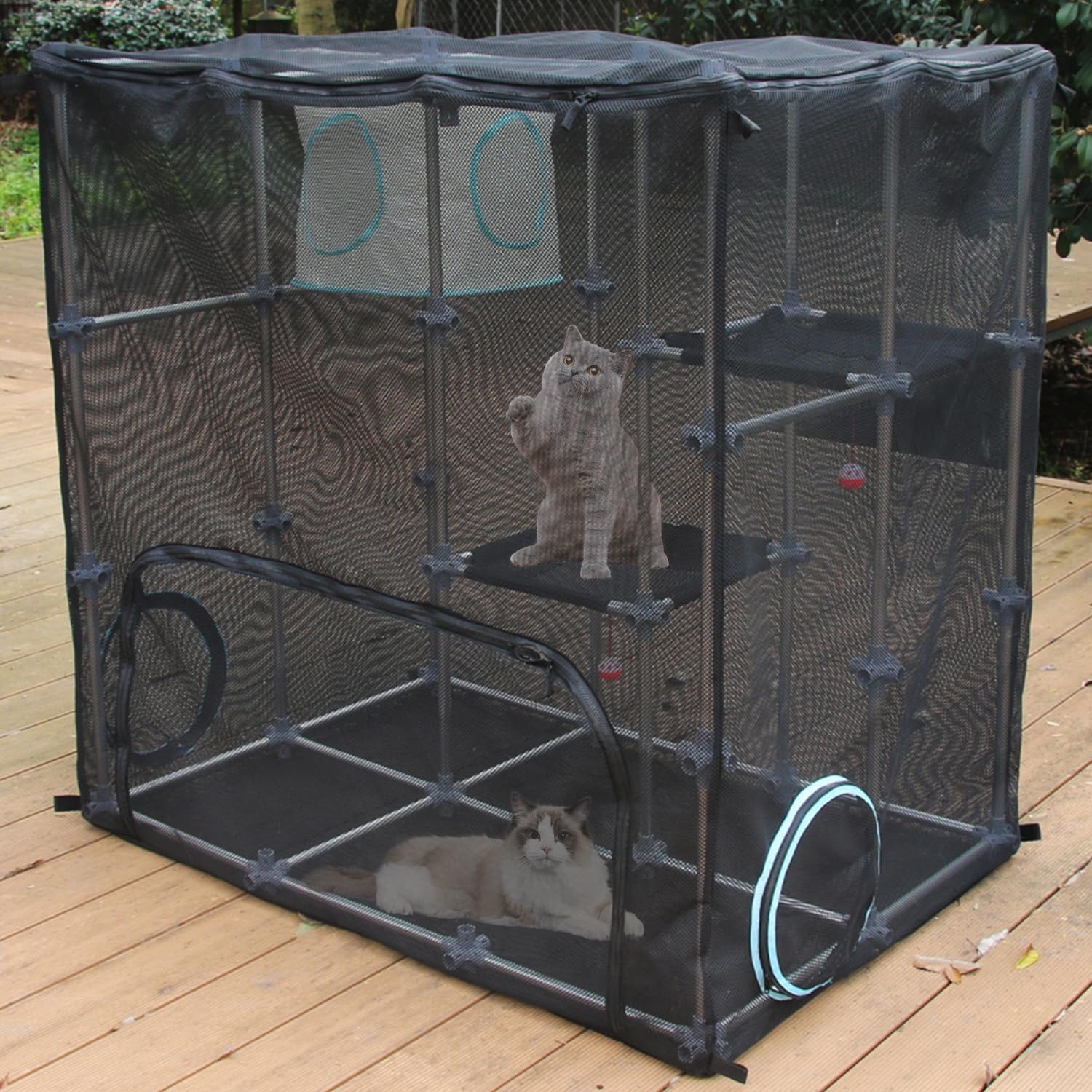
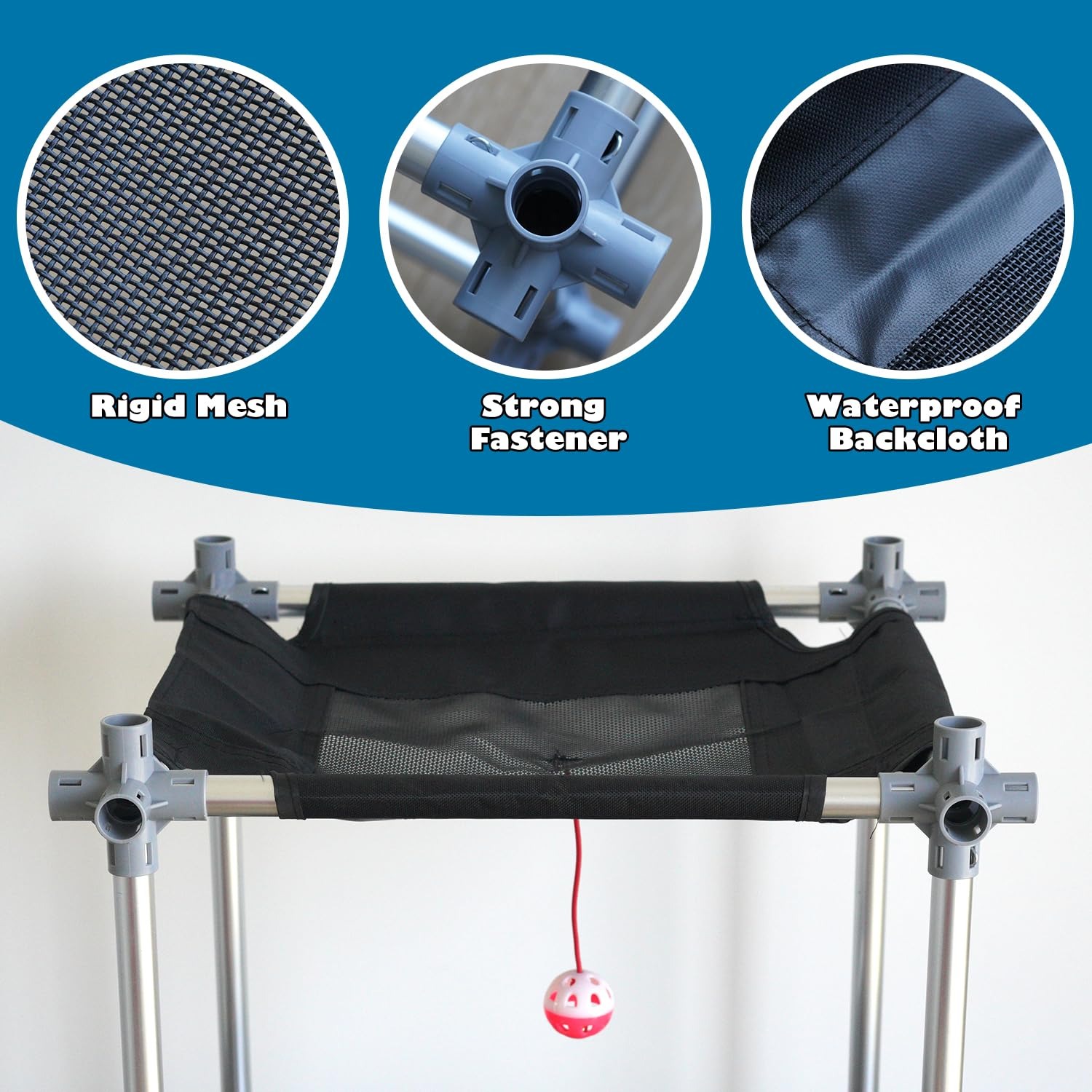
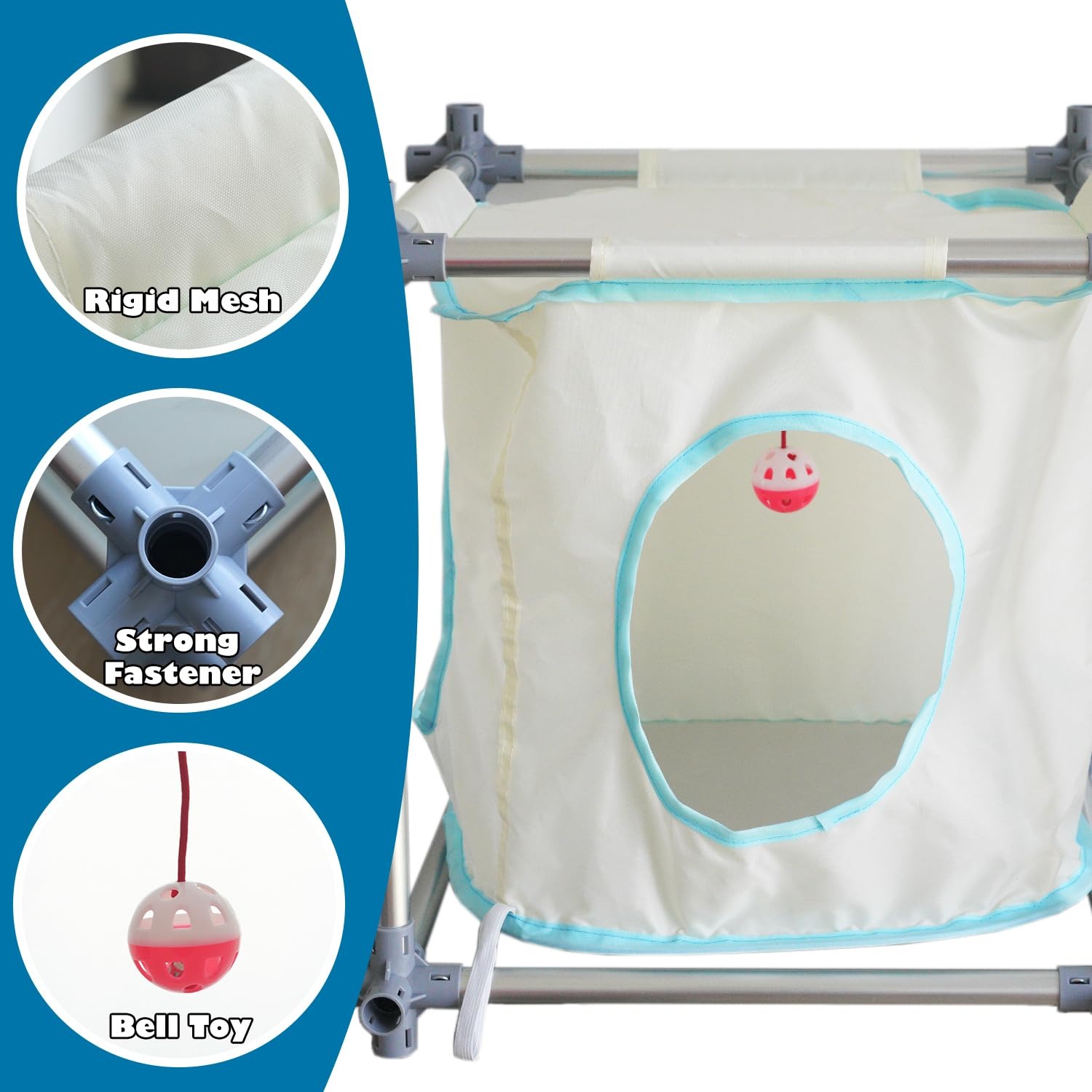
Think of it as an outdoor room made from poles and mesh rather than timber and wire. This kit uses aluminium poles for the frame and nylon mesh for the walls and roof. It stands 78.7 cm high with a square floor of 119.4 x 119.4 cm, which is a touch over 1.4 square metres.
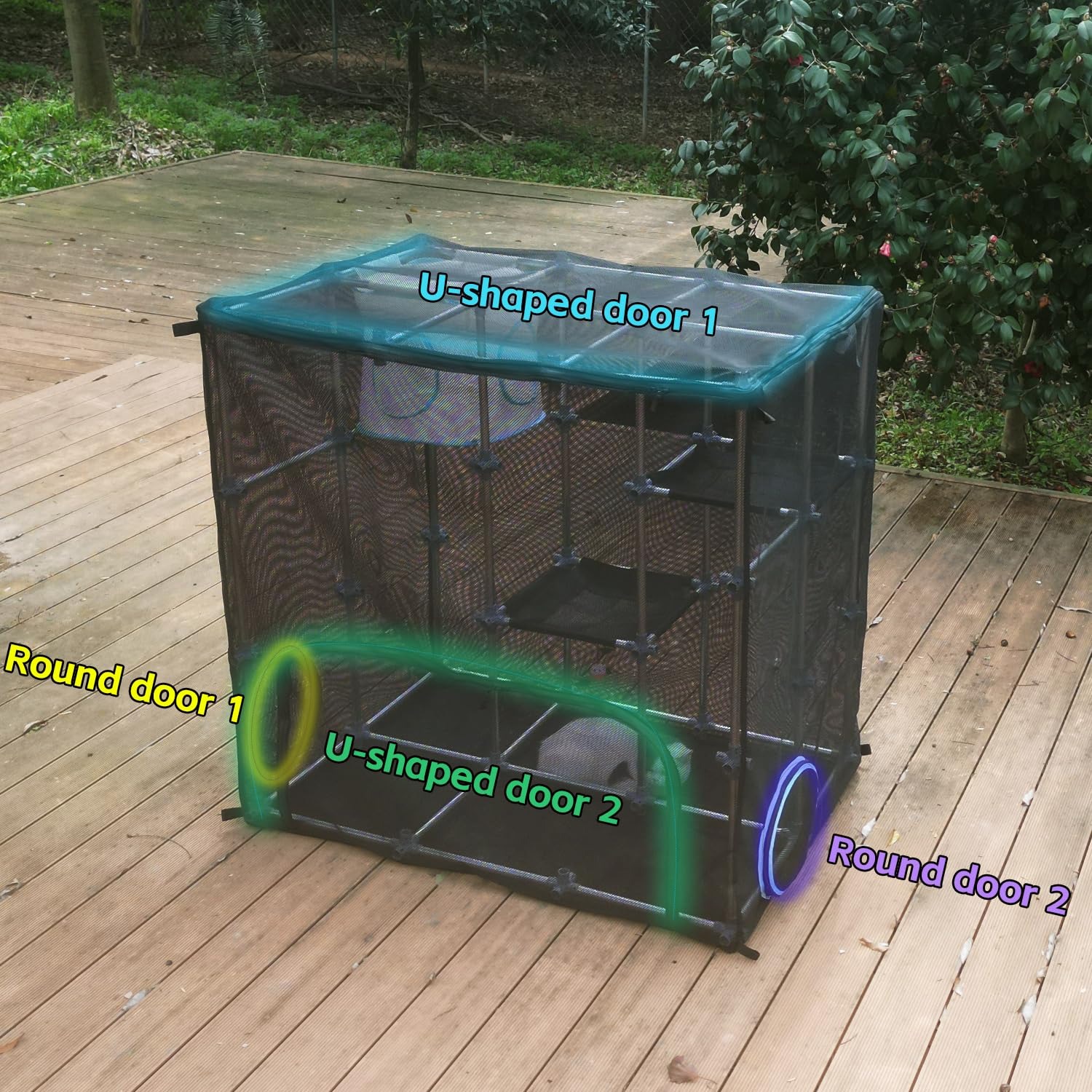
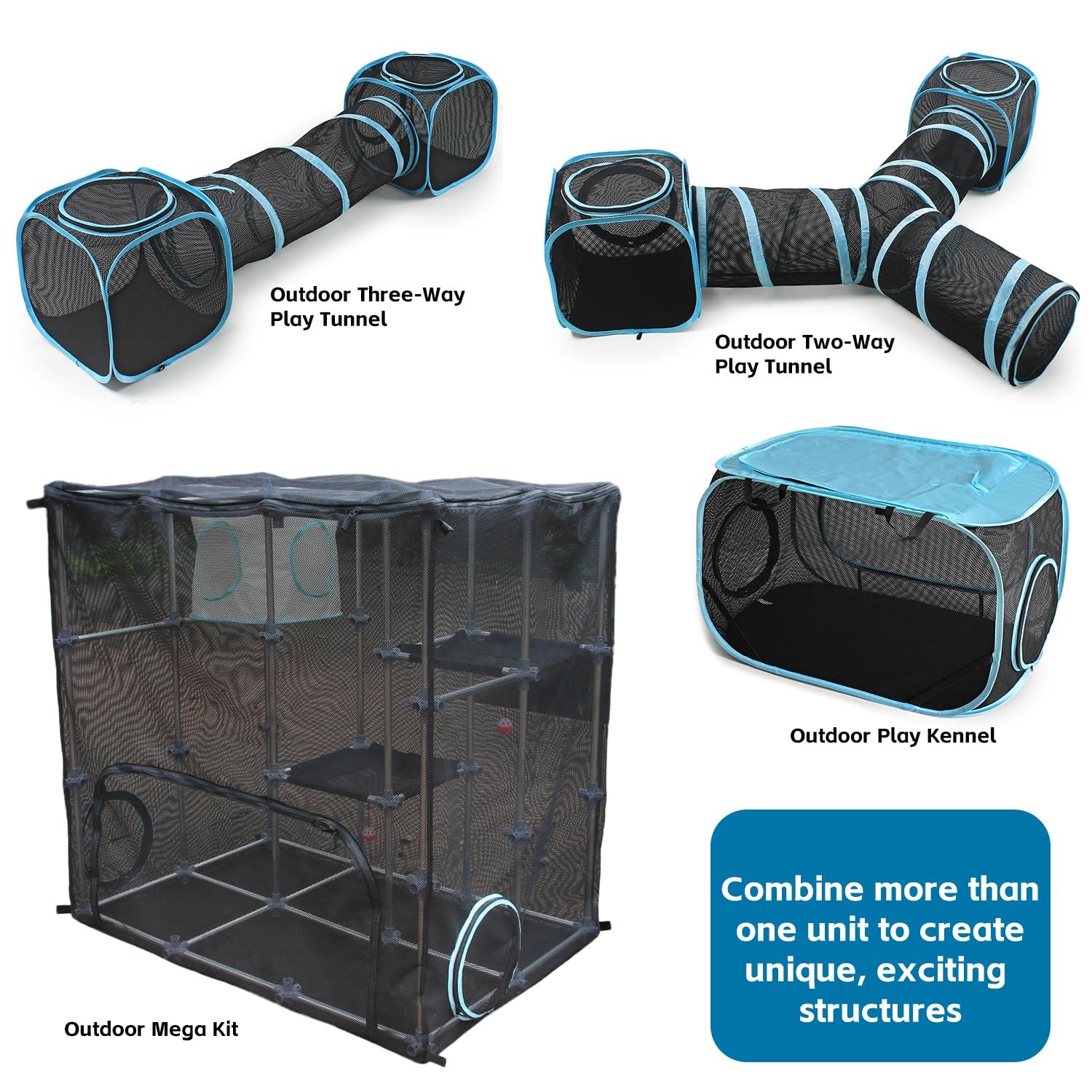
The word that matters is modular. Two of its sides carry double zip doors, and those doors are built to connect to compatible INTURN pieces. That means the square you set up on day one does not have to be the final version. Add a tunnel and it becomes a cat enclosure with tunnels running to your back step. Add another section and the footprint doubles. Buy a second kit and you can wrap the whole thing around a garden bed.
Compare that with a fixed catio bolted to a wall. The fixed version is sturdier, but you choose its size once, you need tools and often permission, and you cannot take it with you when you move. A portable catio trades a little rigidity for a lot of flexibility.
How the mesh and frame work together
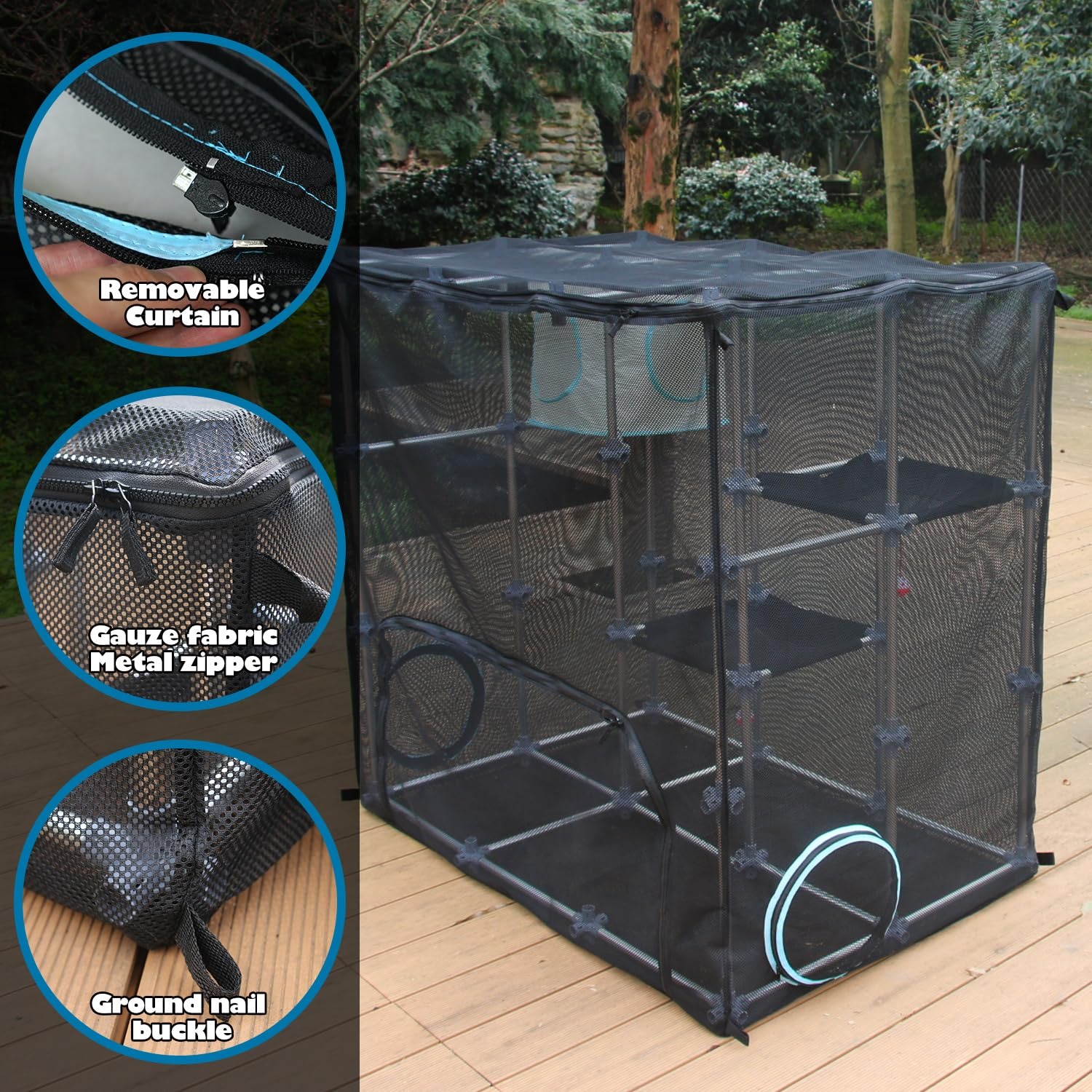
The mesh is doing more work than it looks like. Nylon mesh lets air move through the enclosure from all sides, so heat does not build up the way it does inside a solid-walled hutch. It also keeps your cat visible. You can look out the kitchen window and see whether they are asleep in the corner or stalking a moth.
Aluminium keeps the whole structure light. You can pick up a built catio and shift it across the lawn to follow the shade, which is genuinely useful in summer. Aluminium also does not rust like steel, so leaving it out in a shower is not a disaster. The locking joints hold the poles in position once assembled, and because nothing is bolted down, setup needs no tools.
Assembly is required. The first build takes the longest while you work out which pole threads through which sleeve. After that, most people can stand it up or pack it away fairly quickly.
Who this suits
It suits indoor cats who are curious but not frantic. A cat who likes a sunny patch and a view will take to a mesh catio quickly. A cat who flings themselves at every barrier will need patience and supervision, and might do better with a fixed structure.
It suits renters especially well. Nothing is screwed into a wall, so there is no damage and no landlord conversation. The same goes for anyone who expects to move within a few years.
It suits multi-cat homes within reason. Two cats who already share space indoors will be fine. More than that, and you are better served by connecting sections into a larger cat enclosure system rather than packing everyone into one square.
It suits apartments with a decent balcony. Check your measurements carefully though, because many balconies are narrower than 120 cm. If yours is, a long narrow run built from linked sections is usually the better shape for a catio for apartments.
It is less suited to anyone who wants to leave their cat outdoors all day while they are at work. Treat this as supervised or semi-supervised outdoor time, not a substitute for a secure fixed building.
Choosing the right size and shape
Start with a tape measure, not a wish list. Mark out 119.4 x 119.4 cm on the spot you have in mind and leave it there for a day. You will quickly notice if it blocks a doorway, sits in full afternoon sun, or leaves no room to walk past.
Then think about where your cat enters from. The single best upgrade to any outdoor cat pen kit is a tunnel from the enclosure to a window or cat flap, because it lets your cat decide when to go out. That changes it from a place you put your cat into a place your cat chooses. If that is your eventual plan, position the catio within tunnel reach of the right window from the start.
Think about height too. A low enclosure keeps a cat on one level, which is fine but a bit dull. Adding a platform, a hammock or a low scratching post inside gives them something to climb onto. Cats value vertical options more than extra floor, so a small perch often beats a bigger square.
Finally, think about weather. Mesh is not a roof. If your spot gets hard sun or regular rain, plan a shade sail, a verandah or a tree above it. Shade cloth draped over part of the top is cheap and makes summer afternoons usable.
Getting your cat to use it
Do not carry a nervous cat inside and zip the door. That teaches them the catio is a trap. Set it up, open a zip door, put a blanket that smells like home in one corner, and walk away.
Most cats inspect the perimeter first, then step in on their own within a session or two. Scatter a few treats, sit nearby with a book, and keep the first visits short. Once they associate the space with calm and sunshine, they will head for it on their own.
Always have water inside, and always have a shaded corner. On hot days, bring them in rather than trusting the mesh to keep temperatures down.
Care and storage
Care is simple because there is not much to go wrong. Brush fur and leaves off the mesh so the zip teeth stay clear, since grit in a zip is the usual cause of a failing door. Wipe the mesh with a damp cloth and mild soap when it needs it, and skip bleach and strong solvents on nylon.
Let everything dry completely before packing it down. Mesh folded away damp will go musty. Store the poles somewhere dry and check the locking joints for grit before the next build.
Trimming your cat's claws regularly does more for the life of the mesh than anything else. Hooked claws are what create snags, and snags are what grow into holes.
The short version
This is a light, square, mesh-walled catio measuring 119.4 x 119.4 x 78.7 cm, built on aluminium poles with zip doors on two sides. It needs assembly but no tools, and it packs down to move or store. The point of it is the zip doors, which let you connect tunnels and extra sections and turn one square into a bigger expandable cat enclosure over time.
Buy it if you have an indoor cat who deserves outdoor time, a flat patch of at least 120 x 120 cm, and a preference for something you can move rather than something you bolt to a wall. Measure first, add shade, and introduce it slowly. Done that way, it is one of the easier wins in cat ownership.