
The complete guide
How to Choose a Cat Cube Tunnel Set That Your Cat Will Actually Use
The real problem a tunnel solves
A cat that acts up at 10pm is usually not being difficult. It is a cat that has spent the day sleeping in a sunny spot with nothing to stalk. Indoor cats in particular run out of things to do, and the energy has to go somewhere. It tends to come out as sprinting down the hallway, chewing cables, or waking you at 4am.
Toys help, but a lot of them only work while you are holding the other end. The moment you put the wand down, the game stops. What changes that is a structure the cat can use on its own, something with an inside and an outside and more than one way through.
That is what a cat cube tunnel set does. It is not clever. It is just a shape cats are built to care about. Enclosed spaces with multiple exits trigger the same instincts that make cats sit in cardboard boxes and shopping bags. They can hide, watch, and then ambush, and they can do all of it without you being involved.
How this set is put together
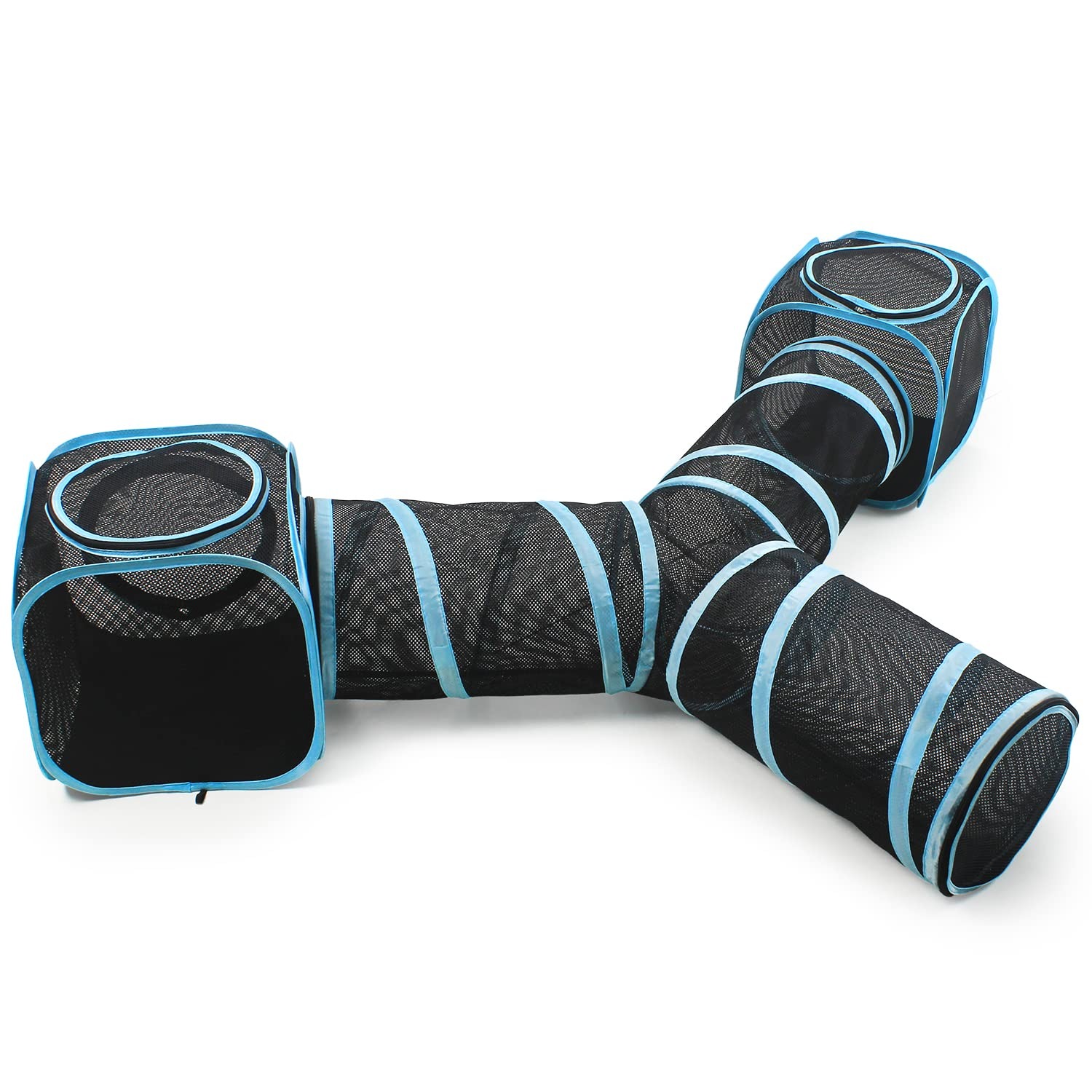
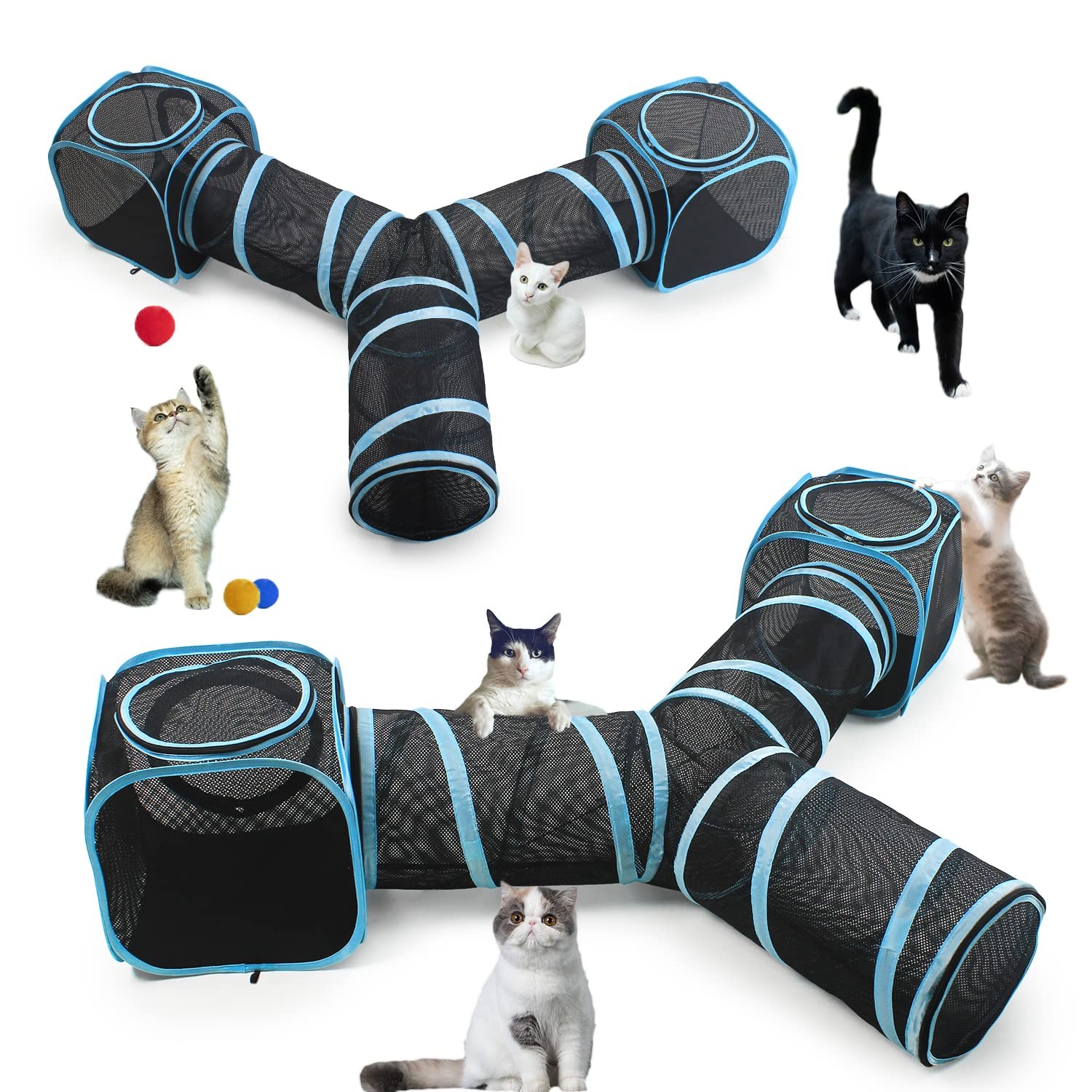
This one is two cubes joined by a three-way tunnel. The third exit matters more than it sounds. A straight two-ended tunnel is a corridor, and a cat figures out a corridor in about a minute. Add a third opening and it becomes a junction, which means a cat can make a choice, double back, or wait for another cat to pick the wrong exit. That is the difference between something used twice and something used for months.
The panels are mesh. Air flows through, so the inside does not heat up the way a solid-walled fabric tent can, and you can see in. If you have more than one cat, being able to glance over and see who is where saves a lot of unnecessary intervention.
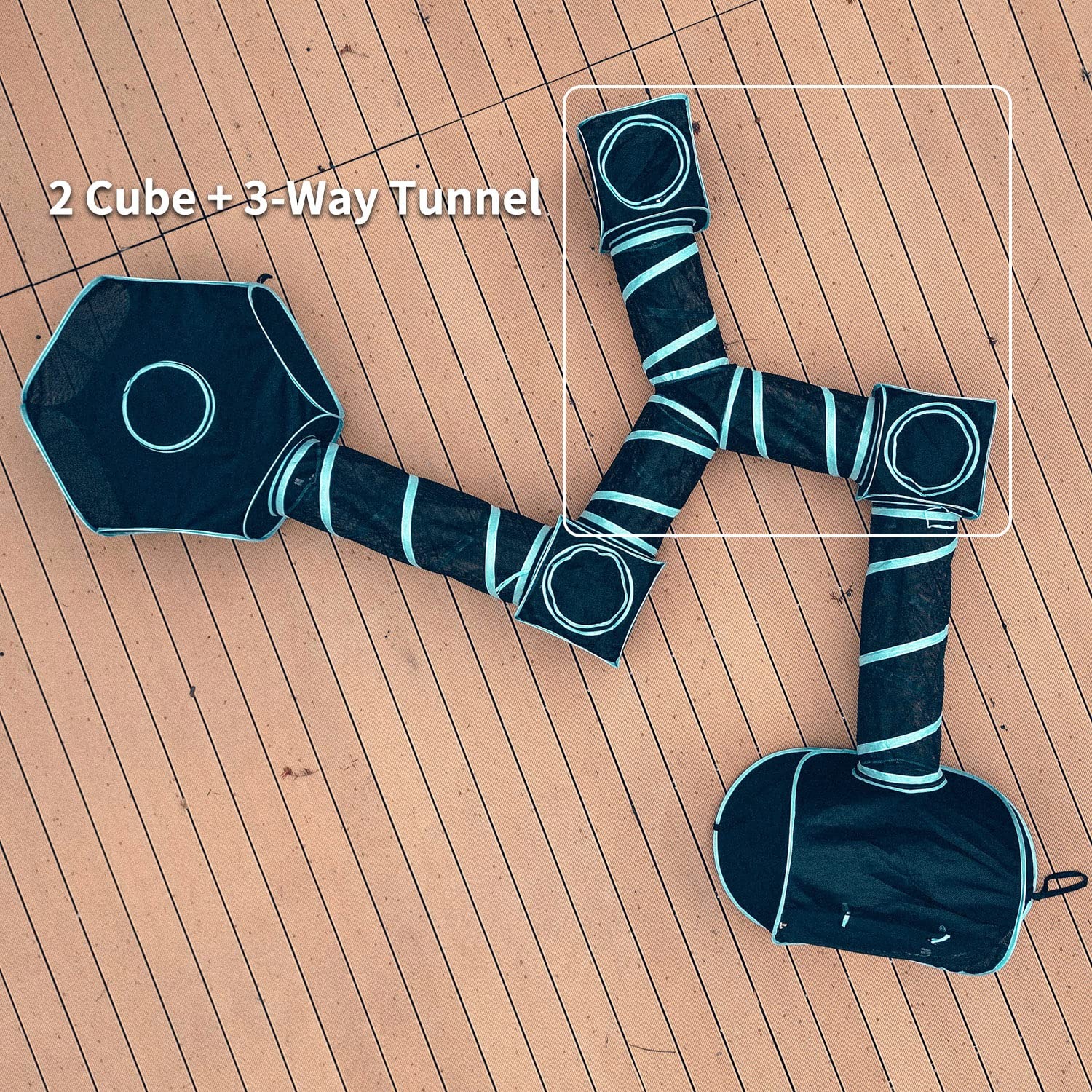
Zips run along the top and the sides. Unzip a top panel to reach in. Close a side to turn a cube into a quiet end. Detach a section and set the whole thing up in a different shape next weekend. Because it is modular, it is also expandable, and INTURN make other pieces designed to connect to the same system if you want a bigger run later.
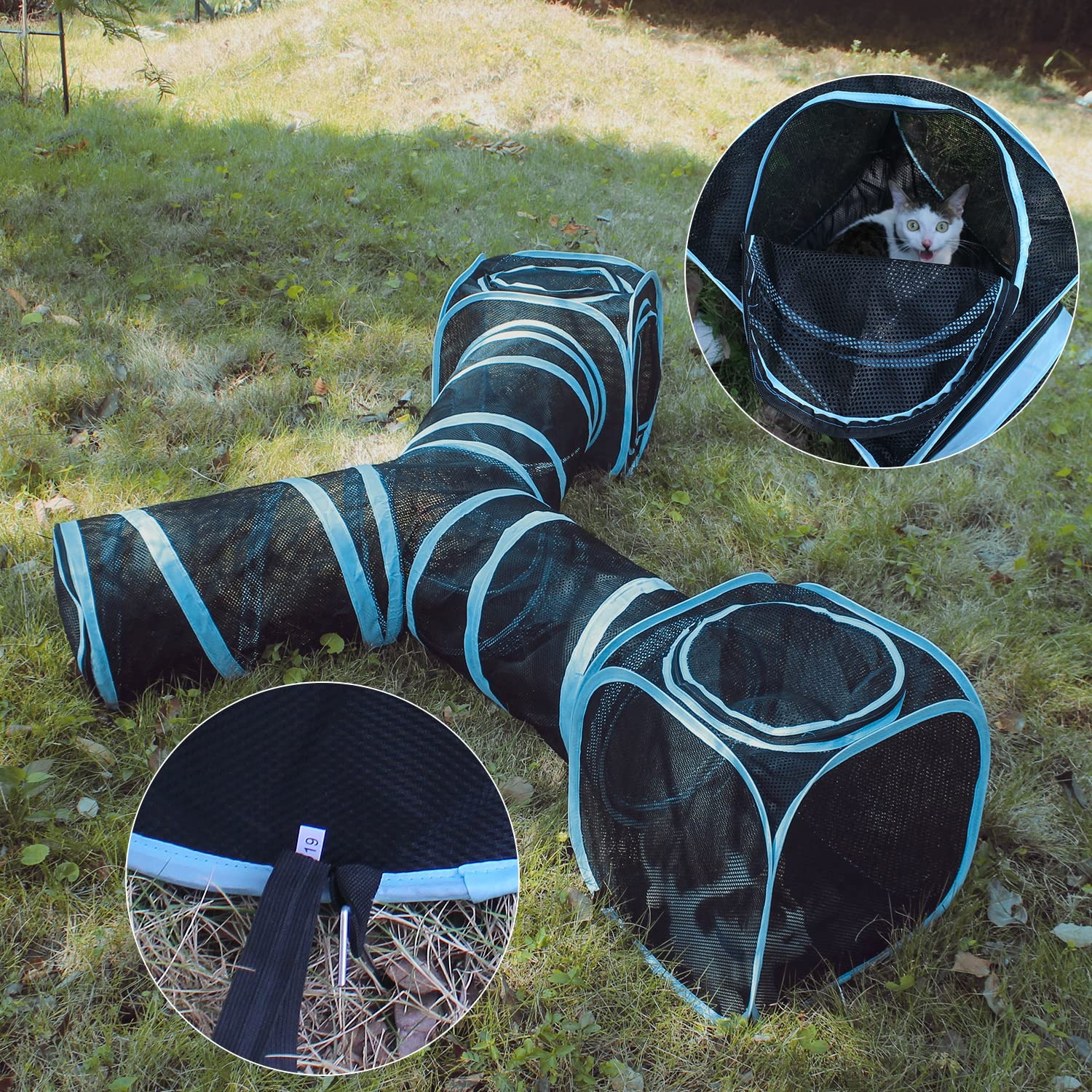
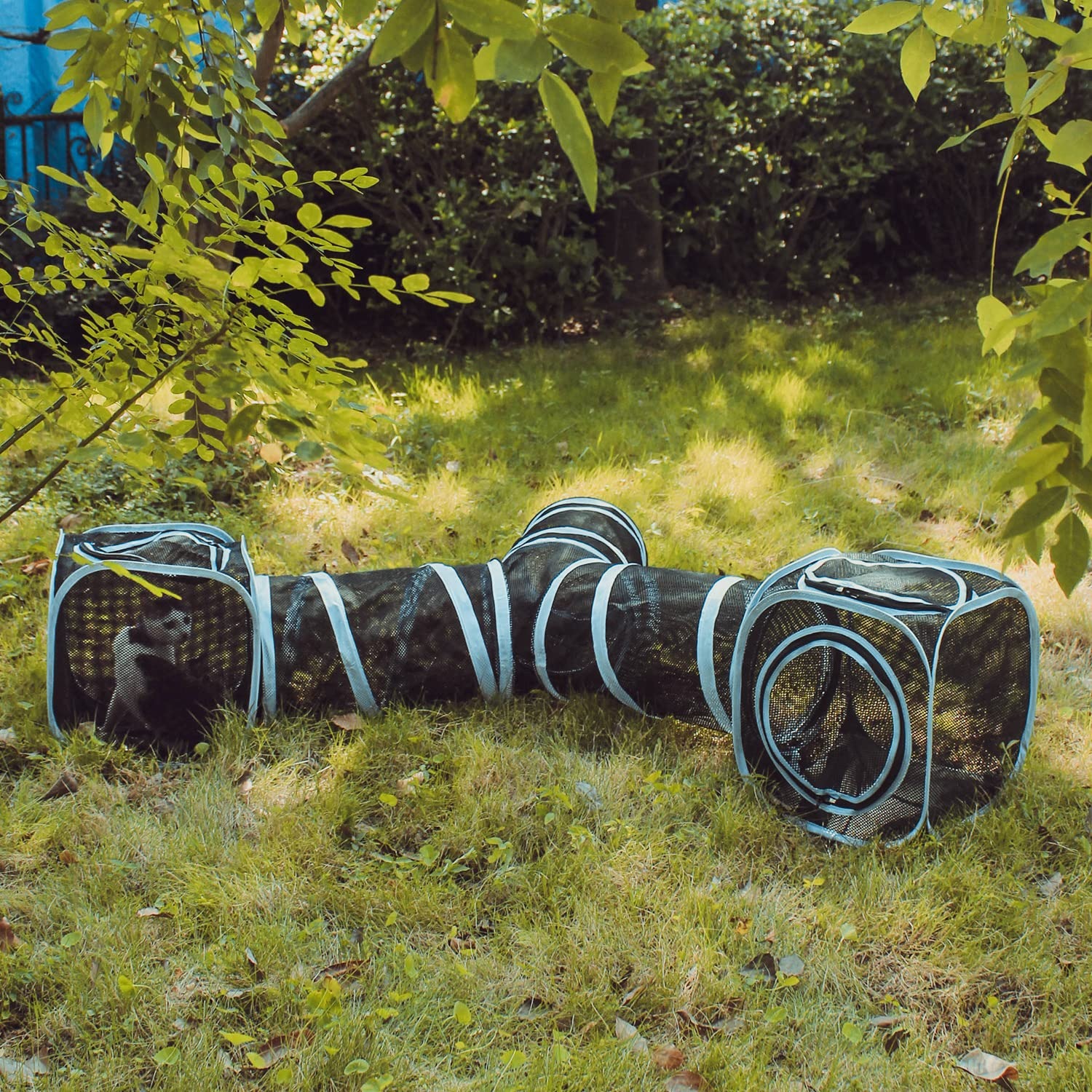
Ground pegs come in the box. That is what makes this a genuine cat tunnel outdoor product rather than an indoor one you optimistically carry out to the lawn. A cat hitting an entrance at full speed puts real force into a lightweight structure, and pegged corners keep it where you put it.
Assembly is not required, and it folds flat. Both of those matter more than people expect. Gear that needs twenty minutes of setup tends to stay in the shed.
Who it suits
Indoor cats get the most out of it, because they have the fewest outlets. If your cat has never been outside and spends most of the day asleep, a cat tunnel playpen gives them a reason to move.
Multi-cat households are the other obvious fit. The multiple exits reduce the chance of one cat getting cornered by another, which is where play turns into a real scuffle. Everyone has an escape route.
It also suits people with small places. The whole thing packs down, so a one-bedroom flat can have a play zone in the evening and a clear floor by bedtime.
Who it suits less well: very large breeds, who may find the cubes tight, and cats who simply do not care for enclosed spaces. Some cats prefer height to hiding. If your cat has always ignored boxes and bags, a tunnel is a less certain bet, and a tall cat tree may be the better spend.
Indoors or outdoors, and the difference it makes
Used inside, you can leave the set up for a few days at a time. Put it where your cat already hangs around, not in a spare room they never visit. Near a window with afternoon sun is usually a winner, because the cubes become nap spots between bursts of play.
Used outside, the rules change. Peg it into grass, always supervise, and bring it in afterwards. Rain, UV and wind all wear fabric down faster than indoor use ever will. A cat play tunnel outdoor session is also more stimulating for a cat than the same thing indoors, because there are smells, insects and birds to react to, so sessions tend to be shorter and more intense.
On a balcony or a concrete patio, pegs are useless. Set the ends against a wall or a planter so the structure has something to brace against, and keep an eye on it in any breeze.
Never treat it as secure containment. It gives a cat a defined area to play in and it is a reasonable first step towards a proper catio tunnel setup, but it is not escape-proof and should not be used as a way to leave a cat outside alone.
Getting your cat to use it on day one
Plenty of cats walk straight in. Some stare at it suspiciously for three days. Both are normal.
The trick with a cautious cat is to make the tunnel the location of something good rather than the point of the exercise. Drop a few treats just inside one entrance and walk away. Put their usual blanket in one cube so it already smells right. Then use a wand toy and drag it slowly through the tunnel so it vanishes at one end and reappears at another. Very few cats can ignore a toy that disappears.
What does not work is picking the cat up and posting it through the entrance. That creates an association you then have to undo.
If a cat has used it happily and then loses interest, change the shape. Unzip the sections, rearrange them, move the whole thing to a different room. A cat tent and tunnel layout that has sat in the same corner for a month stops registering as new. Five minutes of rearranging usually brings them back.
Care, cleaning and how long it lasts
Spot cleaning is all it needs most of the time. A damp cloth with a little mild soap handles fur, dust and the odd muddy paw print. Let it dry fully before folding, because fabric packed away damp will smell by the time you next open it.
After outdoor use, shake it out properly. Grass seeds and dirt work their way into seams and zips, and grit in a zip is the quickest way to wreck one. Run the zips a few times to clear them.
Check the seams and zip tape every month or so if the set gets heavy use. A loose thread caught early is a two-minute fix. Left alone, a cat will pull at it until there is a hole.
Store it flat in a dry cupboard. Do not stack heavy things on top of the folded set, because the frame holds its shape better if it is not compressed for weeks at a time.
What to weigh up before you buy
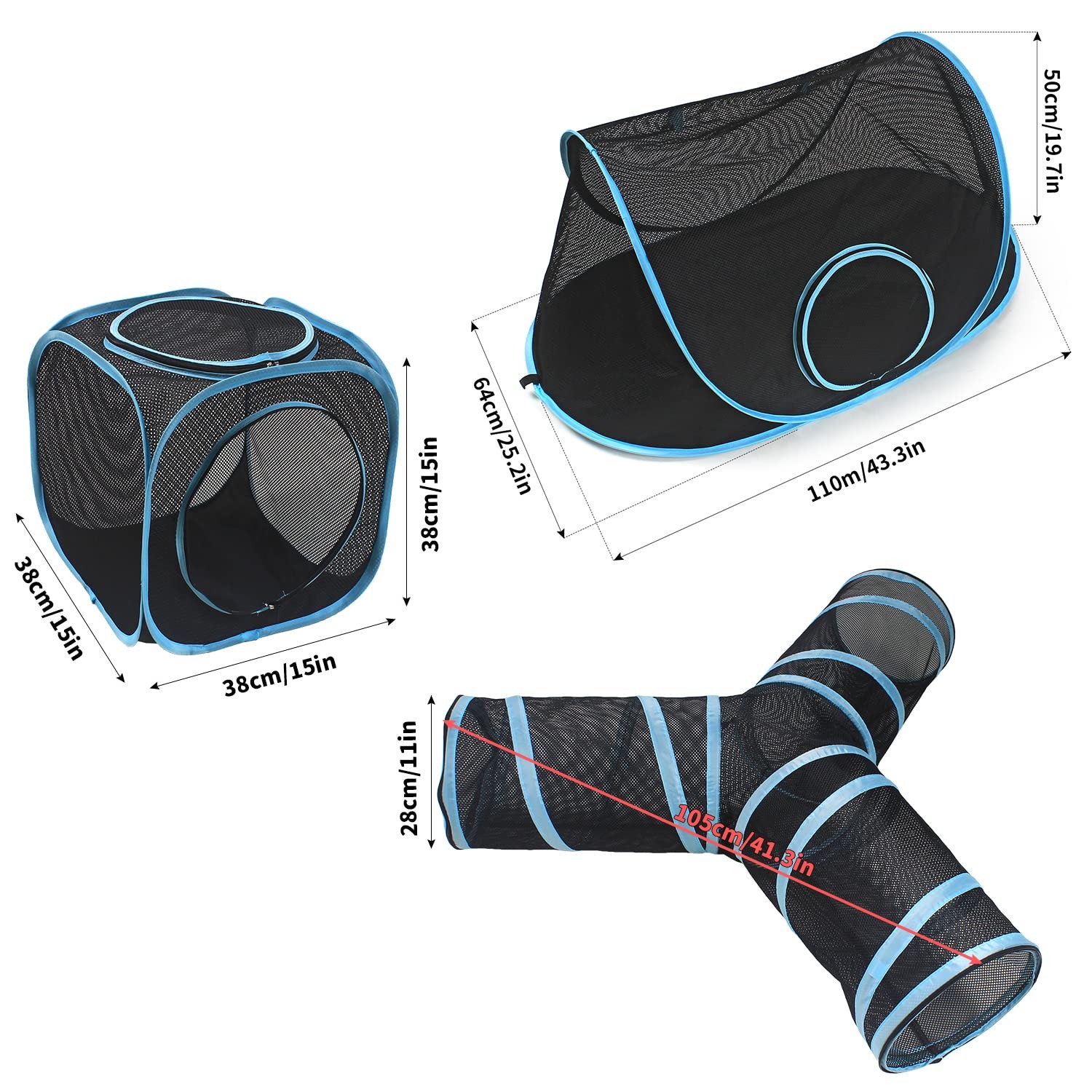
Measure your space, not just your cat. The listed item dimensions are 38.1 x 35.6 x 20.3 cm, and the full extended footprint is not given in the product record, so leave yourself room.
Think about where it will actually live. A collapsible cat tunnel that you can set up in two minutes and put away in one is a different purchase from a permanent cat tree, and it suits a different kind of home.
Consider your cat's personality honestly. Energetic, curious, under five years old, lives with another cat: strong match. Elderly, settled, dislikes enclosed spaces: less so.
And think about whether you want to expand later. Because this joins to other pieces in the same range, starting with the two-cube and three-way tunnel combination gives you a base you can build on rather than replace.
The short version
This is a two-cube, three-way tunnel play set in mesh fabric, with zip doors on the top and sides and ground pegs for grass. No assembly, folds flat, works indoors or out. The three exits are what keep cats coming back, the mesh keeps it cool and lets you watch, and the zips let you change the layout when interest drops.
It suits indoor cats, multi-cat homes and anyone short on floor space. It is less suited to very large cats or cats who have never liked enclosed spaces. Supervise outdoor use, peg it down on grass, bring it in afterwards, and spot clean rather than machine wash.
If your cat is bored and loud at night, this is one of the simpler things you can try.