
The complete guide
How To Choose An Outdoor Cat House That Your Cat Will Actually Use
The problem with "they'll find somewhere"
Most outdoor cats do find somewhere. The trouble is where. Under a car bonnet that is still warm. Behind a shed, on bare soil. Inside a rolled tarp that fills with water the first time it rains sideways. Cats are good at finding cover, and much worse at finding cover that is actually dry.
Cold air alone does not harm a healthy cat all that much. Damp does. A wet coat loses heat several times faster than a dry one, and a cat sitting on cold ground is losing warmth into the earth the whole time. That is why an outdoor cat house is worth more than it looks. You are not building a luxury suite. You are giving the animal a floor above the wet and a roof that does not drip.
How a shelter like this actually works
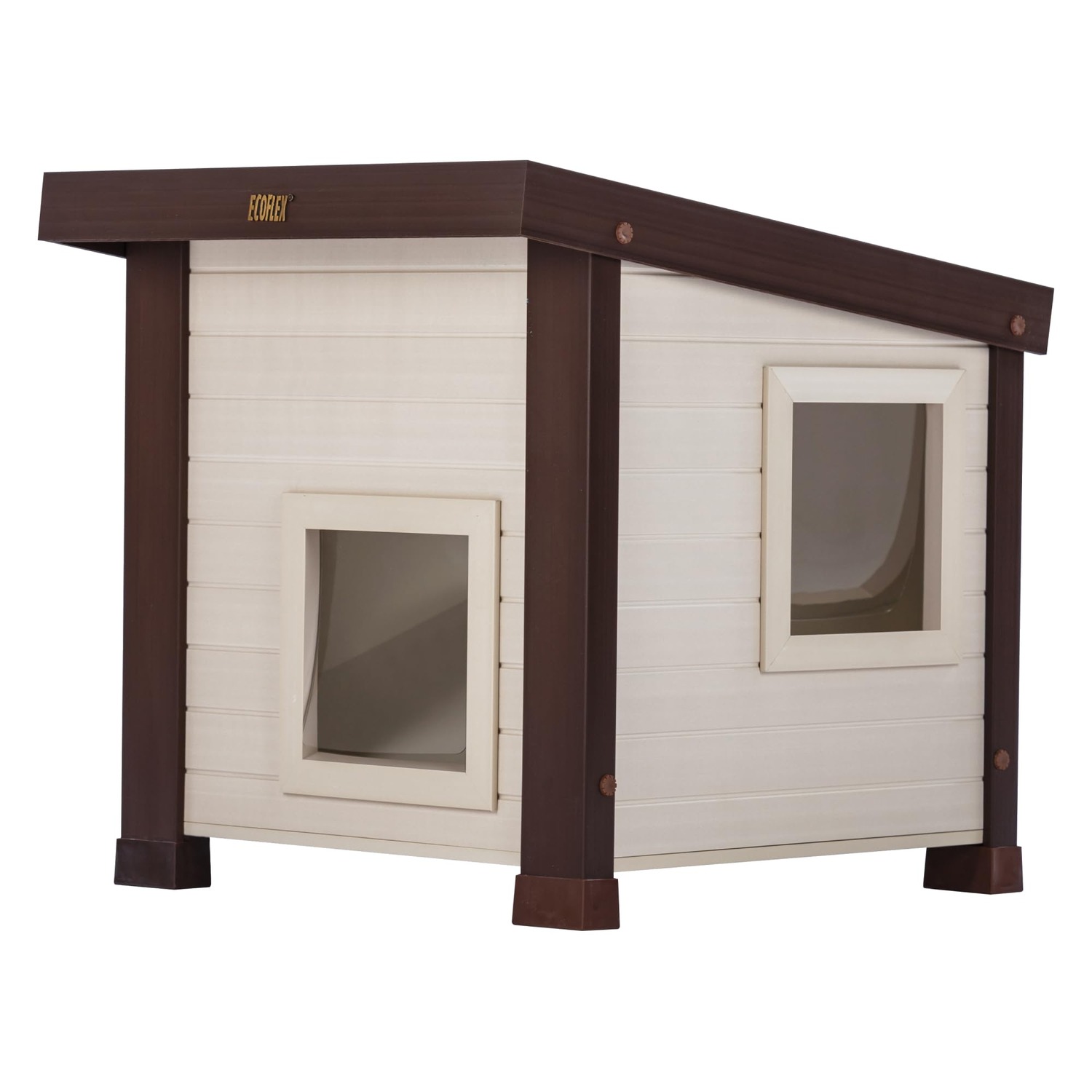
Three things do the heavy lifting in any good weatherproof cat shelter, and this one has all three.
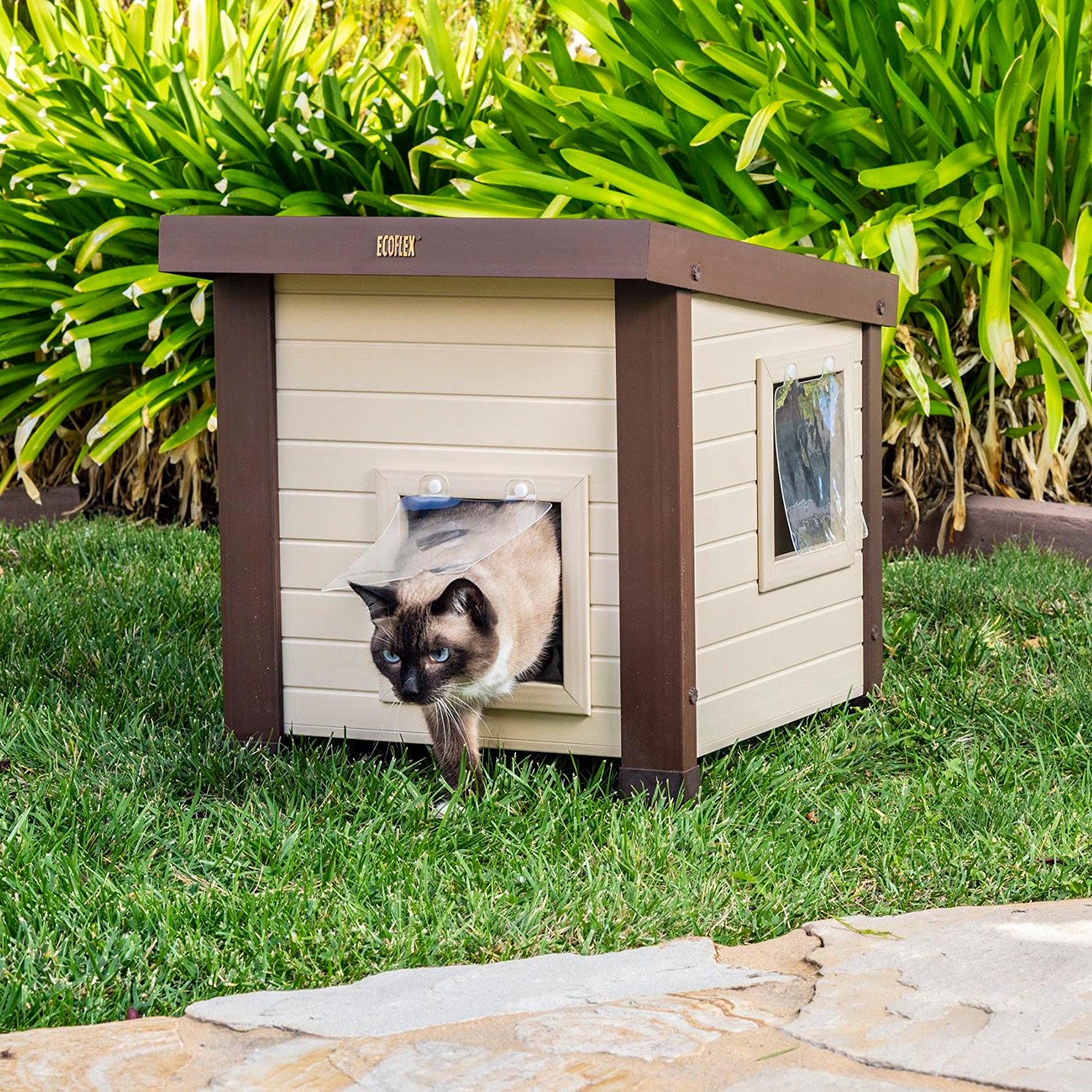
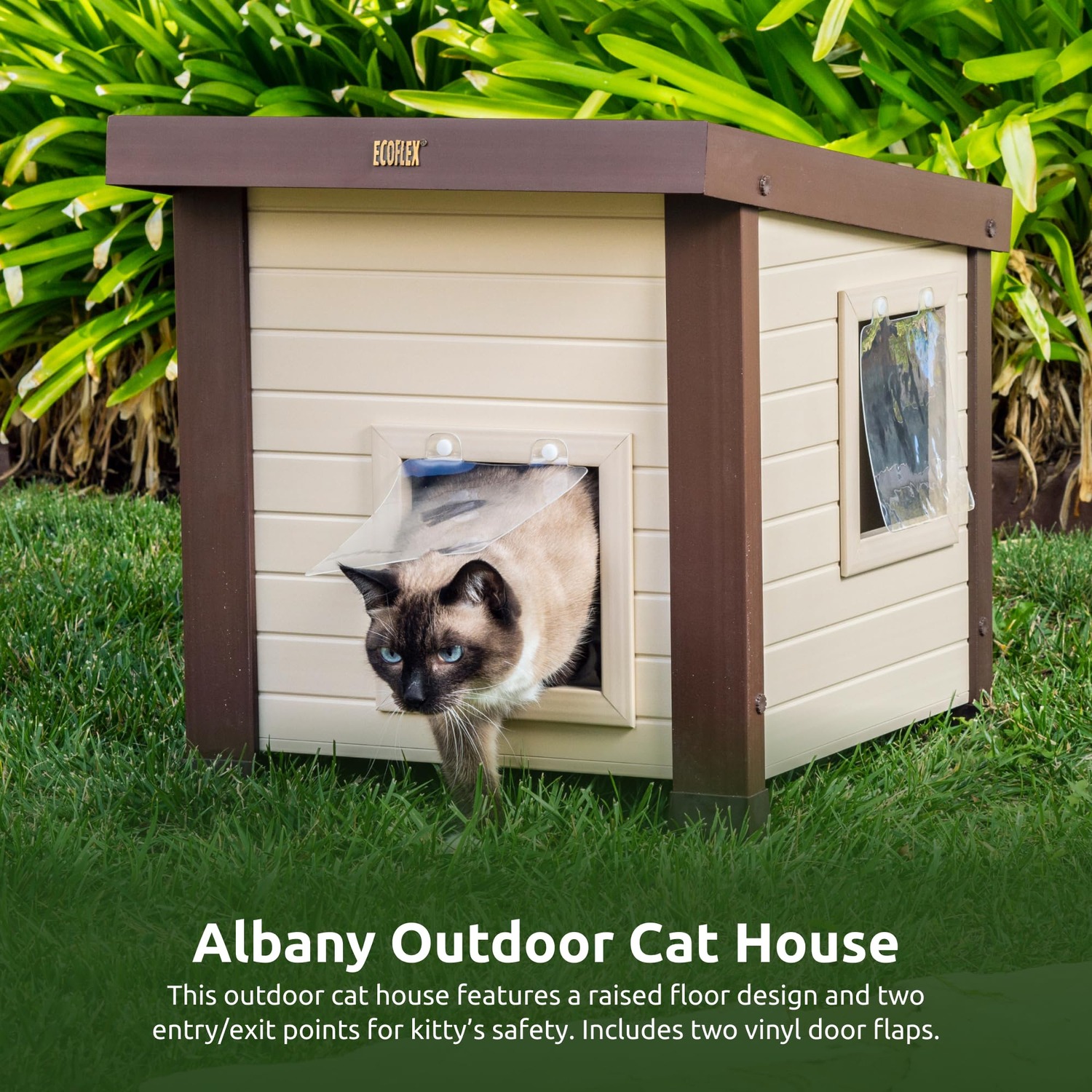
First, the shell. Resin does not soak up water. Untreated timber swells in winter, dries out in summer, splits along the grain and eventually starts to hold damp inside the walls. Resin just stays resin. Rain runs off it, and when it is time to clean, you wipe it rather than scrubbing at a porous surface.
Second, the raised floor. This is the part people skip when they build a shelter out of a plastic tub. If the floor sits directly on the ground, moisture wicks up into the bedding and the cat ends up lying on something slowly going damp. Lifting the floor breaks that path and lets air move underneath, so condensation does not collect inside on cold mornings.
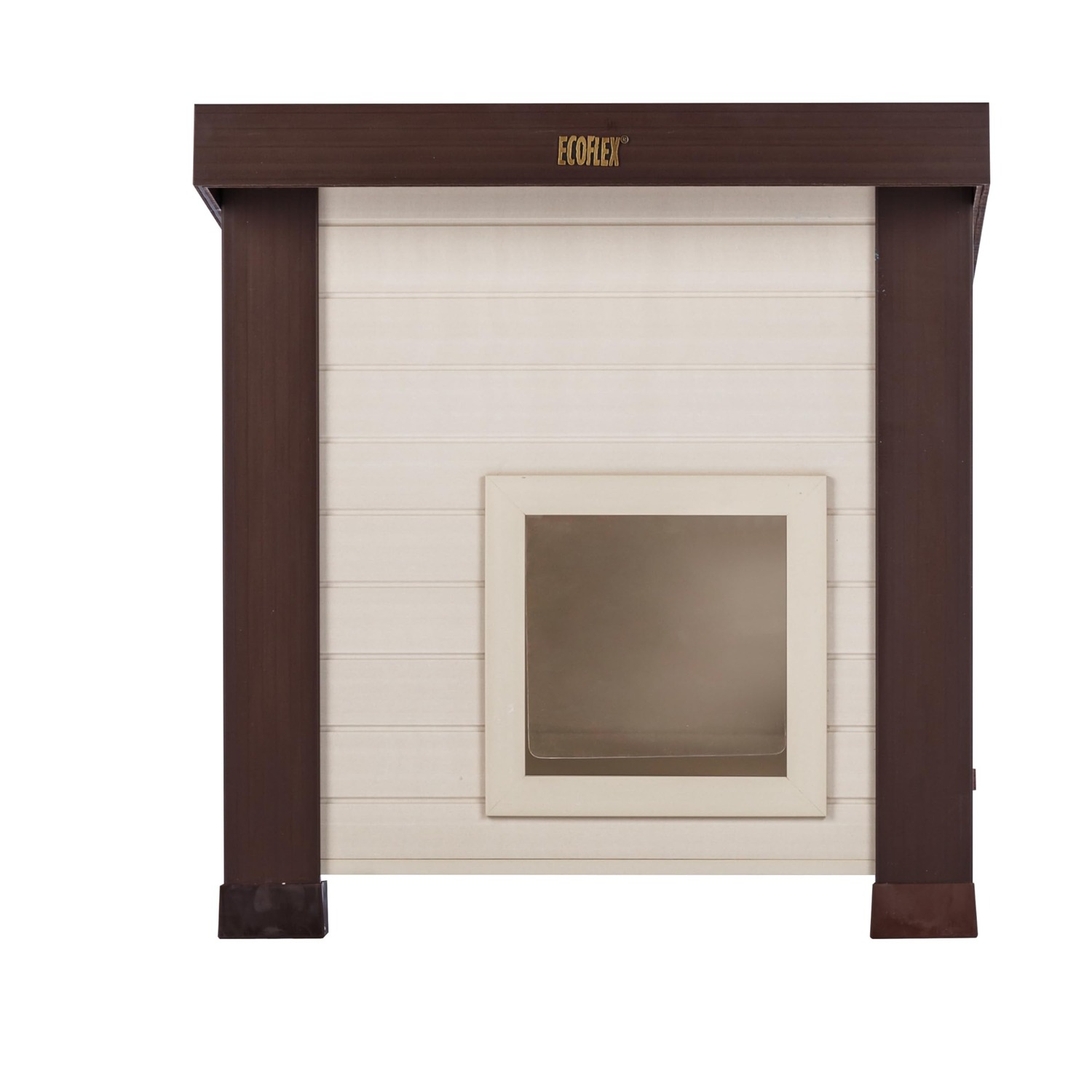
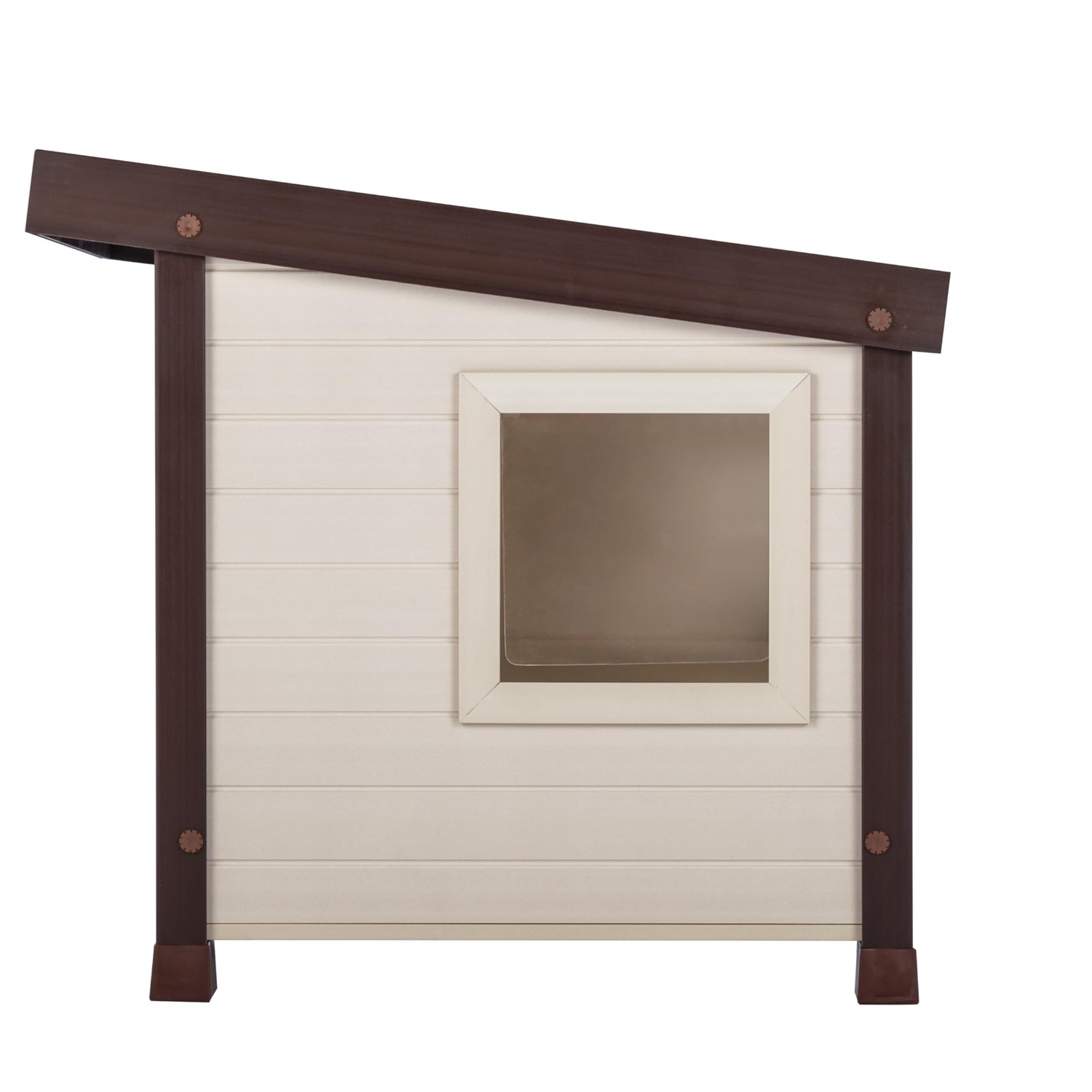
Third, the two doorways with vinyl flaps. The flaps cut the wind without locking the cat in. The second door matters more than most people expect. Cats are prey as well as predators, and a space with one way out reads as a trap. Give a cat a second exit and it relaxes, which means it sleeps properly rather than dozing with one ear up.
Who this suits
If you have a cat that comes and goes through a cat flap, this is a halfway house for the hours it does not want to come in. Plenty of cats would rather watch the garden at 5am than sit on the sofa, and a sheltered spot to do that from saves them getting soaked.
If you run a catio, a small house inside it changes how the space gets used. Cats sit out in weather they would otherwise avoid, because they have somewhere to duck into. Shy cats in multi-cat homes use it as a private corner.
If you feed strays or manage a colony, a feral cat house is the single most useful thing you can add after food and water. Colony cats often will not accept handling, but they will accept a dry box. Place it near the feeding spot, leave it alone for a week, and check for fur in the bedding to see if it is being used.
And if you live somewhere with a real winter, a cat shelter for winter is not a nice extra. It is the thing that keeps a semi-feral cat going through a cold snap.
Measuring before you buy
This is where people get it wrong. The listed dimensions for this house are 19.1 cm deep, 21.8 cm wide and 20.2 cm high. Take a tape measure to the spot you have in mind and mark that footprint out before ordering. Then think about your cat. A cat sleeping outside curls up tight to conserve heat, so it does not need a lot of room, but it does need to be able to turn around and lie down without pressing against a wall.
Bigger is not automatically better here either. A large, draughty shelter is harder for a cat to warm with its own body heat than a snug one. Snug and dry beats roomy and cold every time.
Also check the ground. Level, well-drained and firm. A slight slope away from the doorway helps water run off rather than pooling at the entrance.
Setting it up so it gets used
Assembly is panel-based with no tools, so you can put it together where it is going to live. Once it is up, placement does most of the work.
Face the doorways away from the direction your weather usually comes from. In most gardens that means pointing them towards a wall or a fence rather than out across open lawn. Tuck the house against something solid if you can, since a wall at its back blocks wind and reflects a little warmth.
Avoid putting it where a sprinkler reaches or where water runs off a roof. Avoid full afternoon sun in hot climates, because a sealed box in direct sun gets uncomfortable fast. Part shade is close to ideal.
Then fill it. Straw is the standard for outdoor use, because it stays springy and dry and the cat can burrow into it. Hay is not the same thing and will go mouldy. Blankets are fine in a dry catio but a poor choice out in the open, where they soak up damp and hold it against the animal. If you want to add warmth in a cold region, a heating pad rated for outdoor pet use is sold separately and fits the floor area of most shelters this size. Follow the pad maker's instructions and keep the cable protected.
Getting a nervous cat to move in
Do not expect instant results. A new object in a garden is suspicious until proven otherwise. Give it a week before you judge anything.
Tape one door flap up at the start so the cat can see straight through. A see-through box is far less threatening than a dark hole. Put a little dry food just inside the entrance, not deep in the back, and move it slightly further in each day. Once the cat is going in freely, lower the flap.
Do not hover. Set it up, walk away, and check for signs of use rather than watching. Flattened straw, a few hairs, paw marks in frost on the roof. Those tell you more than standing at the window will.
Keeping it clean through the year
Cleaning an outdoor shelter is quick if you do it regularly and miserable if you leave it. Pull the bedding out once a week, shake it off, and replace it if it feels damp or smells sour. Wipe the shell inside and out with warm water and a mild, pet-safe cleaner once a month, rinse, and let it dry before fresh bedding goes back in.
Check the door flaps for splits, especially after a cold snap, since brittle vinyl tears where a cat pushes it. Clear leaves and soil from under the raised floor so air can still move. Avoid harsh solvents and scouring pads on the resin, which can dull the surface.
Twice a year, lift the whole thing and look at the ground underneath. If it is staying soggy, move the house or put it on a paver.
The short version
An outdoor cat house works when it is dry, when the floor sits above the ground, and when the cat can see a way out. This one covers all three with a resin shell, a raised floor and two flap-covered doorways, and it goes together without tools in a few minutes.
Measure the spot. Face the doors away from the wind. Fill it with straw, not hay. Clean the bedding weekly. Do that, and a shelter like this quietly does its job for years, whether it is serving one spoilt house cat who likes the garden at dawn or a colony cat who has nowhere else to go.