
The complete guide
How to Choose a Foldable Cat Enclosure That Your Cat Will Actually Use
The problem with keeping a cat indoors
Indoor cats live longer. Almost every vet will tell you that, and the reasons are easy to list, traffic, dogs, fights with other cats, disease, poison baits and the simple fact that a cat who roams eventually meets something it cannot handle. So most of us keep them in.
Then we watch them at the window.
Cats are not built to be bored. They want sound, movement, smell and texture. A screen door and a sunbeam cover some of that, but not the part where grass bends under their weight or a breeze carries the scent of next door's garden. Behaviour problems often follow, door dashing, night yowling, scratching furniture, pestering you at 5am. The cat is not being difficult. It is under stimulated.
A foldable cat enclosure solves the middle ground. It is not a full garden and it is not a cage. It is a contained outdoor room that goes up in about a minute and comes down just as fast.
How this type of enclosure works
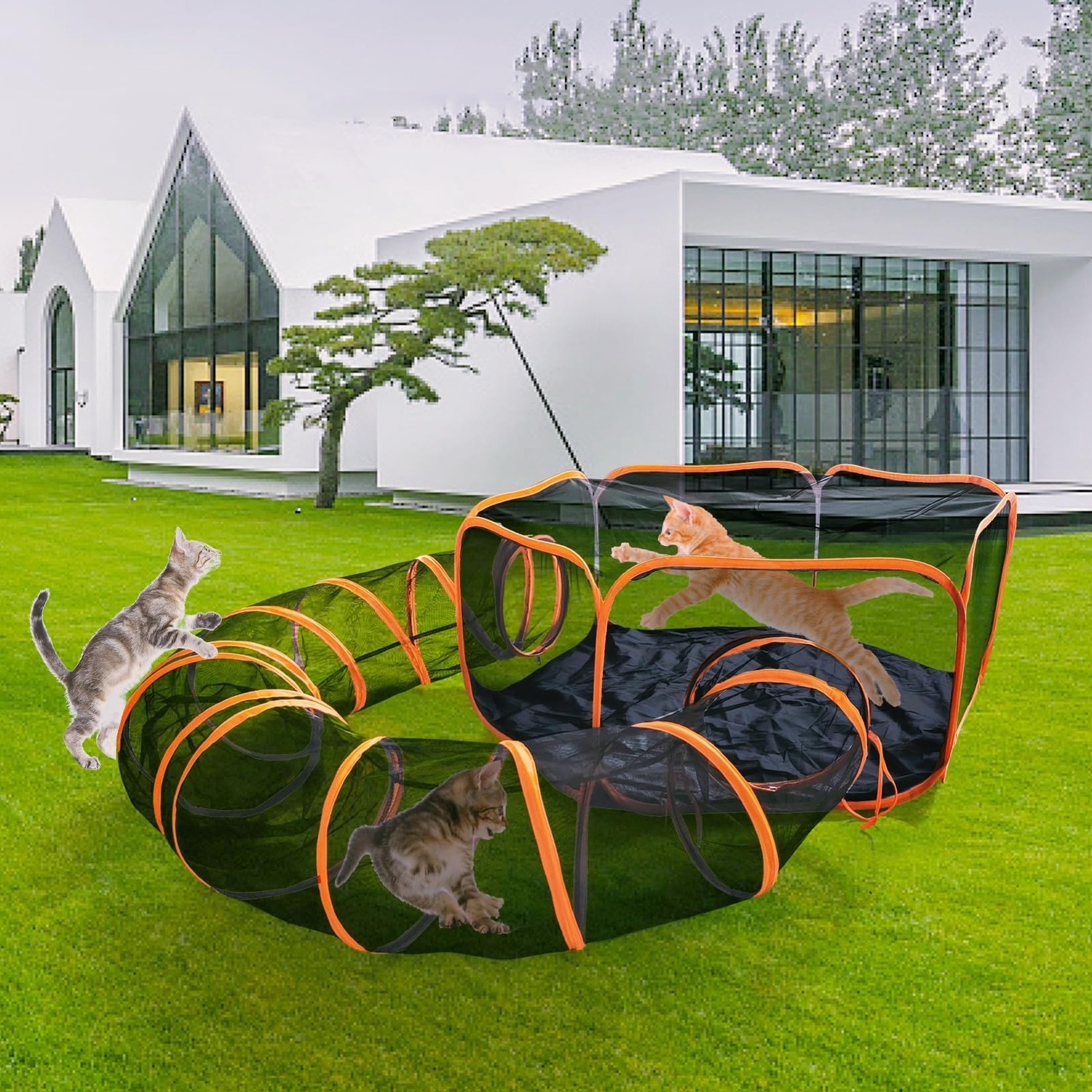
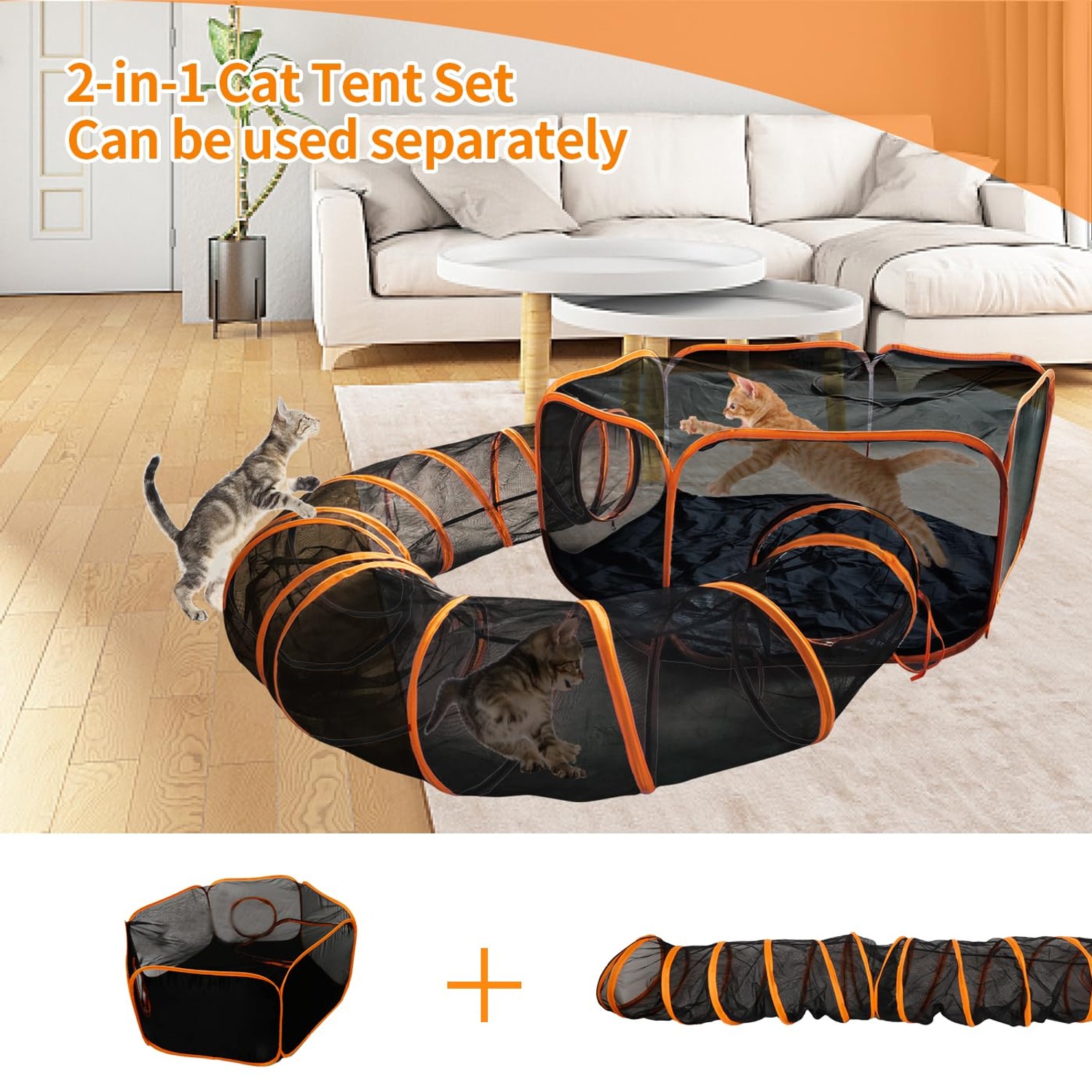
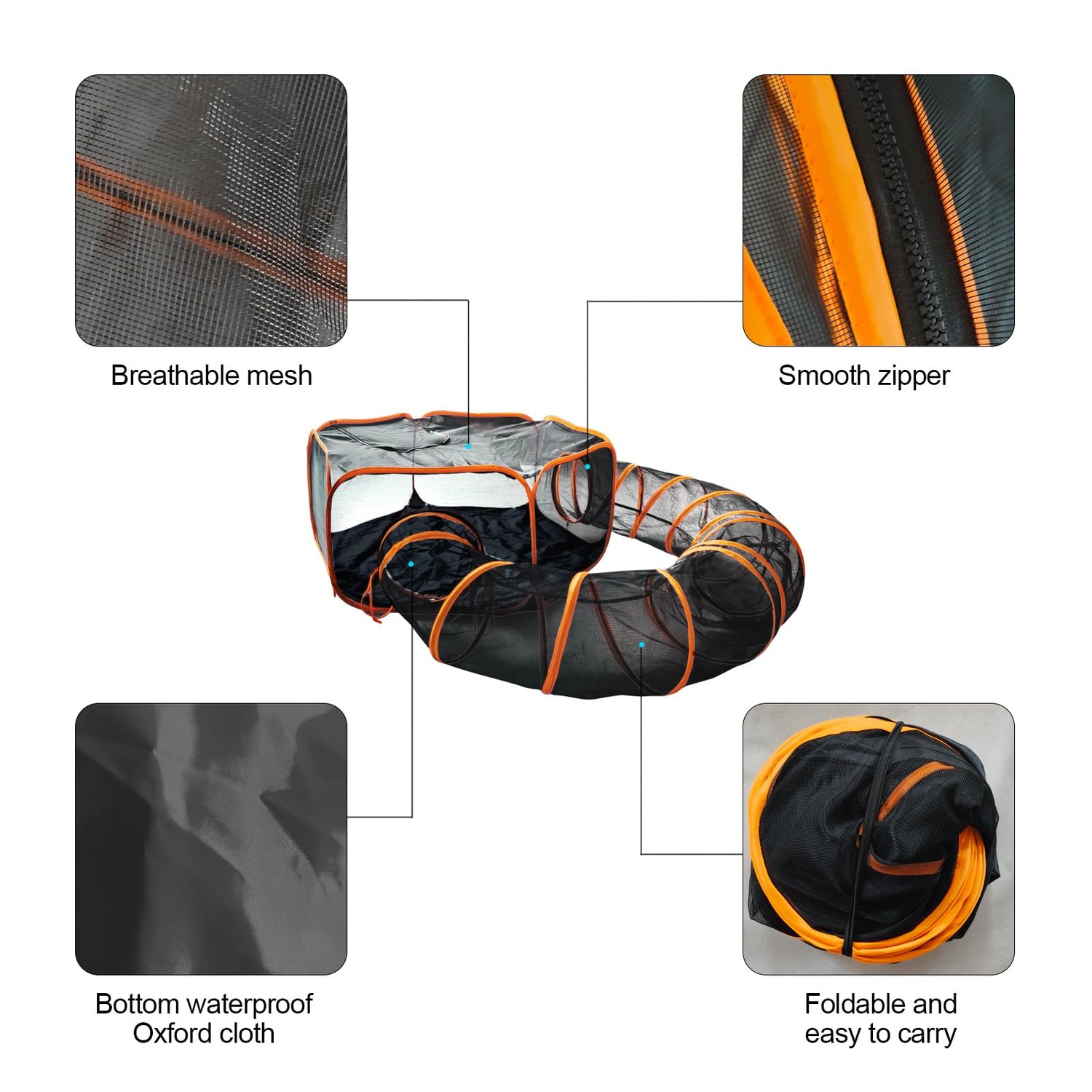
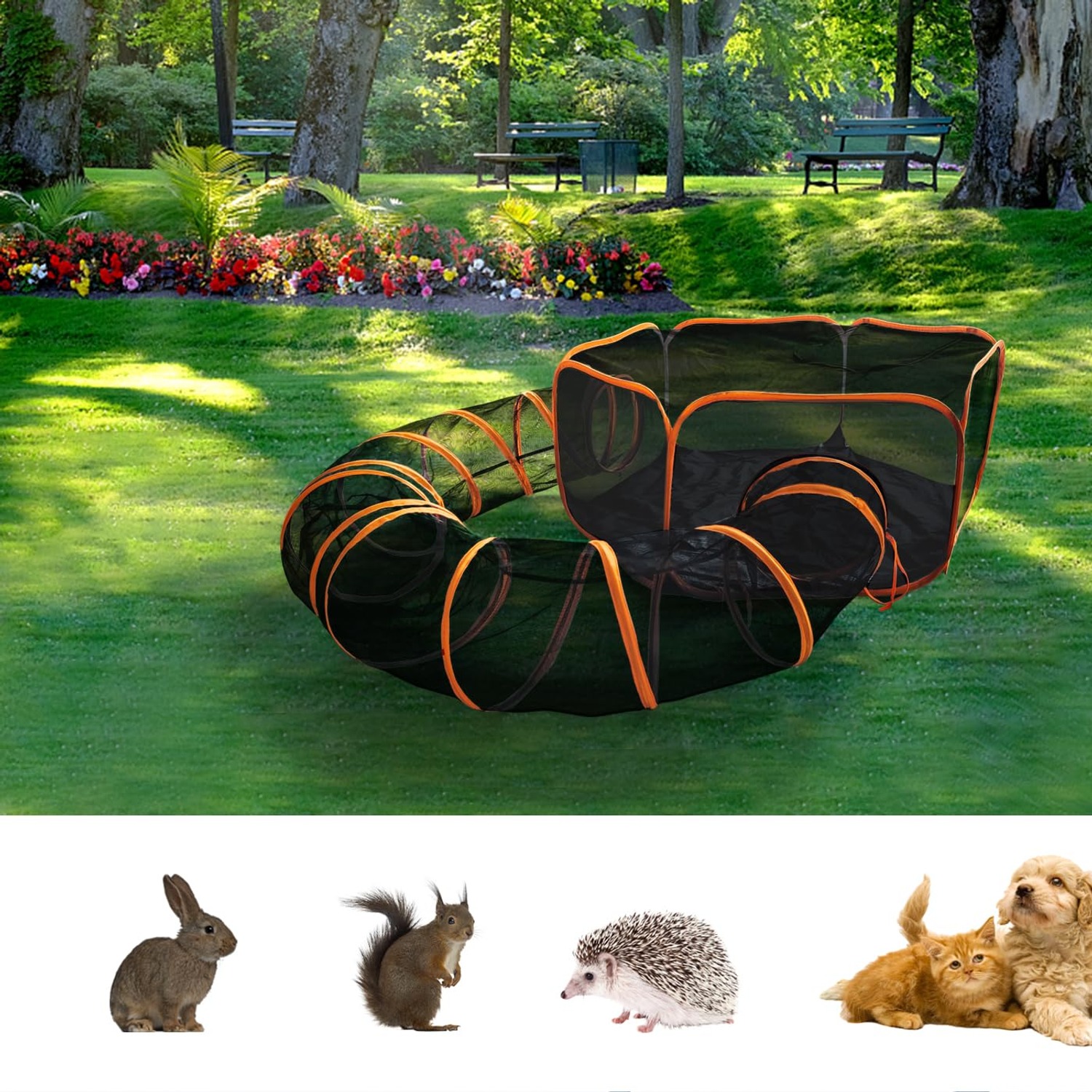
The design is simple on purpose. There is a square tent with an alloy steel frame, mesh panels and a waterproof Oxford fabric floor. The tent in this case measures 120 centimetres square and 45 centimetres high. Two large zip doors give you access and, more importantly, give the tunnel somewhere to attach.
The tunnel is the part that changes everything. Without it, a pen is a box. Your cat walks in, sits down, looks around and after ten minutes decides it has seen enough. With a tunnel zipped on, your cat has a circuit. It can walk out, follow the run, come back in, do it again. Movement keeps interest alive, and a cat tunnel tent will usually hold a cat's attention for an afternoon rather than a few minutes.
The mesh handles two jobs at once. It lets air flow, which matters a lot on a warm day, and it gives a 360 degree view so your cat can track birds, people and leaves. That visual input is a big part of why outdoor time tires a cat out in a good way.
The floor matters more than people expect. Bare ground means wet paws, mud, ants and claws catching in grass. A solid fabric base means your cat can sprint without snagging, and you can lift the whole thing and shake it out afterwards.
Who it suits
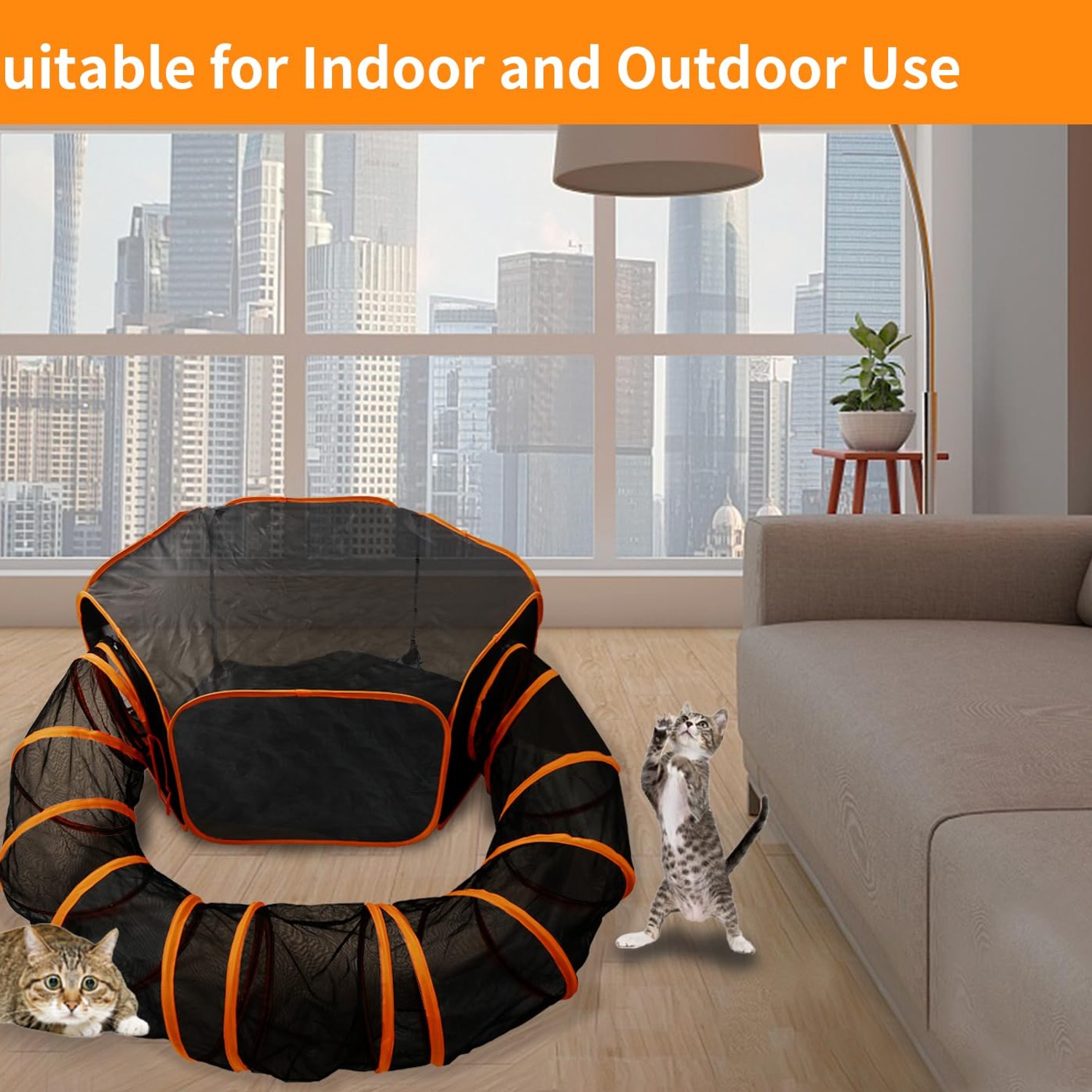
Apartment dwellers get the most obvious benefit. If you have a balcony with enough floor space, a balcony cat tent turns dead square metres into the best part of your cat's day. Set it where part of it falls in shade and put a bowl of water inside.
Renters are the next group. You cannot bolt a timber catio to a wall you do not own, and you probably do not want to leave one behind when you move. A portable cat enclosure asks nothing of the building.
Then there are travellers. If you take your cat caravanning, camping or to a holiday house, you already know the stress of an unfamiliar space with open doors everywhere. A camping cat enclosure gives your cat a known base at the new site. The smell of their own blanket inside a familiar structure does a lot to settle a nervous animal.
It also earns its keep indoors. New kittens, recovering pets after surgery, a rescue cat meeting the resident cat for the first time, all of these go better when there is a safe boundary that both animals can see through. Rabbits suit it too, since rabbits are listed alongside cats as a target species.
How to choose between enclosures
Footprint versus loop. Some enclosures are one big square. Others, like this one, use a smaller tent plus a tunnel. If you have a wide flat lawn, either works. If your space is awkward, a tent and tunnel combination often fits better because the tunnel can bend around a garden bed or follow a fence line.
Frame material. Fibreglass poles are light and cheap, but they bend and they splinter with age. Steel costs a little more and holds its shape under a cat's weight. This one uses alloy steel.
Floor or no floor. Floorless pens sit directly on grass, which some cats love. The trade off is mud, insects and the risk of a cat digging out at the edge. A fabric base is cleaner and safer for most people, especially on a balcony or at a campsite.
Door size and placement. Small doors are annoying. You will be putting a litter tray, a water bowl and sometimes a reluctant cat through them. Two large zip doors give you options and let you choose which side the tunnel attaches to.
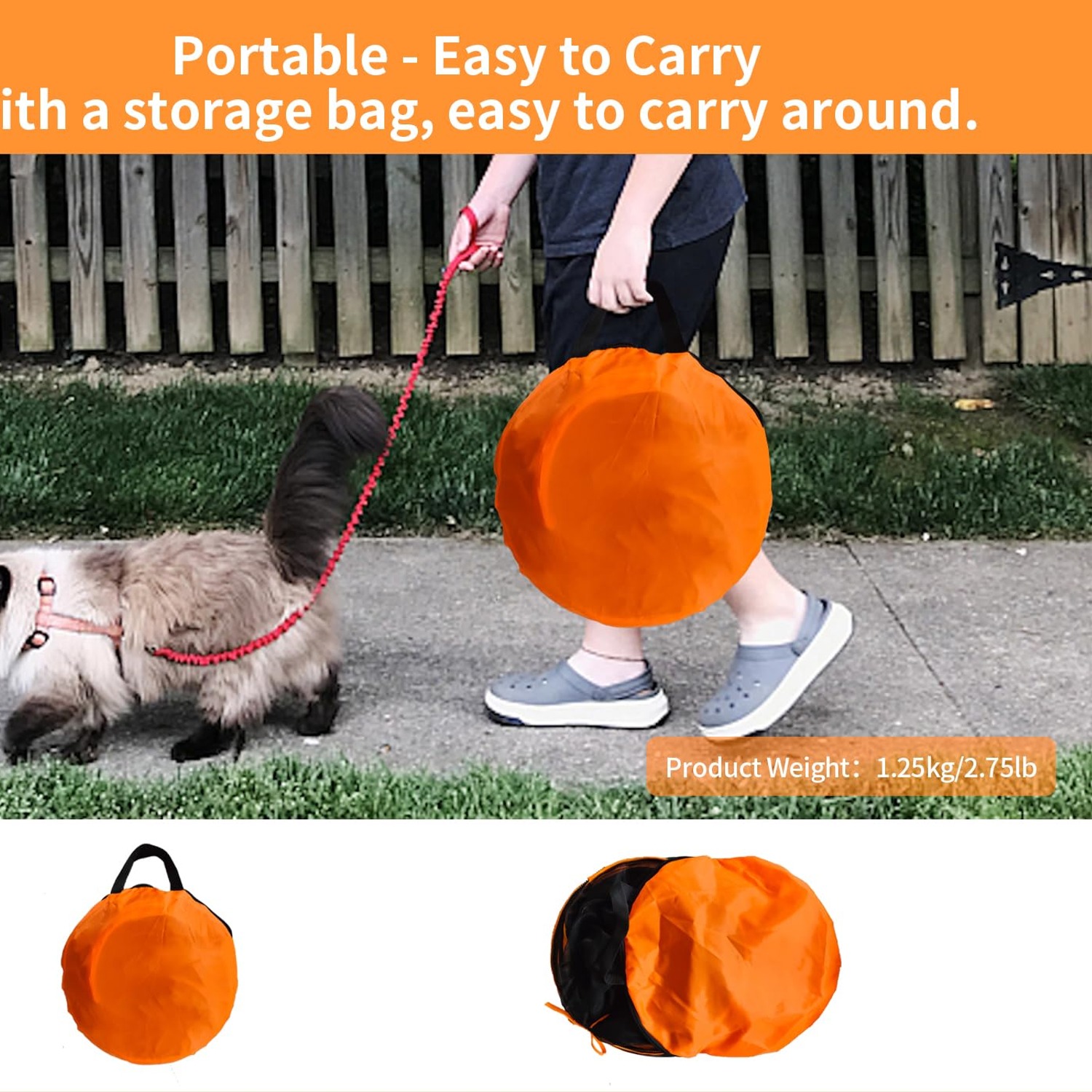
Pack down. If it does not fit back in the bag easily, it will end up living in a corner of the shed. Check that the enclosure you choose actually folds rather than just disassembles.
Getting your cat to use it
Do not expect instant enthusiasm. A cat that has lived indoors for years may stand at the entrance and refuse to move for the first session, and that is normal.
Start inside. Set the tent up in the lounge room for two or three days so it stops being a strange object. Put a blanket that already smells like your cat in the middle. Leave the door open and ignore it. Curiosity usually wins within a day.
When you move outdoors, pick a quiet time. Early morning or late afternoon, away from noisy neighbours and barking dogs. Sit nearby with a book. Ten minutes is a fine first session.
Add a reason to stay. A few treats scattered in the tunnel, a toy on a string you can flick from outside the mesh, a cardboard box in the corner. A mesh cat tent becomes a destination once there is something worth doing inside it.
Build up slowly. Within a week or two most cats will walk in on their own and complain when you pack it away.
Safety and care
Always supervise. Fabric and mesh keep a cat in, but they do not keep a roaming dog out, and a determined cat with time alone can work at a seam. Treat this as a supervised cat playpen outdoor rather than an unattended run.
Watch the sun. Mesh gives airflow but no shade. Position the enclosure so part of it stays shaded, move it as the sun shifts, and keep water inside on any warm day.
Peg or weight it in wind. Light structures with mesh walls catch a breeze. On open lawn, peg the corners.
Cleaning is quick. Shake out fur and grass, wipe the mesh and base with a damp cloth and mild soap, then let it dry fully open before folding. Damp fabric packed into a bag grows mould and damp steel joints eventually rust. Check the zips occasionally and trim your cat's claws, which saves the mesh.
The short version
An indoor cat with no outdoor access gets bored, and bored cats make their feelings known. A foldable cat enclosure gives them grass, air, sound and a view without the risks that come with letting them roam.
Look for a steel frame, a solid waterproof floor, big zip doors and a tunnel that attaches properly. This one covers all four, folds into its own bag and travels to the balcony, the park or the campsite without fuss.
Introduce it slowly, supervise the sessions, keep shade and water handy, and you will have a cat that sleeps well and stops campaigning at the front door.