
The complete guide
Cat Tent and Tunnel Buying Guide, How to Give an Indoor Cat Safe Outdoor Time
The problem with an indoor cat who wants out
Every indoor cat owner knows the sound. The chirping at the window. The sit-and-stare at the back door. The sudden sprint when someone brings the groceries in. Indoor cats are safer, live longer and cause less damage to local wildlife, and almost everyone who keeps one still feels a bit guilty about it.
Letting them roam free is not the answer for most households. Roads, dogs, territorial neighbourhood cats, ticks, fights and the plain fact that a spooked cat can vanish over a fence in two seconds are all real. But keeping a curious animal inside four walls for fifteen years is its own kind of problem. Bored cats overgroom, overeat and pick fights with the furniture.
A cat tent and tunnel sits between those two extremes. It is a contained patch of outdoors. Your cat gets grass, moving air, insects to track and the smell of the garden, and you get to stand there with a coffee knowing exactly where they are.
What a pop-up catio actually is
The term catio covers everything from a custom-built timber frame bolted to the side of a house down to a folding mesh tent you can carry in one hand. This one is firmly at the portable end.
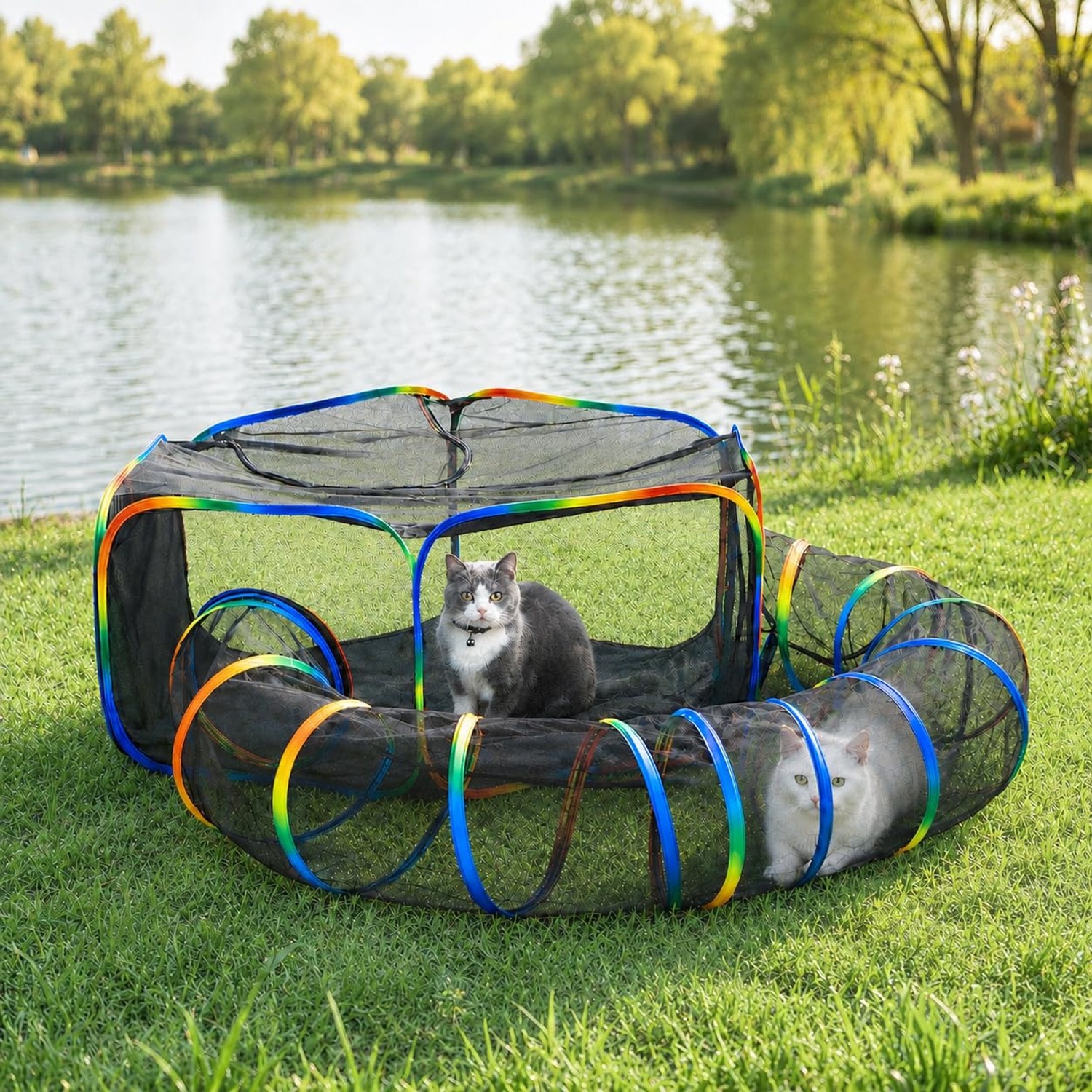
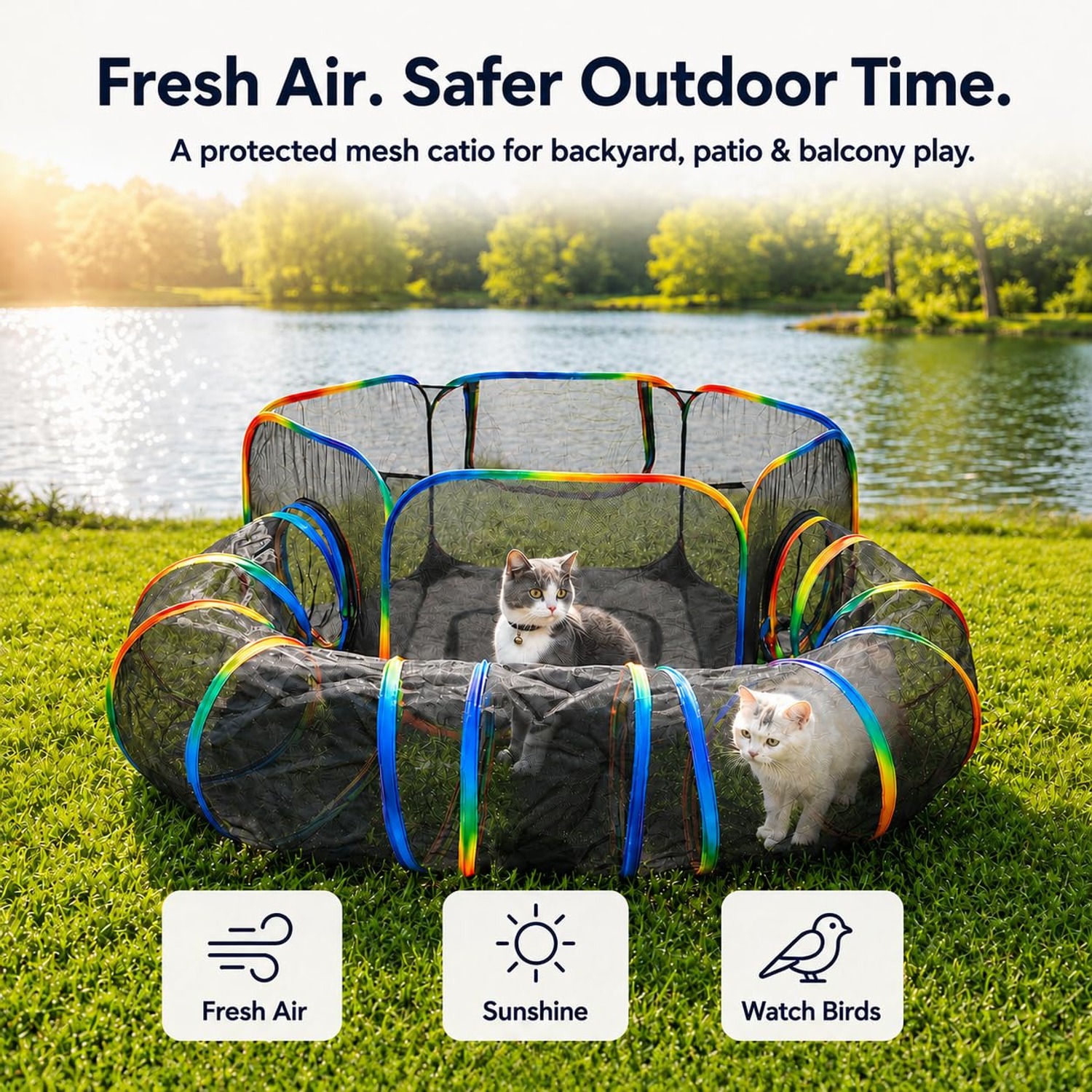
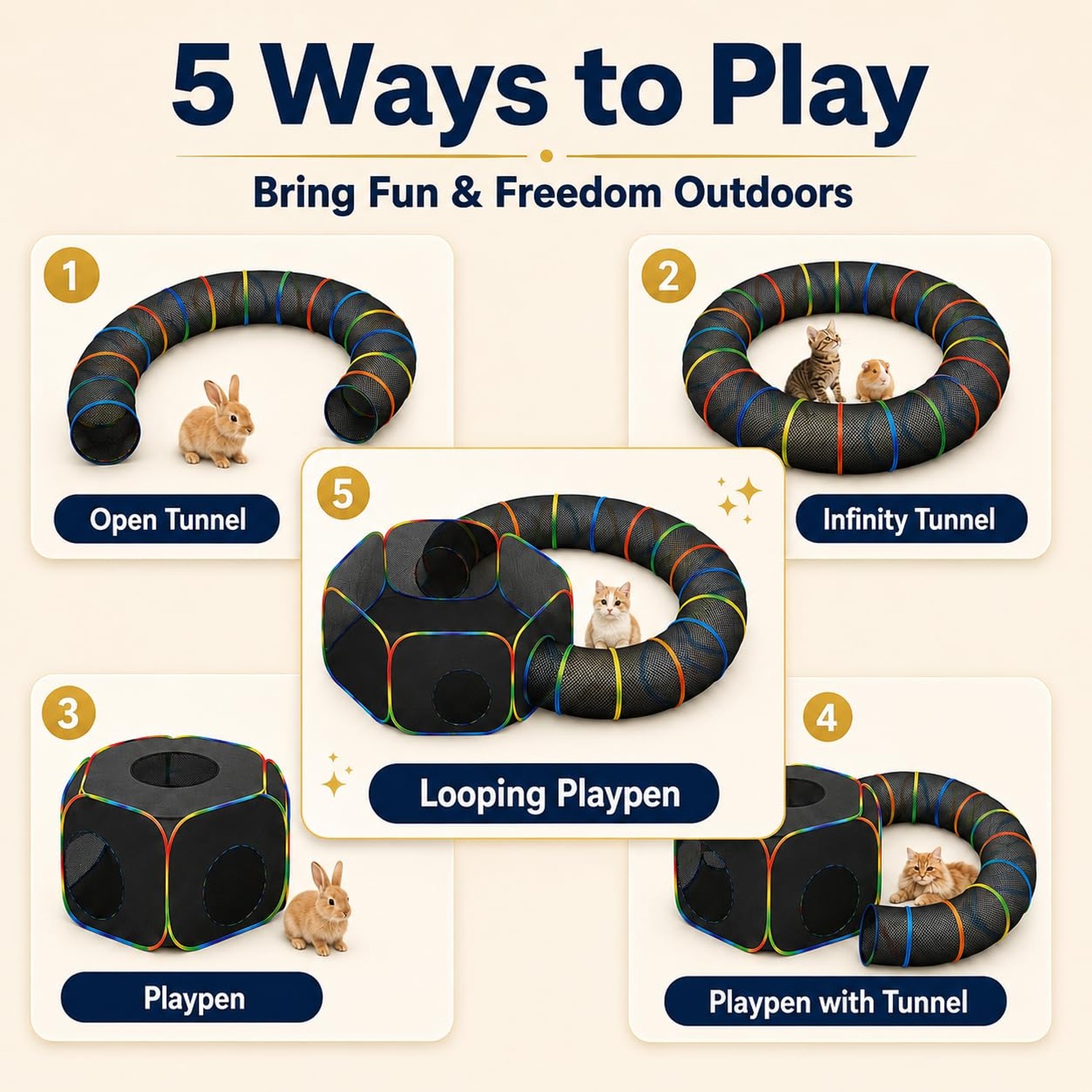
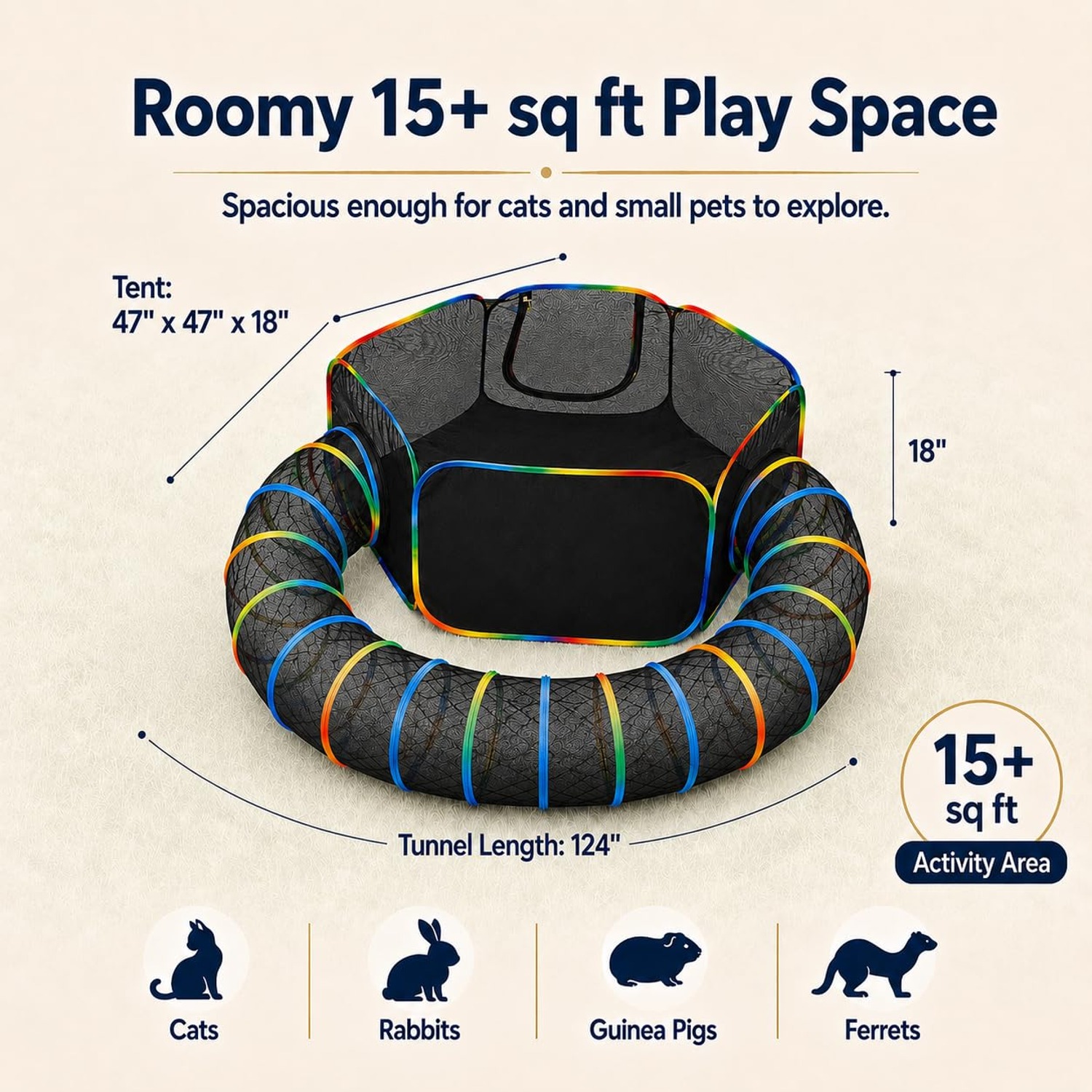
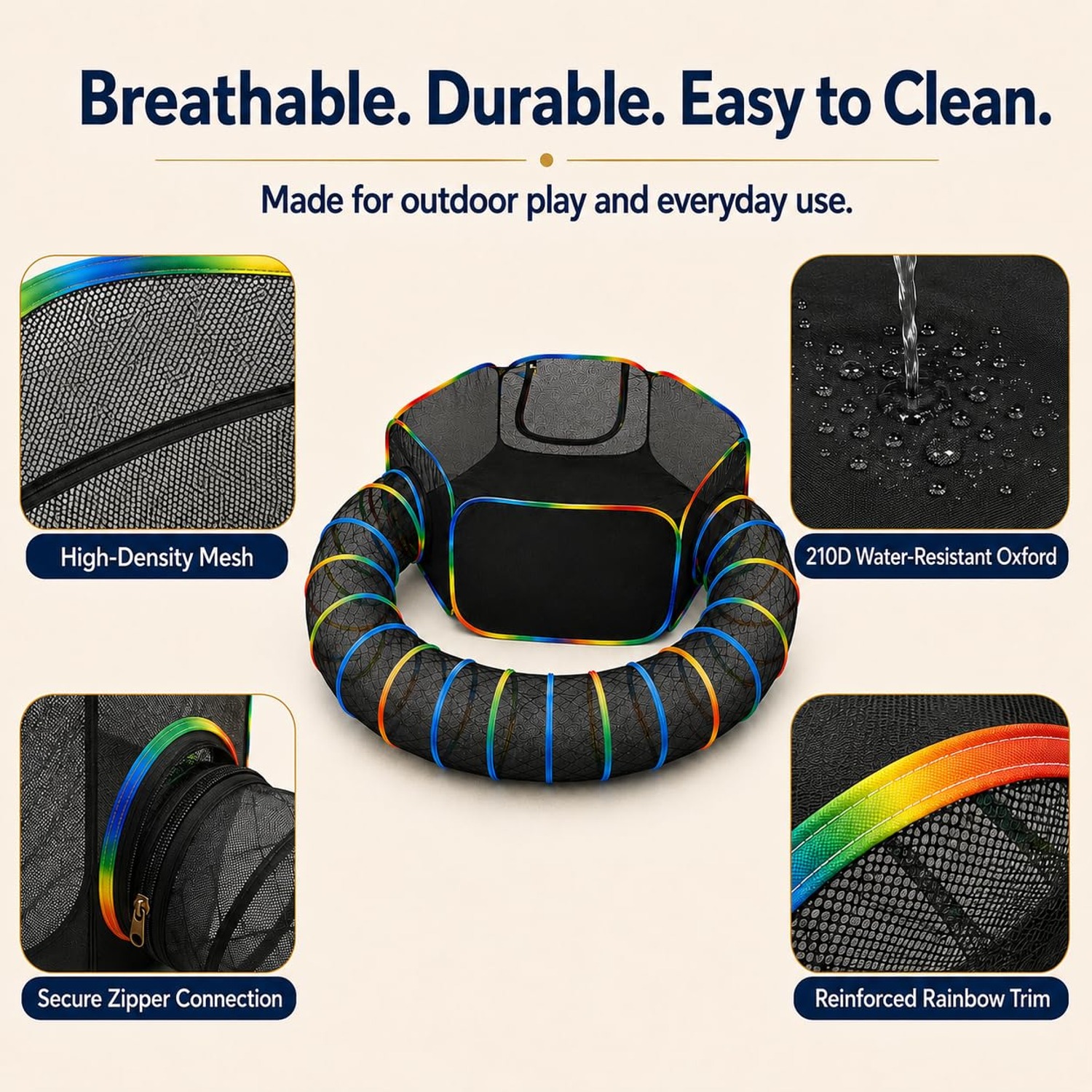
The set has two parts. There is a tent, which is the main living space, built from polyester with mesh panels and fitted with two large zippered doors. Then there is a tunnel, which zips onto the tent to create a longer run. Together they give a cat something closer to a route than a box, which matters because cats like to patrol, not just sit.
The pieces also work apart. Unzip the tunnel and you have a standalone cat tunnel for indoor play plus a tent for the lawn. That flexibility is genuinely useful across a year of weather.
When you are done, the whole thing folds and goes into the supplied storage bag. Assembly is required each time you set it up, so it is not quite as instant as a true pop-up dome, but it does pack away properly rather than living in the yard.
How the mesh does the heavy lifting
Mesh is the single most important material in any outdoor cat enclosure, and it does three jobs at once.
First, airflow. A solid fabric tent in direct sun turns into a hot box fast, and cats do not sweat the way we do. Mesh panels let heat escape and breeze come through, which is what makes extended sessions safe.
Second, sightlines. Cats are visual hunters. Half the value of an outdoor session is watching a bird land on the fence or a leaf skid across the paving. Mesh gives a clear view in every direction. Dark mesh, like the Rainbow-Black colourway here, is easier to see through from the inside than the outside, which shy cats seem to appreciate.
Third, containment. Mesh plus zippers means there is no gap to wriggle through when the enclosure is closed properly. Always check both zips before you walk away, every single time. That habit is worth more than any other safety feature.
Who this suits
Apartment dwellers with a balcony get a lot out of a balcony catio. A folding enclosure gives a cat floor space to sprawl in the sun without any risk of a fall or a leap onto the rail. Set it in the middle of the balcony floor, away from edges and railings.
Renters benefit too, because nothing gets screwed to a wall. You set it up, you pack it down, and the landlord never knows.
Families with a yard tend to use it as a daily routine. An hour on the grass after work, then back inside. It also works for a cat who is recovering from surgery and needs confined but stimulating space, though check with your vet first.
Travellers are the other obvious group. A portable cat run means a holiday rental or a campsite can include a safe outdoor patch for your cat. That is hard to arrange any other way.
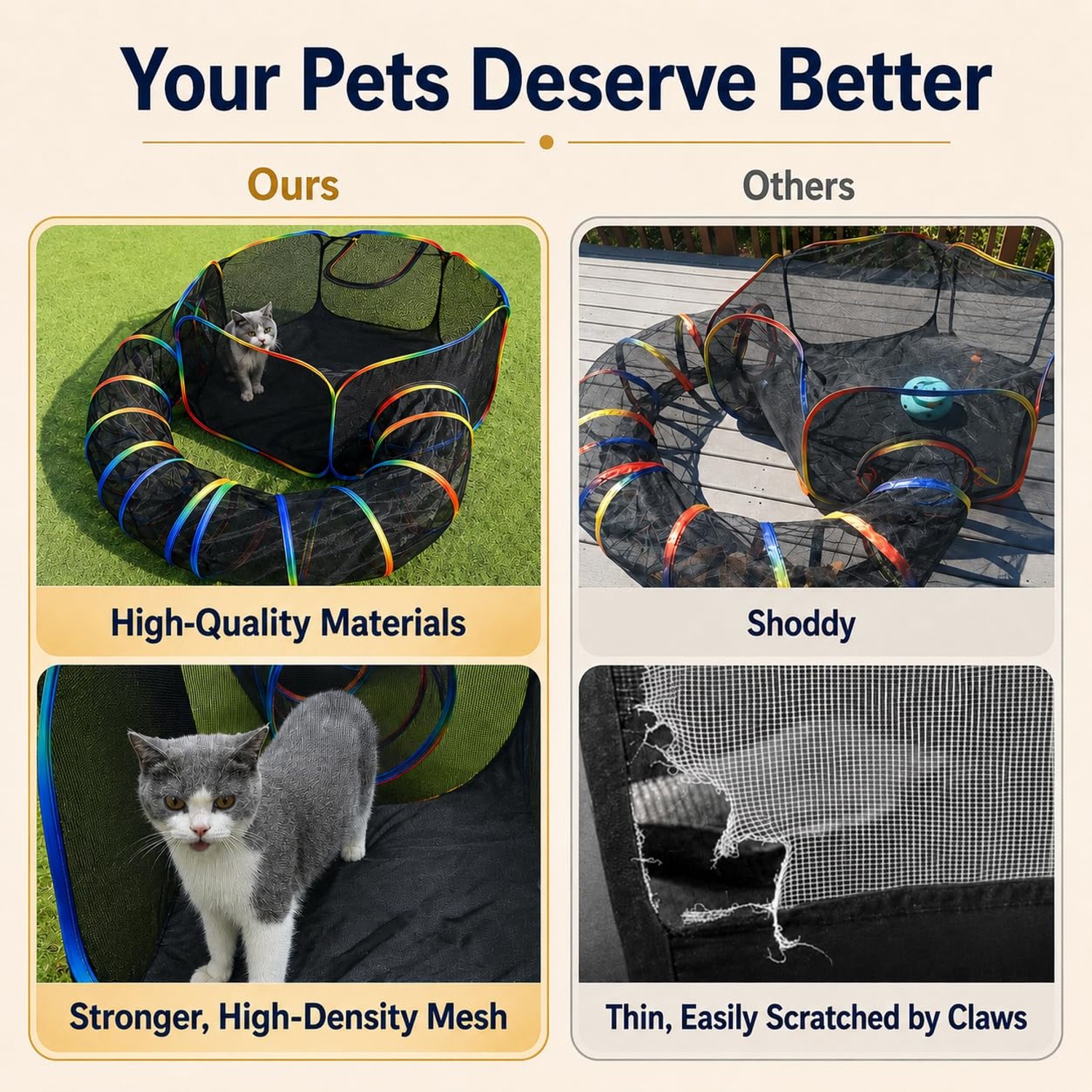
The ones it suits least are determined escape artists and heavy chewers. A cat who treats fabric as a scratching post will eventually find the weak spot. Keep claws trimmed and stay nearby.
How to choose and set it up well
Start with your space. Measure the flattest, most level area you have. Slopes make a fabric enclosure sag, and sag makes gaps. A level patch of lawn, deck or balcony floor is ideal.
Think about shade. Even with mesh, direct midday sun is too much for most cats. Position the tent so part of it falls under a tree, an awning or an umbrella, and move it as the sun shifts.
Anchor it. This is the step people skip and regret. On grass, use pegs. On hard surfaces, put a weight at each corner, something like a brick or a filled water bottle. A gust of wind under a light mesh tent will lift it, and a lifted tent is a frightened cat.
Add the comforts. A folded blanket or a flat bed gives your cat somewhere to settle. Water is non-negotiable on warm days, and a wide low bowl tips less. For sessions over about twenty minutes, a small litter tray is worth passing through the second door.
Introduce it indoors first. Set the tent up in the living room, leave the doors open and walk away. Let your cat investigate on their own terms. Scatter a few treats near the tunnel entrance. Most cats will be inside within a day, because a new enclosed space is irresistible to them. Forcing a cat in on day one usually sets you back a week.
Keeping it in good shape
Care is simple and mostly about habit. Shake out fur, grass and grit after each use. Spot clean mesh and fabric with warm water and a mild pet-safe detergent. Let it air dry completely before it goes back in the bag, because folding away a damp enclosure is how you end up with mildew and a smell you cannot shift.
Skip bleach and solvents entirely. They weaken mesh fibres and fade the fabric. Skip the washing machine too. The agitation stresses the stitching and the zips, which are the parts you actually need to last.
Store it out of direct sun. UV is the quiet killer of outdoor fabric, and a bag in a cupboard adds years compared with a tent left standing on the deck all summer.
Check the zips and the mesh every few weeks. Catching a small pulled thread early is a two-minute fix. Catching it late is a new enclosure.
The short version
If you have an indoor cat and any outdoor space at all, a cat tent and tunnel is one of the better quality-of-life upgrades you can buy. It is not a permanent structure and it is not meant to be. It is a folding, carryable patch of safe outdoors that you put up when the weather is good and pack away when it is not.
This LUCKITTY set gives you a mesh tent with two zip doors plus a tunnel that attaches or separates, all in polyester, all fitting into one storage bag. Assembly is required, and supervision is non-negotiable.
Set it up on level ground, weight the corners, provide water and shade, and let your cat decide the pace. Most of them work it out faster than you expect.