
The complete guide
How to Choose a Pop-Up Cat Enclosure That Your Cat Will Actually Use
The problem with keeping a cat indoors
Indoor cats live longer. That is the standard advice, and the evidence behind it is solid. Roads, fights, poisons and getting lost all stack the odds against a cat that roams.
The trouble is that the same cat still wants to be outside. It sits in the window. It waits by the door. It chirps at birds it will never reach. Boredom shows up later as scratched furniture, 3am sprints down the hallway, and the kind of over-grooming that ends in a vet visit.
A pop-up cat enclosure sits right in the middle of those two problems. Your cat gets grass, sun, breeze and smells. You keep the boundary. Nobody has to compromise much.
How a pop-up catio works
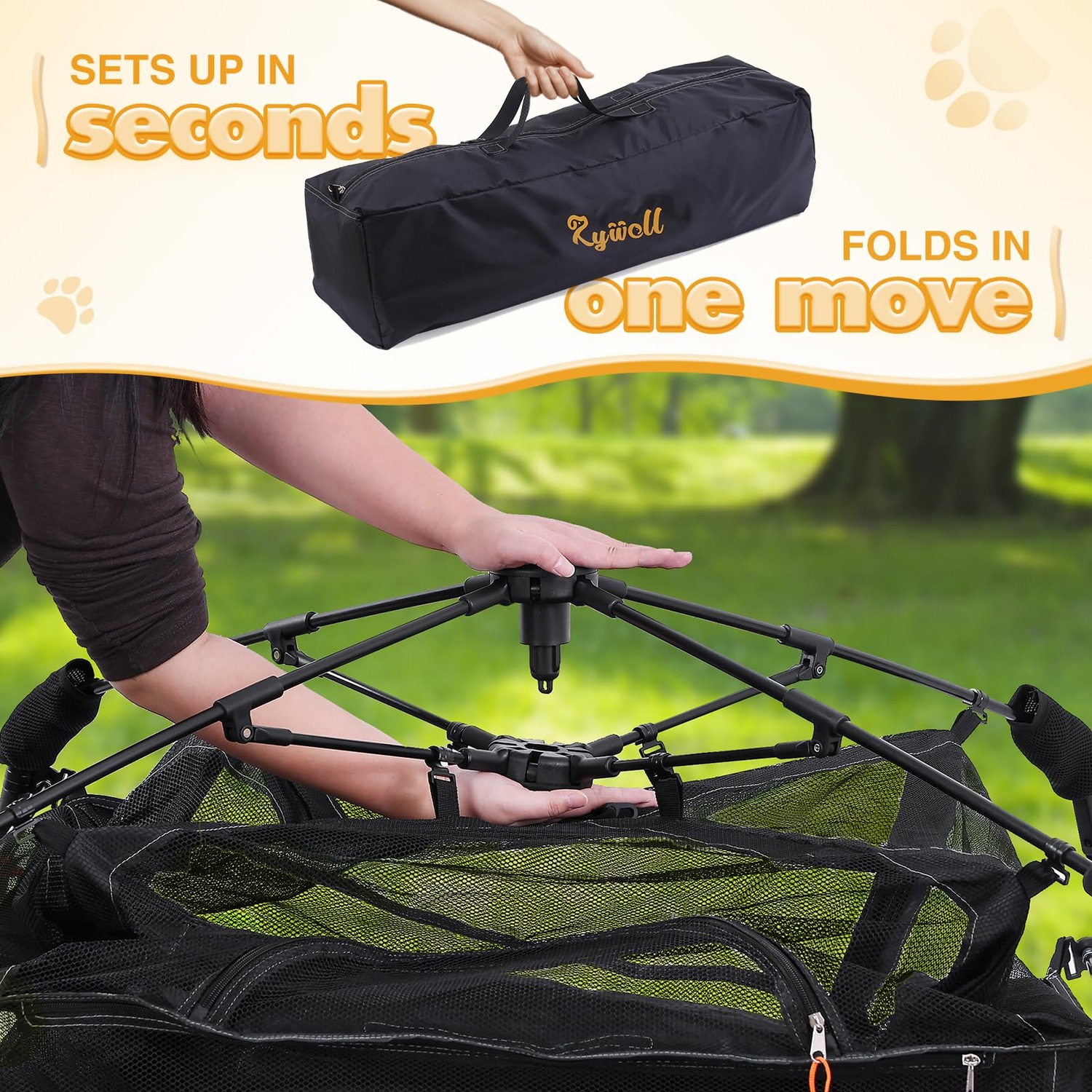
The design is borrowed from camping tents, with one big change. Instead of poles you thread through sleeves, the whole frame hangs off a central hub. You hold the base, press the top section into place, and the frame springs into shape. Taking it down is the same motion in reverse, pressing the lower rods in until the frame collapses.
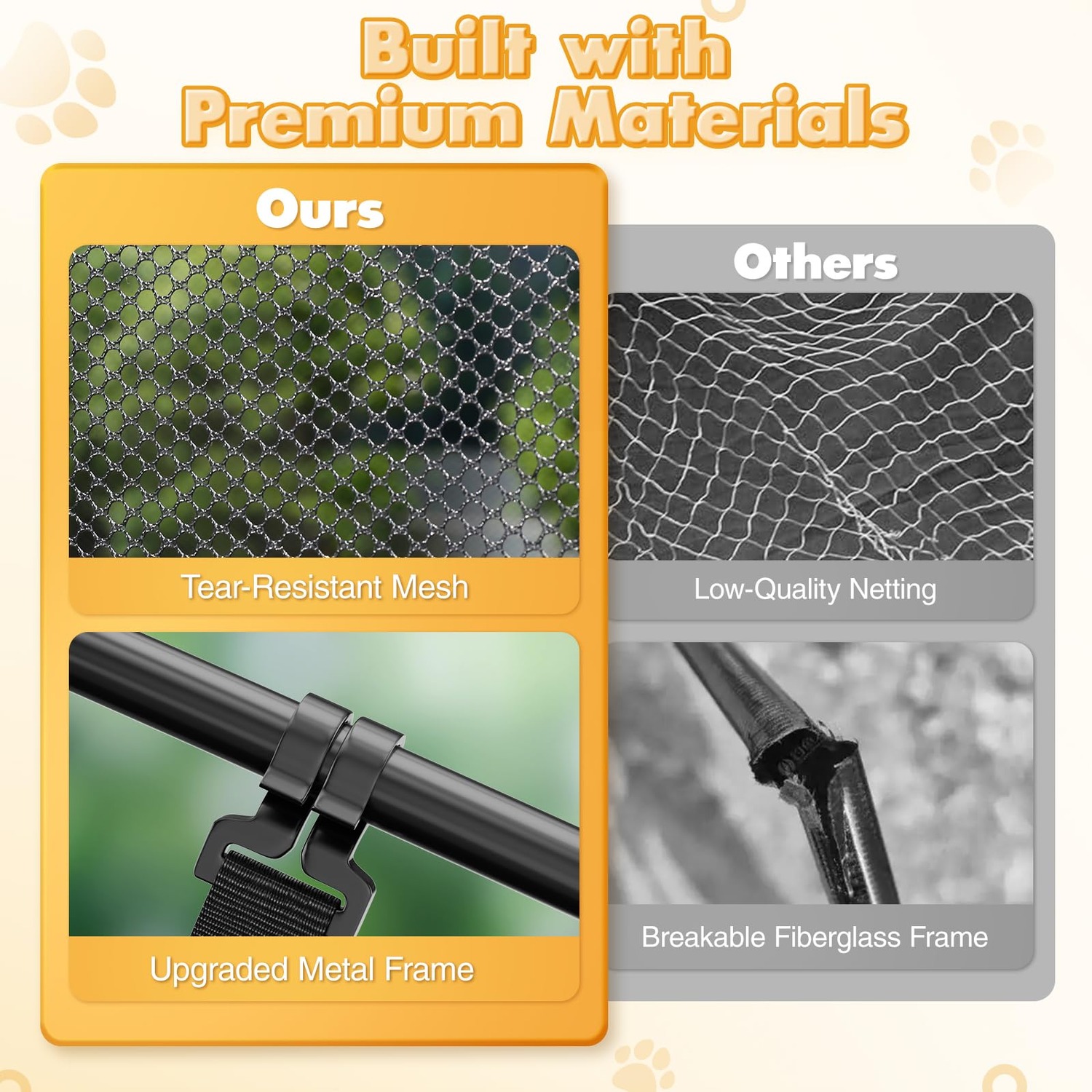
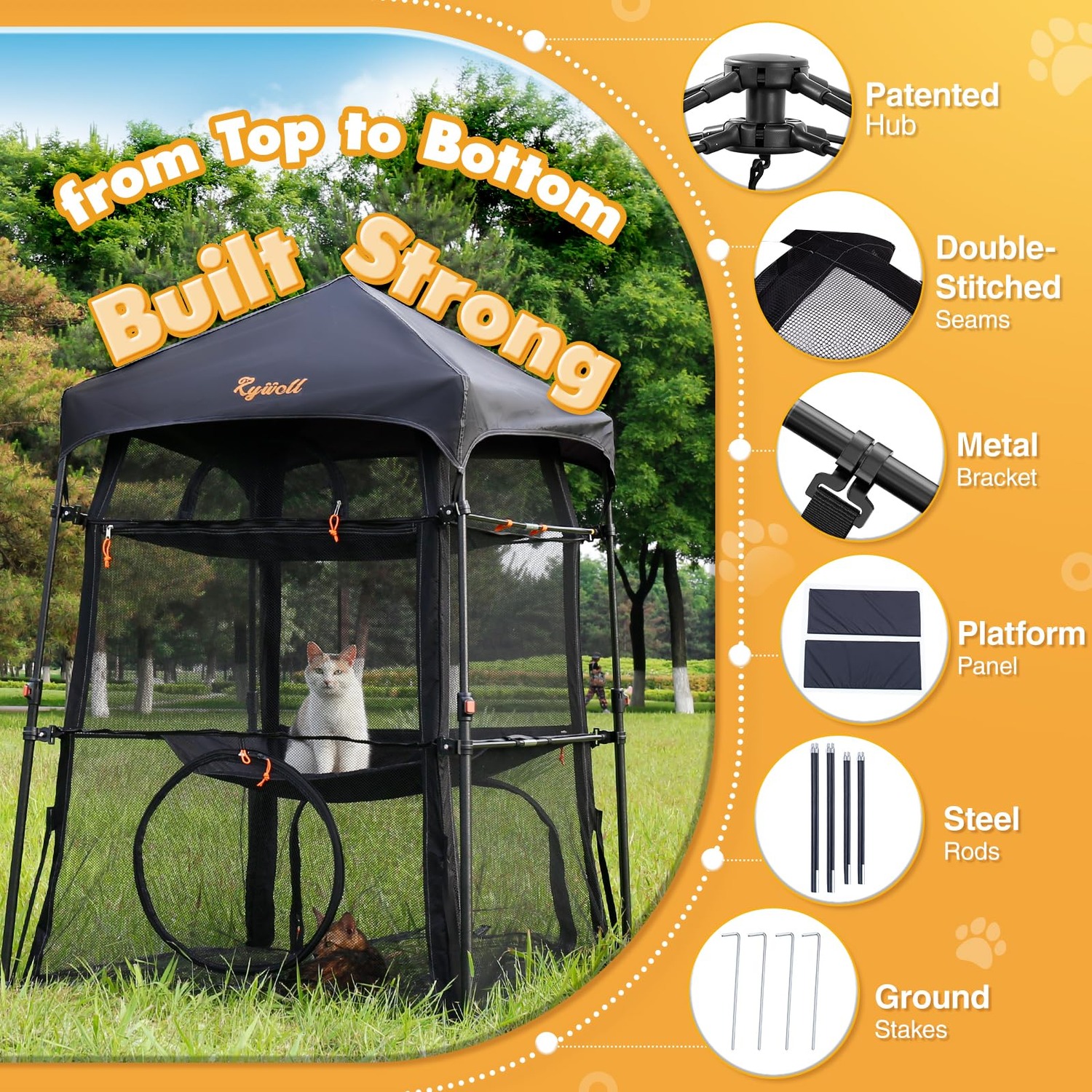
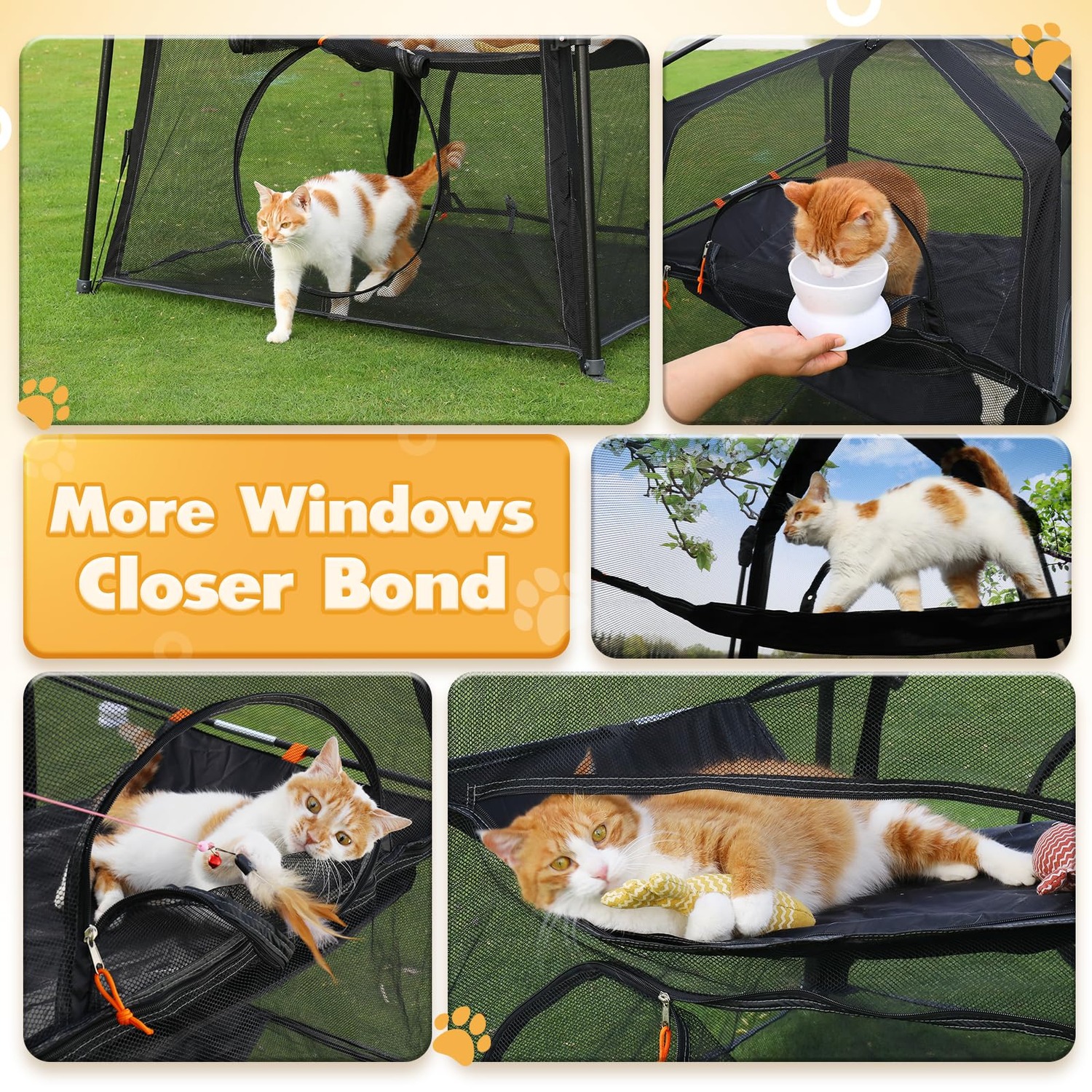
This model is built from alloy steel and Oxford cloth, with mesh panels for airflow and visibility. The openings close with zips rather than ties or velcro, which matters more than it sounds. Zips do not slowly work loose when a bored cat leans on them.
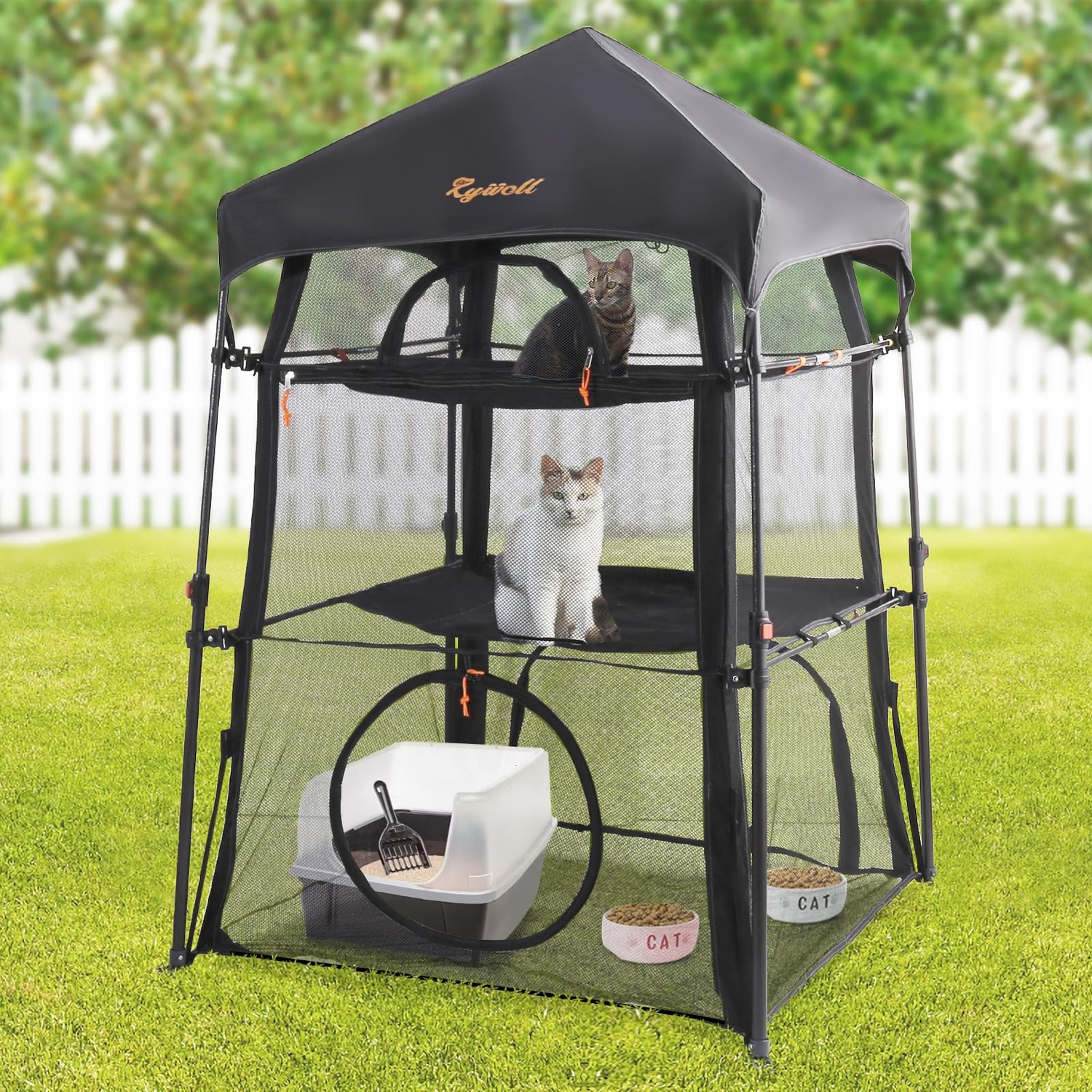
The footprint is 110 x 110 cm and the height is 145 cm. That height is what makes the three-tier layout work. A flat pen at knee height gives a cat somewhere to sit. A tall enclosure gives it somewhere to climb, perch and look down from, which is much closer to what cats actually want from being outside.
The whole thing weighs 5.9 kg and packs into the supplied carry bag along with the tent pegs.
Who it suits
Indoor cat owners with a garden. This is the obvious case. You have grass and sun but no safe way to let the cat use it. Half an hour in the enclosure after work changes a cat's whole evening.
Apartment dwellers with a balcony. As long as you have roughly a metre square of flat space and 1.5 metres of clearance, it fits. You cannot peg into tiles, so you weight the corners instead.
Multi-cat households. Three levels means three places to be. Cats that would bicker over a single sunny patch tend to sort themselves out when there is vertical space to spread into.
People who travel with their cat. A foldable cat enclosure that goes into a bag is a genuinely different proposition from a fixed catio. Holiday houses, camping trips and visits to family all become easier when your cat has a familiar safe space that comes along.
Anyone managing a transition. New kitten settling in, a cat recovering from surgery, or two cats being slowly introduced. A mesh cat enclosure lets animals see and smell each other with a barrier between them, which is exactly how introductions are supposed to go.
Choosing the right size and setup
Size is the first thing to get right, and most people underestimate it. A cat that can only sit is in a carrier, not an enclosure. You want enough floor for a bed, a water bowl and room to turn around, plus height for climbing. The 110 x 110 x 145 cm dimensions here clear that bar comfortably for one or two cats.
Next, think about where it will live. Grass is the easiest surface because the pegs go straight in. Decking, concrete and indoor floors all need weights on the four corners instead. Sandbags work well. So do dumbbells or a stack of bricks tucked at each corner under the fabric.
Think about sun, too. Fabric panels give partial shade, but no tent is a substitute for proper shade in the middle of a hot day. Position the enclosure where a tree, fence or awning throws shadow for part of the session, and move it as the sun shifts.
Finally, think about what you will put inside. A familiar blanket from your cat's indoor bed does more for acceptance than any toy. Water is essential for anything beyond a short visit. A small litter tray is worth adding if your cat is going to be in there for an hour or more.
Getting your cat to use it
This is the part people skip, and it is the part that decides whether the enclosure gets used or ends up in the shed.
Start indoors. Set it up in the lounge room with the door unzipped and leave it alone. Put treats on the floor inside. Put the blanket in. Let your cat investigate on its own schedule, which may take a day or may take a week.
When it is going in willingly, move it outside and repeat with the door open and you sitting next to it. Only then start closing the zip, and keep the first few closed sessions short.
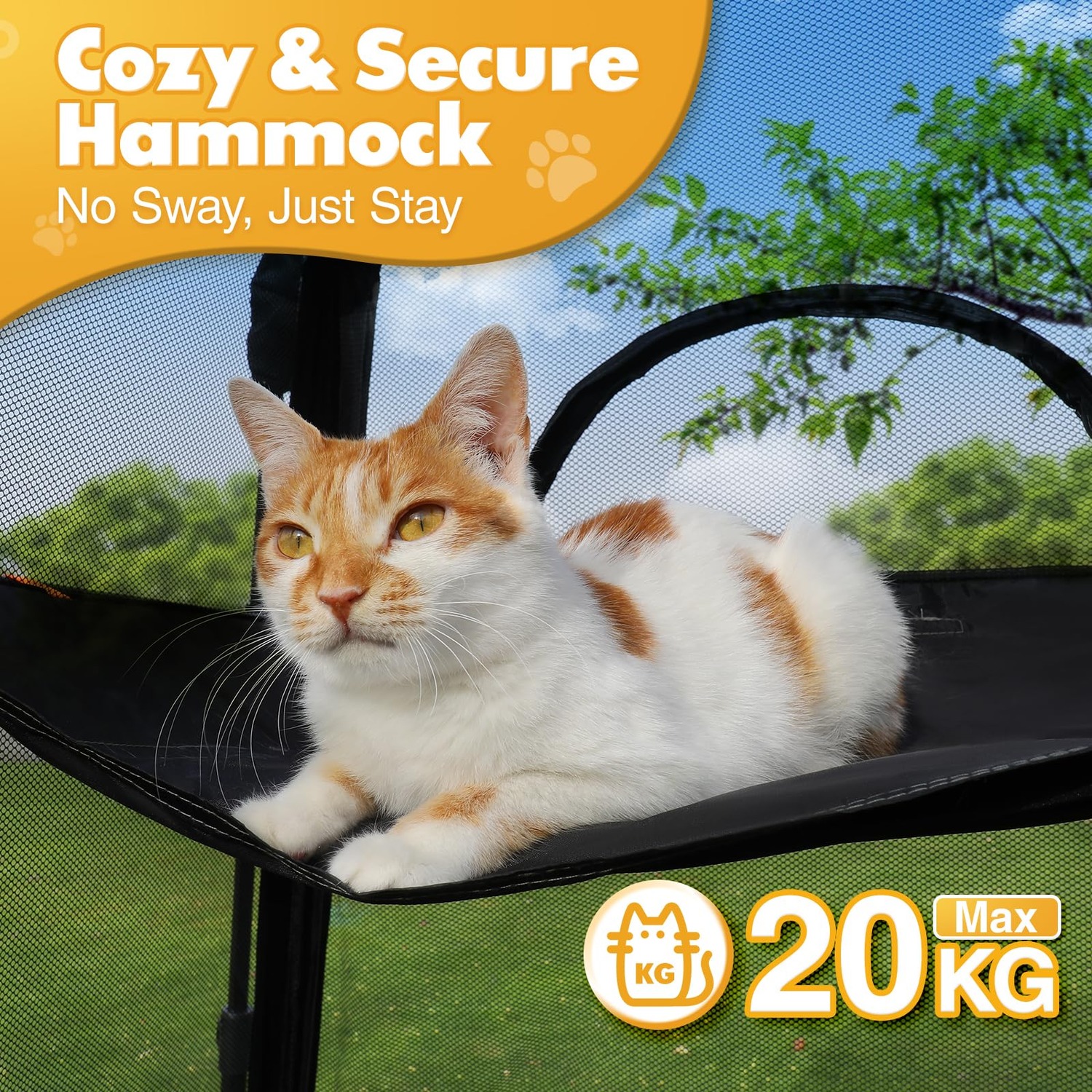
The bounce is the other thing to manage. Fabric platforms move a little when a cat lands on them, and some cats hate that at first. Pegging every corner tight makes a real difference because it pulls the structure taut. If your cat still hesitates at the upper levels, coax it with a treat or a wand toy rather than lifting it up there. Being placed somewhere wobbly against your will is not a confidence builder.
Be patient with nervous cats. Most come around. A few decide the ground floor is enough, and that is a perfectly good outcome.
Looking after it
Shake out fur, grass and leaves after each session. Spot clean the fabric and mesh with warm water and a mild pet-safe detergent, then rinse lightly. Skip the washing machine and the dryer, both of which will ruin the panel shape and stitching.
The single most important habit is drying. Fold a damp enclosure into its bag and you will open it next month to mildew. Leave it standing open in a breezy spot until it is completely dry, then pack it.
Check the zips, pegs and support poles before each outdoor use. A bent peg or a sticking zip is a five-minute fix now and a problem later. Store the bag somewhere dry and out of direct sun, since UV is hard on tent fabric over years.
The short version
If you have an indoor cat and a bit of outdoor space, a pop-up cat enclosure is one of the simplest upgrades you can make to its week. This one gives you a 110 x 110 x 145 cm space with three levels, a steel frame, Oxford cloth and mesh panels, zip closures, tent pegs and a carry bag, at 5.9 kg packed.
Peg it down properly. Give your cat time to warm up to it. Keep water and shade available. Do those four things and you will have a cat that comes running when it hears the bag unzip.