
The complete guide
Portable Catio Buyer's Guide, How to Pick a Cat Tent That Gets Used
The problem with keeping a cat indoors
Many of us keep our cats in. They still stare out the window and sit by the door.
Cats like sunlight, moving air, grass under the paws and the smell of next door's garden. The usual way to give a cat outdoor time is to open a door and let them roam, which many owners would rather not do.
A portable catio sits between those two options. It is a contained outdoor space your cat can use with you nearby. Unlike a built catio, you do not need permission, a slab of concrete or a weekend with a saw. You unroll it, it pops open, and your cat goes outside.
How a pop up cat tent works
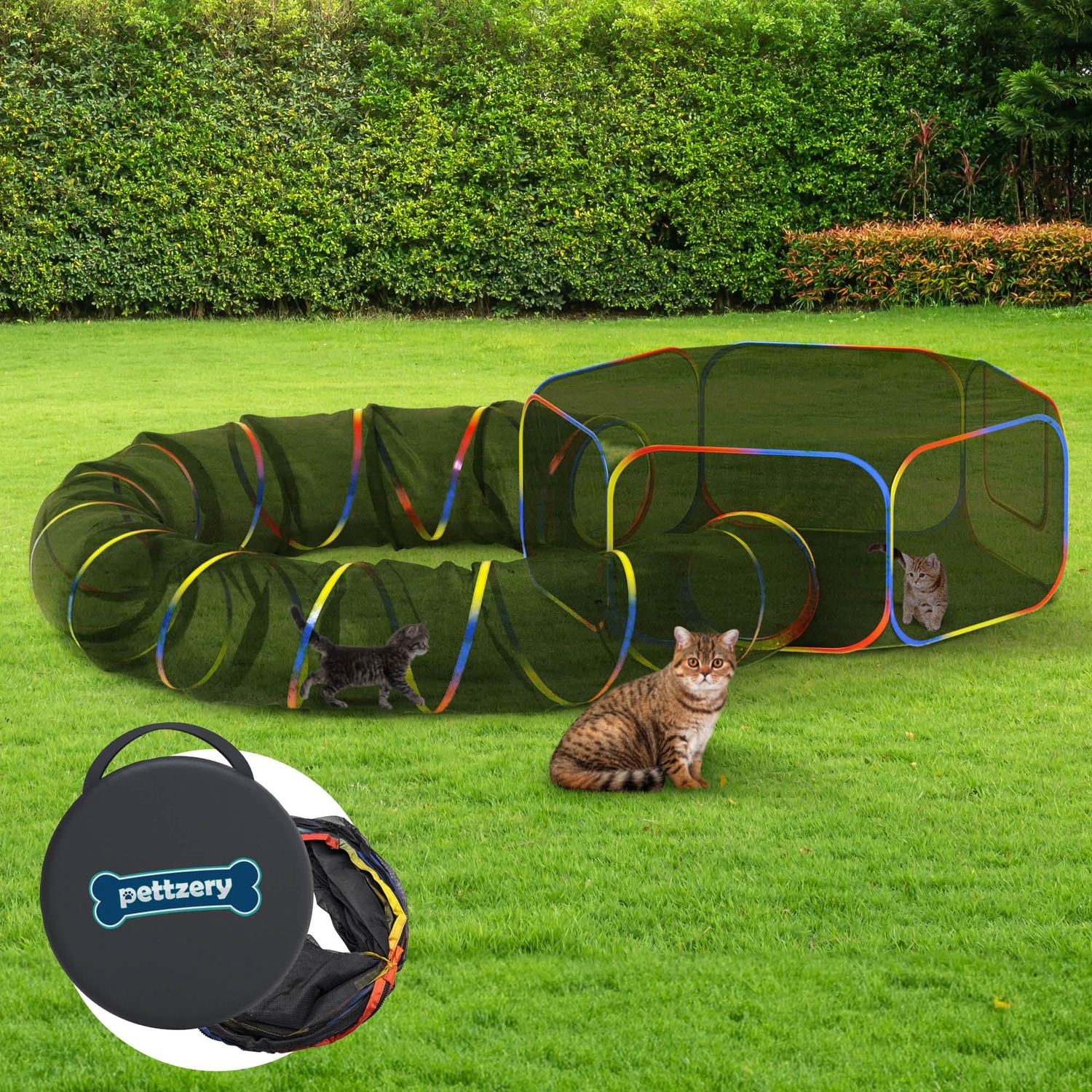
The design is simple on purpose. A sprung frame is sewn into fabric panels. When the structure is released from its bag it opens itself into shape, and no assembly is required. This particular one opens to a square of 119.4 by 119.4 centimetres, standing 45.7 centimetres tall.
The panels are a mix of Oxford cloth and mesh. Oxford cloth is the same kind of woven fabric used in camping gear and luggage. The mesh sections let air move through and give you a clear view of your cat from the outside.
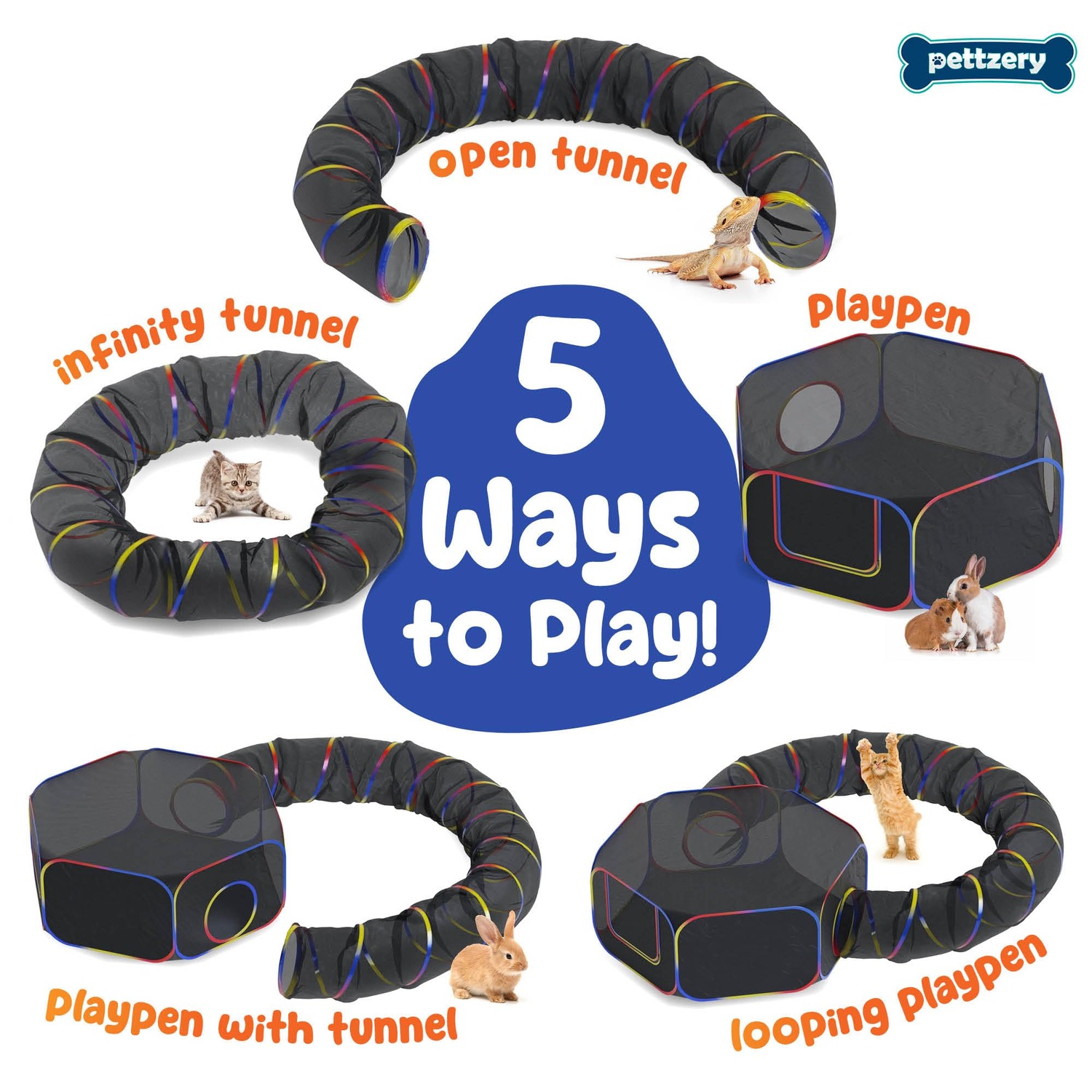
Zips handle the access. You unzip a panel, put your cat in, zip it shut. The same zips attach the play tunnel to the main tent, which is what turns a basic mesh cat tent into something more interesting.
Why the tunnel matters more than the floor space
A lot of people shopping for an outdoor cat playpen focus on floor area. A wide open square is a place to nap in. A tunnel is a place to hide, stalk and charge through.
Attach the tunnel and the enclosure becomes a circuit. Many cats like to run a tunnel, pause, back up and run it again.
The tunnel also unzips and works on its own. On a wet day you can leave the tent in the cupboard and let the tunnel live in the hallway. That flexibility is worth something, because any pet product that only has one use ends up in the garage.
Who this suits
Apartment owners get the most obvious benefit. If you have a balcony and no garden, a balcony cat enclosure gives your cat some outdoor time. Check your clear floor space first. You need about 120 centimetres in each direction, and you want it positioned away from the railing so your cat cannot push the mesh toward a gap.
Renters are in a similar position. You cannot bolt a frame to someone else's wall, but nobody can object to a tent you fold away each evening.
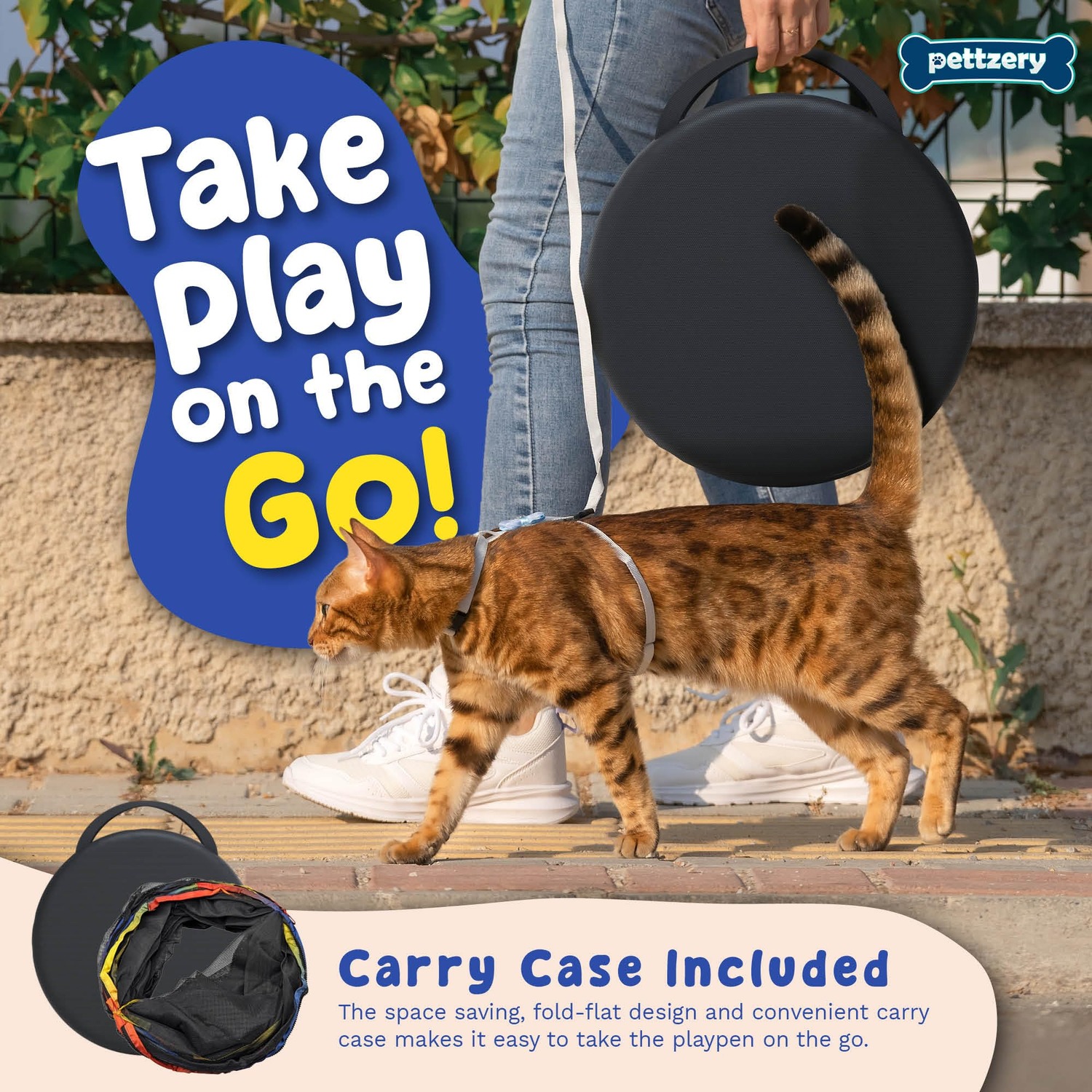
People who travel with their cats get real value here too. A travel catio means your cat has a known, enclosed space at a holiday rental, a campsite or a relative's house. Take the carry bag, set it up in the corner of the garden, and your cat has somewhere familiar.
It also suits people who have recently adopted. A nervous cat who has never been outdoors needs a gentle introduction, and an outdoor cat tent lets them see, hear and smell the outdoors inside an enclosed space, with you beside them.
Finally, it is not cats only. The listed target species include ferrets, guinea pigs and rabbits. Small pets should only use it supervised.
How to choose between fabric and fixed
If you have a garden you own and no plans to move, a built timber catio will give you more height, more permanence and more climbing structure. It will also cost more, take a weekend to build, and never move again.
A foldable catio trades height and permanence for portability. You get a low, wide space rather than a tall one. Your cat cannot climb in it. But you can carry it, store it and set it up in four different places in a month.
The honest test is this. Will you use it more than once a week? If the answer is yes and you have a fixed garden, build something. If the answer is sometimes, or your space is a balcony, or you move around, portable makes more sense.
Getting your cat to use it
Do not put your cat in and zip the door. That is the fastest route to a cat who never goes near it again.
Open the enclosure indoors first and leave it there for a day or two with the access unzipped. Put a blanket they already sleep on inside. Drop a few treats in the tunnel. Let them investigate on their own terms.
Once they are comfortable, move it outside and repeat the process. Keep the first outdoor session short, ten or fifteen minutes with you sitting beside it. Build up from there. If your cat seems anxious, bring them back in and try again the next day. Rushing this stage often means the enclosure ends up unused.
Care, storage and keeping it going
Shake out fur, grass and grit after every session. Spot clean the mesh and panels with a damp cloth and a little mild soap, then let everything air dry completely before you fold it. Packing it away damp is how you get mould and a smell that never fully leaves.
Avoid machine washing and tumble drying. Both are hard on sewn-in frames and fine mesh.
Trim your cat's claws reasonably often. Mesh and claws are not natural friends, and a snagged panel is easier to prevent than to repair. Keep the enclosure away from thorny shrubs and anything sharp on the ground.
When it is not in use, keep it dry and in its carry bag. Fabric left in direct sun for weeks will fade and weaken, so the cupboard is better than the patio.
A few safety notes worth repeating
Use it supervised. Always. No soft enclosure replaces supervision.
Provide water on warm days and position it in shade. A mesh tent is breathable, but mesh is not shade, and a cat in direct summer sun will overheat regardless of airflow.
Weigh it down with the bed, bowls and a mat on breezy days, and skip it altogether in strong wind.
Check the zips are fully closed before you walk away from the side of it. Most escapes from any enclosure come down to a zip left half done.
The short version
This is a pop-up cat enclosure and play tunnel set from Pettzery, model PT201. The tent opens to 119.4 by 119.4 by 45.7 centimetres, it is made from Oxford cloth with mesh panels, it uses zip closures, and it requires no assembly. It folds into a carry bag.
It suits apartment and balcony cats, renters, travellers and nervous indoor cats taking their first steps outside. Rabbits, guinea pigs and ferrets are also listed as target species. It is for supervised use, it is not a permanent outdoor structure, and it rewards a slow, patient introduction.
If what you want is supervised outdoor time for an indoor cat without building anything, this folds into a cupboard until next time.