
The complete guide
Outdoor Cat Tunnel Buyer's Guide
The problem with letting cats outside
Cats want out. You can see it in the way they sit at the window tracking a bird for twenty minutes, or scramble to the door the second it opens.
Plenty of owners still keep their cats in, or would rather they did not roam.
An outdoor cat tunnel is a small, practical answer. It does not solve everything. What it does is carve out a strip of the actual outdoors, with real air, real smells and real sunlight, that your cat can use with the ends closed off and you nearby.
How a pop up cat tunnel works
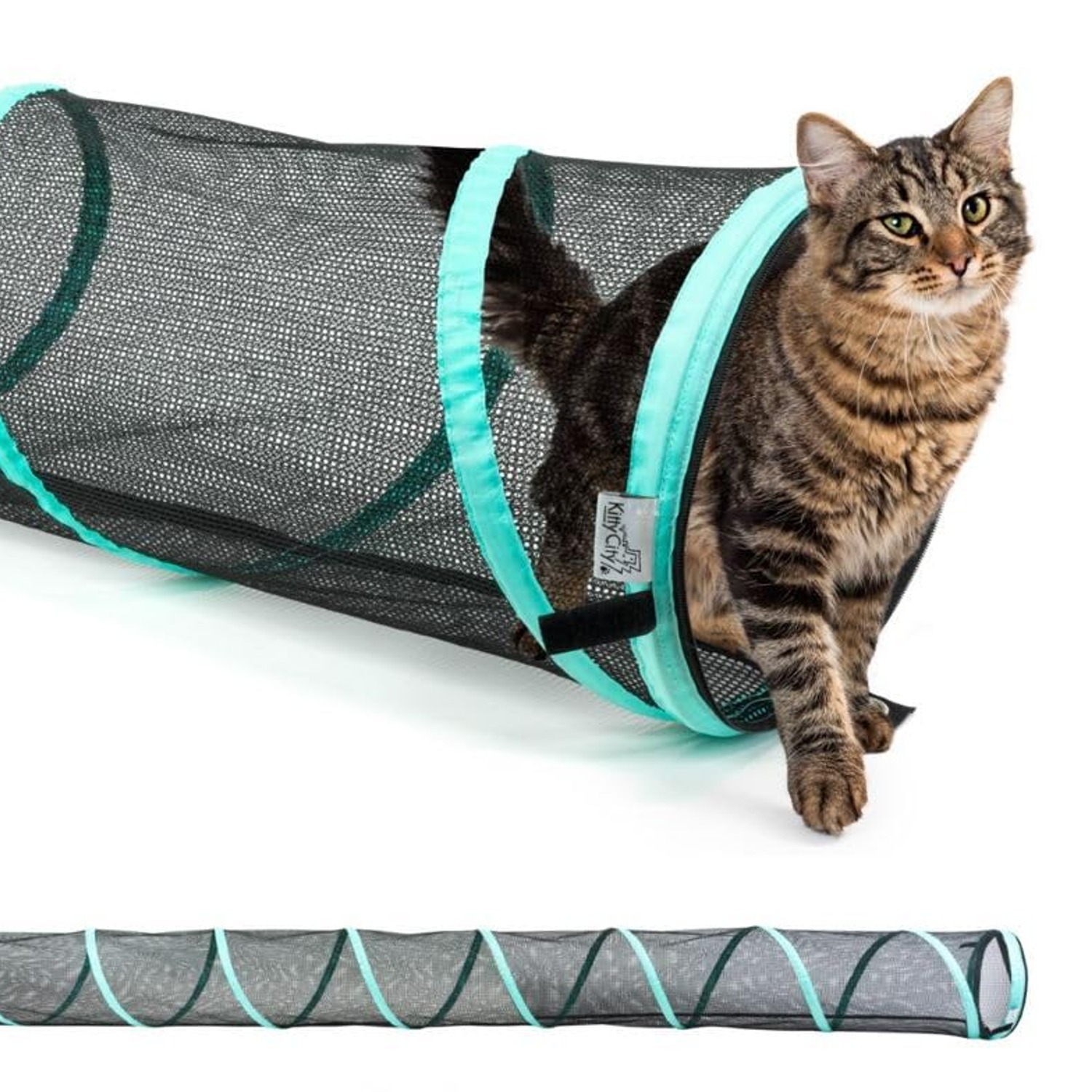
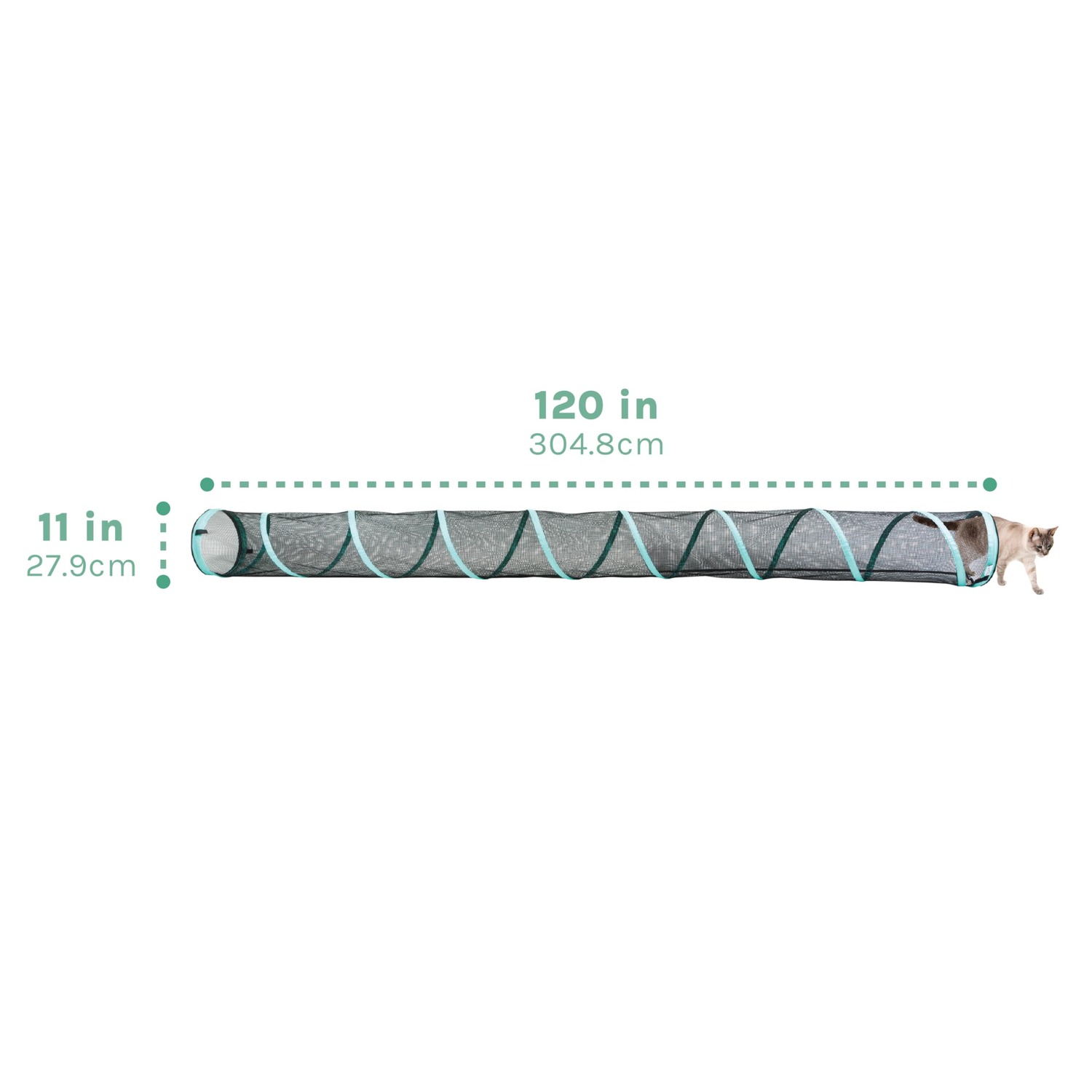
The design is deliberately simple. A sprung frame sits inside a polyester tube. Take it out of its storage position and it opens itself into a 3.05 metre run, 28cm across. There are no poles to thread.
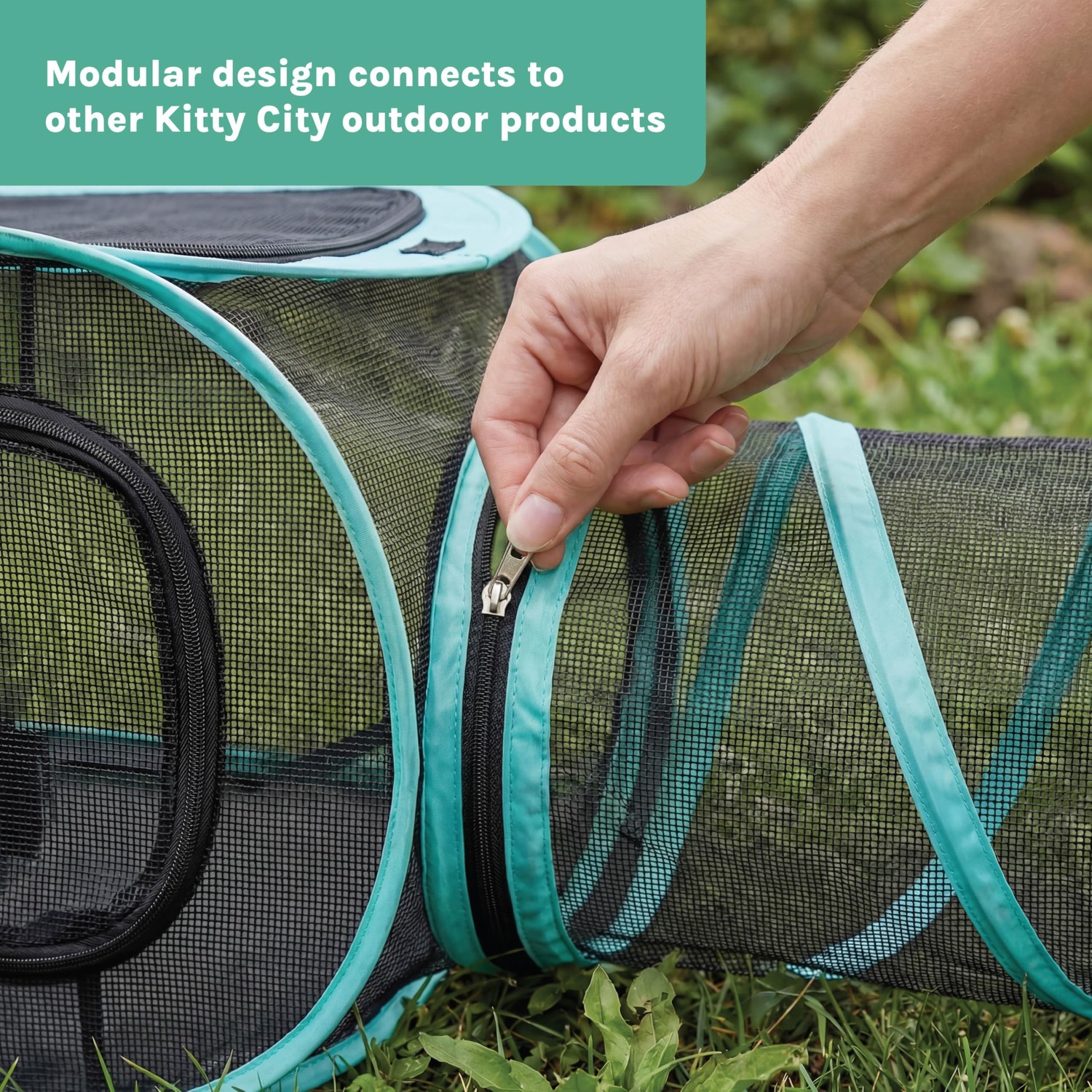
Both ends zip. That is the part that makes it an outdoor product rather than an indoor toy. Zip them and your cat is contained while you watch. Leave one open and connect it to an enclosure or a doorway and you have a route instead of a dead end.
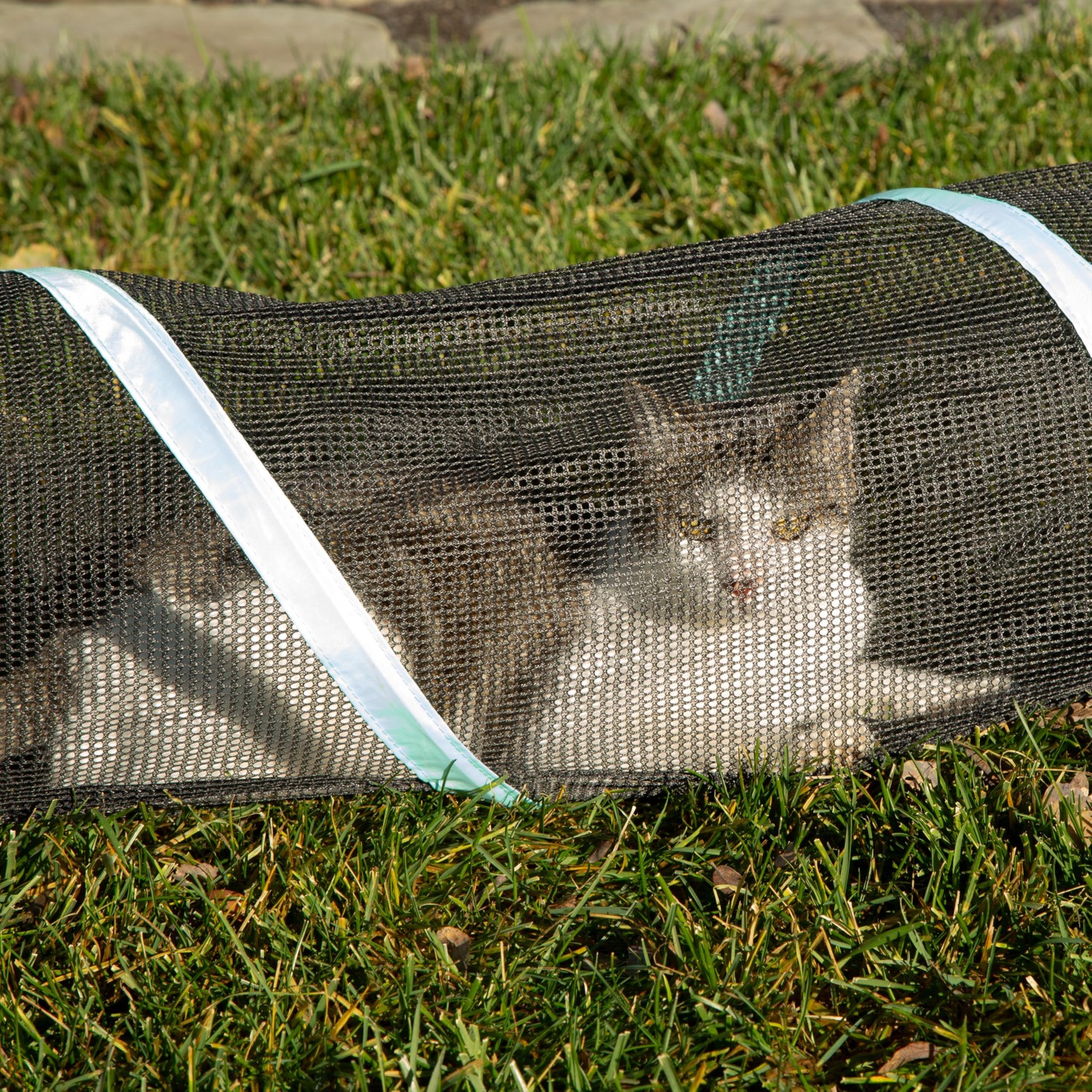
The staking points matter just as much. The whole thing weighs 816 grams, which is easy to carry but light. A cat hitting the inside at speed can shift an unstaked tunnel, and a breeze can roll it. Pin it down on grass or soil.
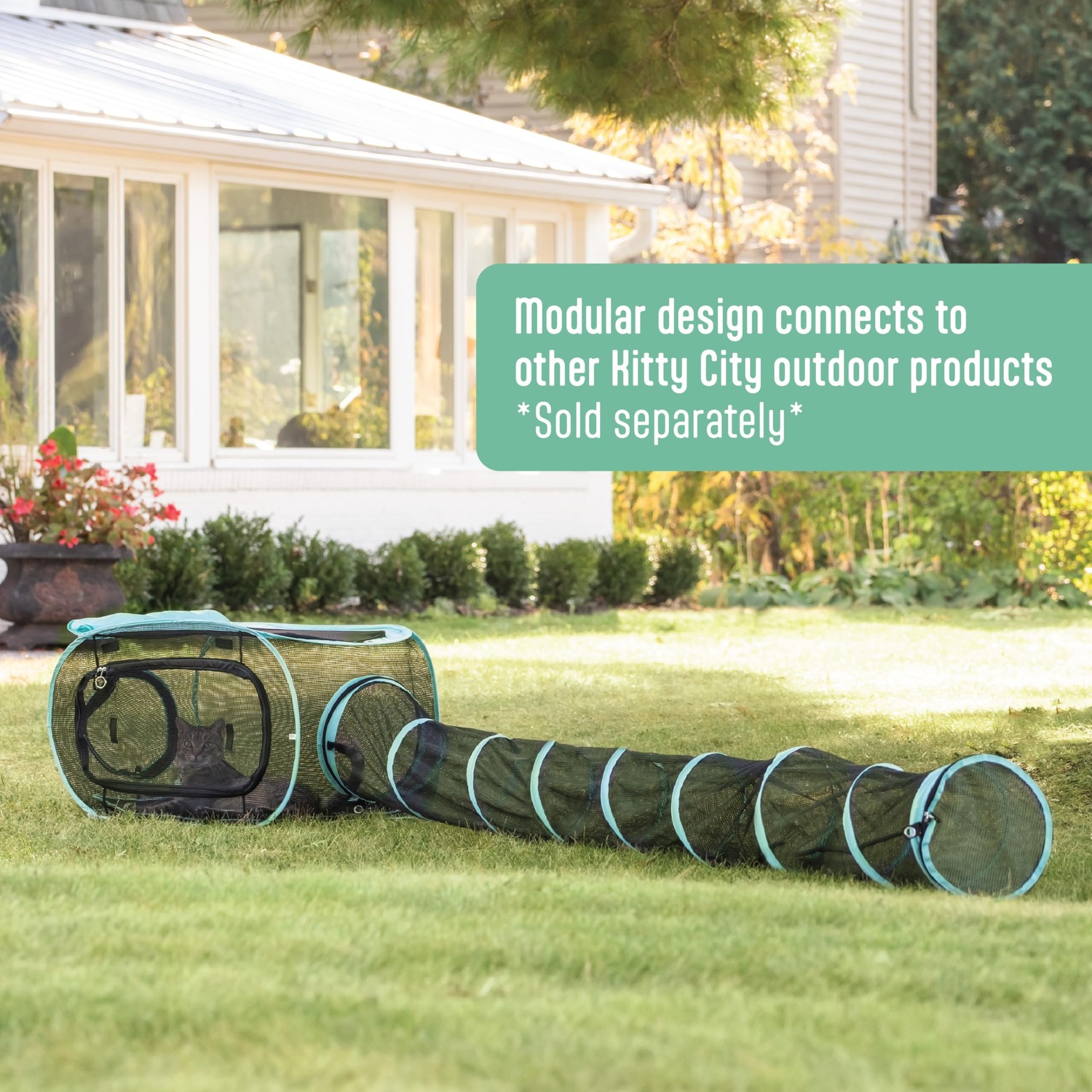
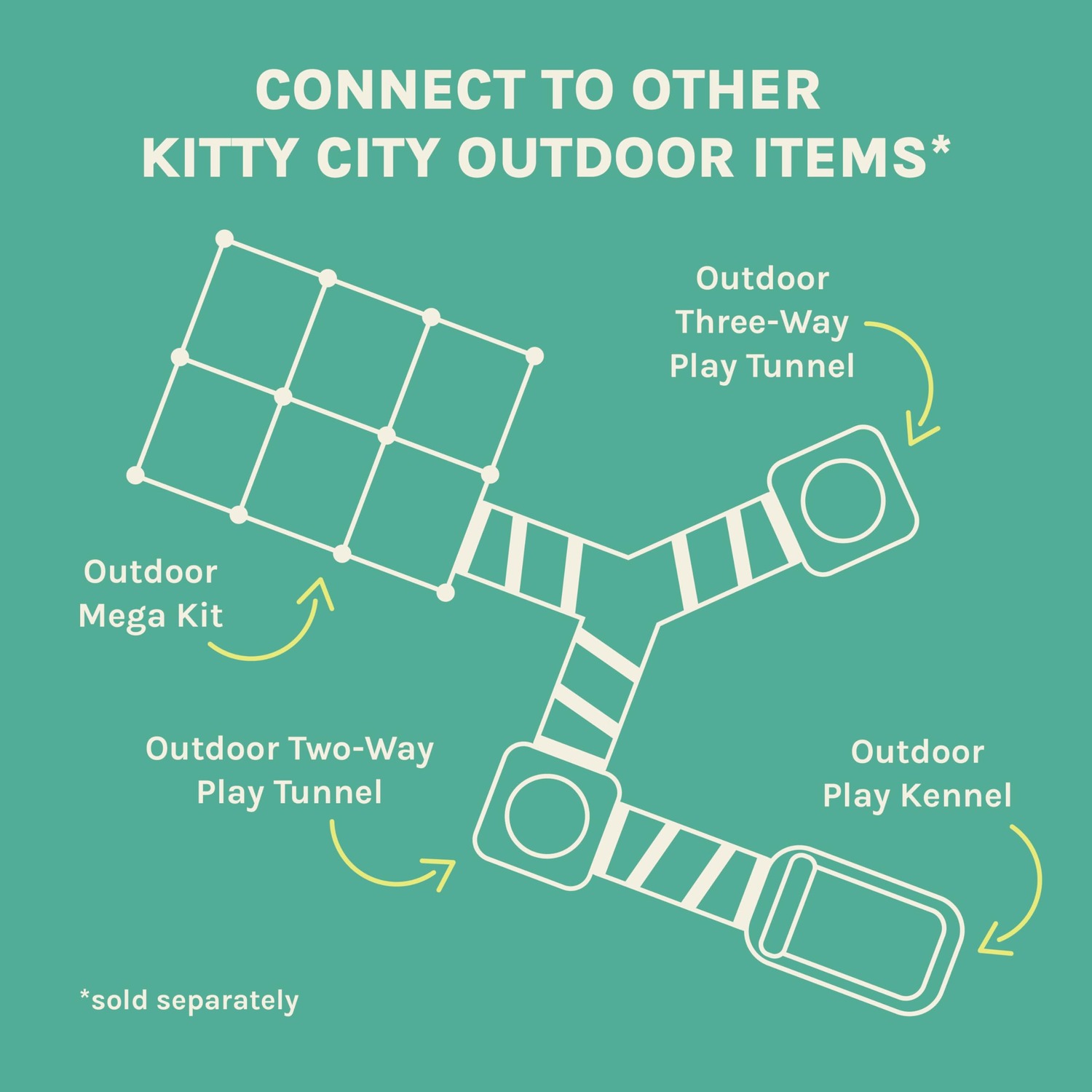
Because the ends are open-able and the range is modular, this tunnel is designed to work with other Kitty City outdoor pieces, including their Outdoor Mega Kit. If you have been looking at a cat tunnel enclosure connector to join two parts of a setup, this is one way to do it.
Who it suits
Indoor cats get the most out of it. If your cat has never had free access outside, a contained three metre run is something new. Some cats take to it quickly and some take longer.
If your cat is recovering from surgery or your vet has asked you to restrict its movement, ask your vet before using a cat tunnel.
Renters and travellers benefit too. You cannot build a catio into a rental, but you can unroll a collapsible cat tunnel on a shared lawn and roll it up again before anyone minds. The same logic applies to caravan trips and visits to family.
Where it suits less well: very large cats, given the 28cm diameter and small breed recommendation, and households with a dog who would see a fabric tube with a cat inside as an invitation.
Choosing the right length and layout
Length is the single most useful number. A cat tunnel 10 foot long gives room for a short run, which is what makes it interesting to a cat. Shorter tunnels mostly serve as hiding spots.
Think about the route before you buy. The best setups go somewhere. A tunnel from the back step to a shady patch under a shrub gives a cat a reason to use it. A tunnel sitting alone in the middle of a bare lawn may get a sniff and then be ignored.
Consider sightlines as well. In a cat tunnel garden setup, a cat can watch what is happening outside the tube. Running it beside a flowerbed or a fence line usually beats running it across open grass.
If you plan to expand later, map it out roughly now. A cat tunnel system built from two or three connected pieces around a tree or along a wall gives a loop rather than one long straight line.
Setting it up well
Pick a spot with part shade. Fabric in full summer sun holds heat, and a cat who likes warmth will not always move. Put a section under a tree or beside a wall.
Stake all the anchor points, not just one end. Half-staked tunnels pivot. Put water within easy reach, especially on warm days, and keep the first few sessions short.
Introduce it indoors first if your cat is cautious. Open both ends, drop a treat partway in, and leave it alone. Once the tube is familiar indoors, carrying it outside is a smaller step.
Never leave a cat inside unattended. Fabric is not a fence, and no tunnel replaces supervision.
Looking after it
Cleaning is straightforward. Wipe it down with a damp cloth and mild soap, or machine wash gently if the label allows. Shake the grass and grit out first, because wet soil pressed into fabric is much harder to shift later.
Dry it fully before folding. This is the rule people break most often, usually when rain arrives and the tunnel goes straight into the cupboard. Folding a damp tunnel is how you end up with a musty one.
Check the zips and the stake points every few weeks. Zips take the most wear on any outdoor cat tunnel because they get opened, closed, pawed and occasionally chewed. A zip caught early can usually be eased with a bit of care, where a zip ignored turns into a tunnel you cannot close.
Store it somewhere dry and flat. It folds down small, so behind a door or under a bed is enough.
The short version
This is a 3.05 metre polyester tunnel that pops up on a sprung frame, zips closed at both ends, stakes to the ground and folds flat again when you are done. It weighs 816 grams, suits small breeds and cats of all ages, and links into the Kitty City outdoor modular range if you want to build something bigger.
It will not turn your garden into an enclosure and it is not a substitute for supervision. What it will do is give an indoor cat some real outside time, with you nearby, without a weekend of building.